New years Solutions

Happy new year to you dear reader! I hope this post finds you well and happy. This is the time of the year that people make their new years resolutions for various things. Resolutions in regards to health, money, relationships, business etc. Resolutions statistically have been broken by many people (including yours truly). So the question to be asked: What is the solution?

First, let’s look at the definition of a resolution: a decision to do something or to behave in a certain manner. That means a decision to take a course of action to achieve a particular goal. This is the conscious decision to do something to better one’s situation. 80% of New years resolutions failed by February of that year. Why aren’t we more successful at keeping our New Year’s resolutions? Some reasons include the idea that we’re thinking too big and not knowing where to start, not considering a “why” behind it, and the fact that one might not be ready to make such a change.

This points out a need for a change in approach would be not a resolution but a solution. A solution is a means of solving a problem or dealing with a difficult situation. This means in order to reach a solution, one must look at all of the variables in a problem. This involves looking at the broad scope of the problem and why the problem persists. Once the solution to the problem is found one must implement said solution to fix the problem and stick to it.

Instead of a new years resolution, one would make a New years solution. Set SMART goals (Specific, Measurable, Attainable, Realistic Timely) that you will be able to stick to with conviction to accomplish your solution to your problem. Write it down on a vision board or a journal, and whenever you feel like quitting, look at what was written down. If you can write it, you can achieve it because it will serve as a reminder of the decision you took on to solve the problem you are facing in life.

Statistically speaking, New years resolutions can fail. If you can turn your resolutions into solutions and create a clear road map, you can reach your goals and clear your challenges. Once you start, keep writing reminders down to encourage you to keep going until you hit your goal. Until the next time, dear readers. Excelsior!

Ending the year on a flavourful note

Holidays are a pretty busy time of year for everyone. It is easy to get lost in the shuffle and neglect things. One thing one should never neglect is one’s diet and nutrition. Last month I gave you a nice dessert so let’s balance that out with a nice simple savory dish: bell peppers and beef. While this was anime inspired from one of my favorite animes (cowboy bebop) I assure you that it the style will be a little different.

For this recipe we will require the following: 1 bell pepper of each color ( for this I only used red/green peppers to start), 1/2 of a small onion, 1 lb of beef chuck (you can substitute for 1 lb of mushroom and tofu for a vegetarian option), assorted spices and seasonings of your choice (Mrs. Dash, old bay, paprika, garlic powder, and pepper were used here) and honey sesame sauce (homemade or store bought)

First, clean your peppers and peel your onions. Once complete, mince your onions and place to side in a bowl. Proceed to slice your bell beppers into strips and add to the bowl with the onions. Lightly season your veggies with your seasoning mix and set aside.

Ready for the fire

Nexr, chop up your beef into bite-sized chunks and remove any gristle or fat as you go. Be sure to season your beef (or mushroom/tofu substitute) and place to the side.

I found the beef

Next, lightly oil your skillet and apply your seasoned beef, and cook thoroughly. Once cooked, set aside in a bowl.

Ok maybe I went a little toooo light on that oil.

Next you will place your veggies into the skillet and cook until tender. Once complete set aside in your bowl with the beef

Cook until the veggies comply

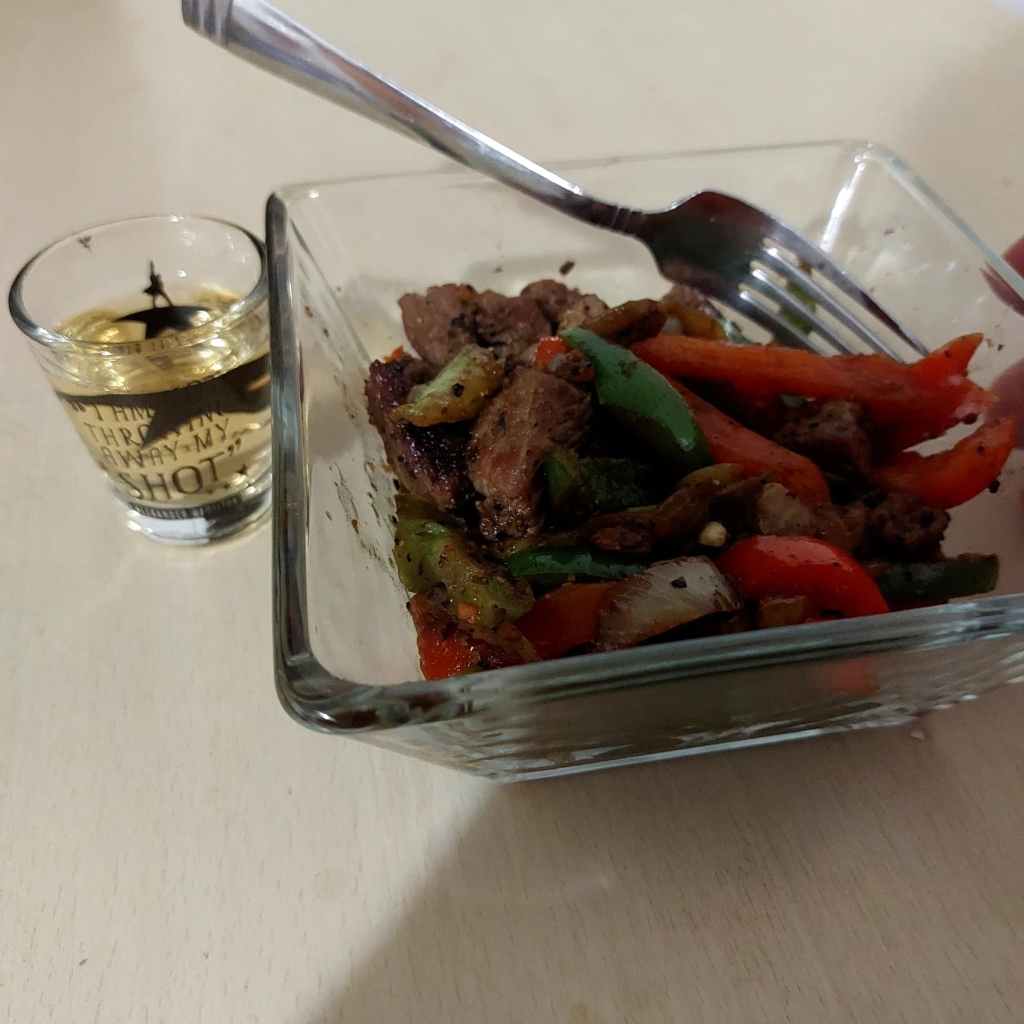
Lastly you can either caramelize the honey sesame sauce in the skillet or add the sauce after depending on your preferences. Once complete, you’re ready to go! Serve with your favorite beverage, and you’re ready to eat.

The whiskey is optional

And there you have it. A simple and quick meal you can enjoy any day of the week. This makes about four servings with my list of ingredients, and it is very filling for the small serving size. Going into the new year, I wish you nothing but the best and success in all your endeavors. Excelsior!

Who did it better?

A holiday treat idea

The holidays are a wonderful time to spend with family and friends. This is a good time to eat all kinds of delicious dishes and for those who are fitness fanatics a cheat day or three for one’s diet. I have a simple holiday recipe that will be sure to leave a smile on your family’s faces: oreo cheesecake.

I made this once with just normal chocolate oreos but you can substitute with any oreo you want. This time I elected to use chocolate and golden oreos. I will list the ingredients I used: (for filling) 3 large eggs, 2 8 ounce blocks of plain cream cheese, 1 1/2 cup of plain Greek yogurt, 2/3 cup of sugar, 2 teaspoons of lemon juice, 1 table spoon of vanilla extract. (For crust) 1 3/4 cups of Oreos (any kind will do), 5 table spoons of melted butter, 1 tablespoon of sugar.

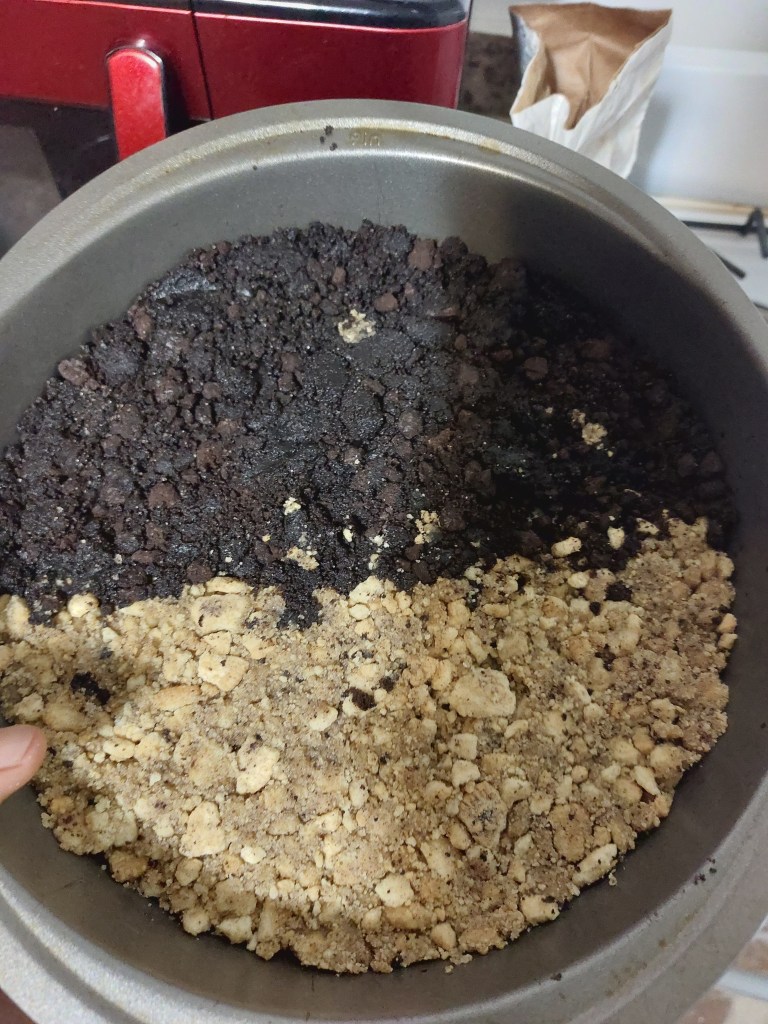
To start things off you want to make sure that the ingredients are all at room temperature to avoid a lumpy mess. Next, remove the frosting from the oreos and crush them and add the sugar and melted butter and mix. Once mixed bake this in the oven at 350 degrees for 9 minutes.

This was more tedious than it looked

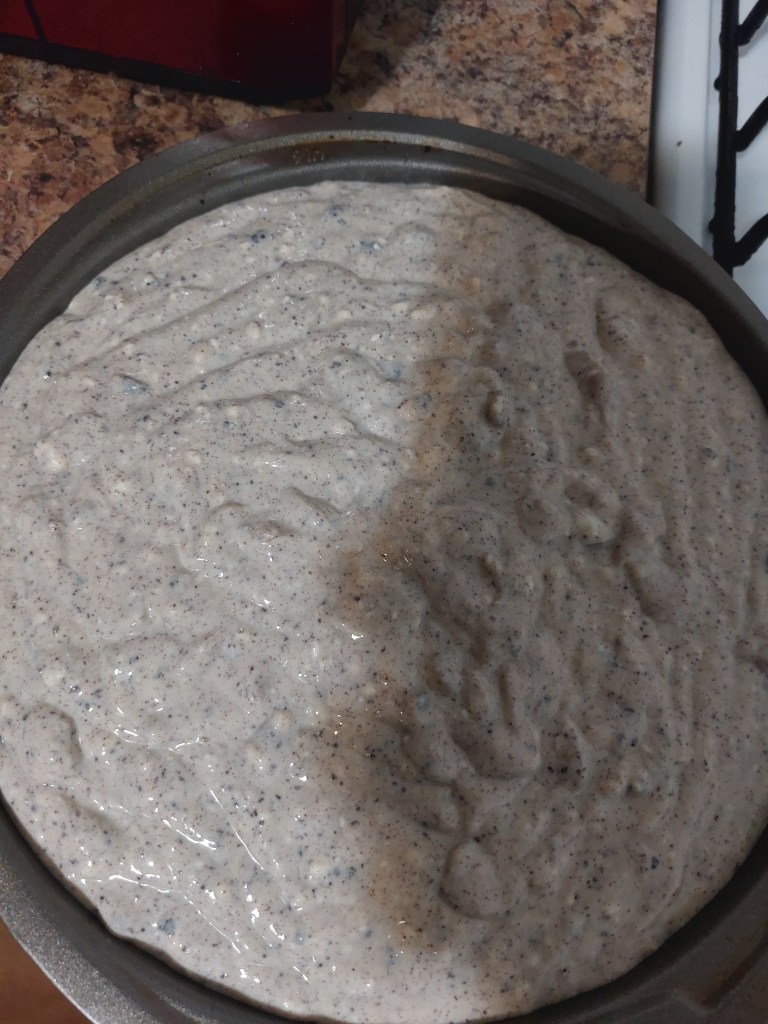
While the crust is baking mix cream cheese, Greek yogurt, vanilla extract and lemon juice, sugar together in a large bowl. Add one egg at a time until the mixture is smooth, be careful to not over mix. (I will also add that I took an extra step and crushed up more oreos to mix into my filling for this so this was a bit of an experiment). By this time the crust should be done so remove from heat and reduce the oven temperature to 325.

It looks gross but it will taste good trust me.

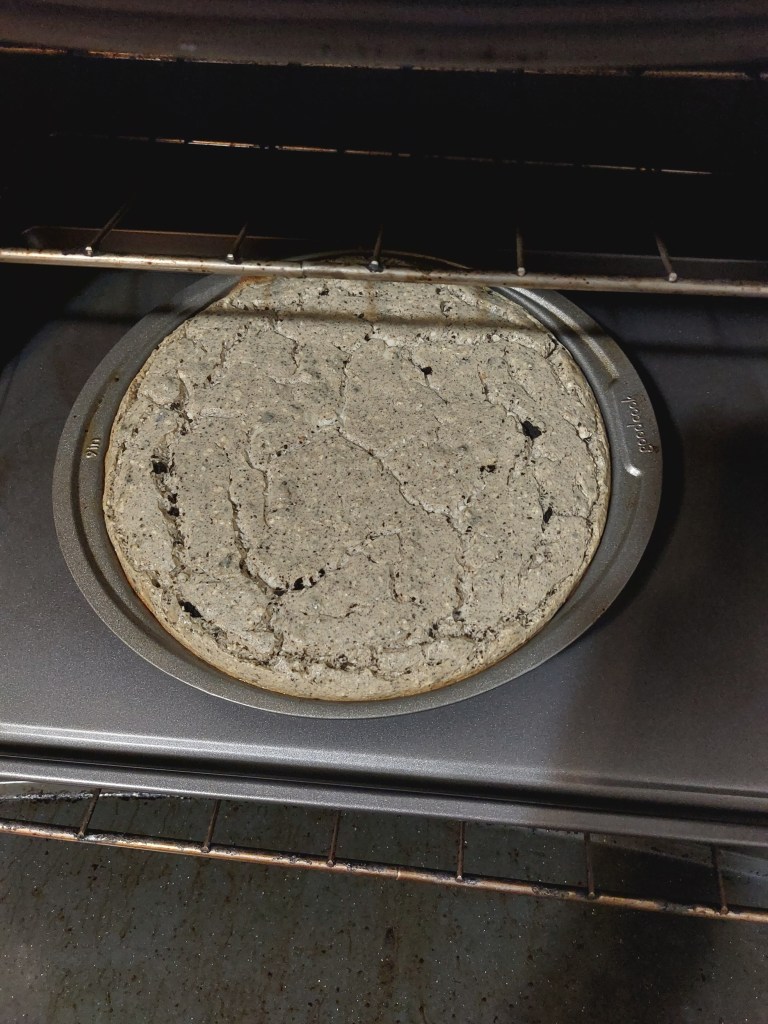
There is an extra optional step depending on if there is topping or not (or depending on how much you care) of adding a one inch layer of water to a roasting pan. This gives your cheesecake a “water bath” to create a steamy environment to bake in to avoid cracking. (This is a step I normally skip because I never had cracking in my cheesecakes but I believe I should have done one this time)

Should have had a water bath

Once the crust is out of the oven, pour the filling into the pan and place into the oven for 45 to 55 minutes or until the filling is set and juggles in the middle like jello. Cut off the oven and Crack the oven door open slightly and let sit for an hour. Take any remaining oreos and break them into crumbles or halves and place over top before chilling for at least 8 hours.

The finished product, should have had a water bath but was delicious nonetheless.

The finished product was pretty good. I suspected I had a hint too much of lemon juice but it was different from my previous cheesecakes and a water bath could have been useful but it was a different take than last time I made cheesecake. It was still devoured by everyone for Thanksgiving so I will take that as a win. Until the next time dear readers, stay safe and healthy this holiday season. Excelsior!

Gone in 60 seconds

Adding a little spice

This month I want to take a brief detour into another personal development skill: cooking. I enjoy it thoroughly and i find it therapeutic to be able to create new dishes in the kitchen. My latest culinary adventure has led me to a nutritious and flavorful low calorie meal: creole shrimp.

For this recipe you will need the following: 1/2 cup of chopped onion, 1/2 cup of chopped green pepper, 4 chopped mushrooms (I had chopped a good two handfuls of pre sliced mushrooms), 1 cup of canned tomatoes, 1/4 teaspoon of oregano, 1/4 teaspoon of salt, 1/8 teaspoon of pepper, 1 pound of shrimp peeled and deveined. Outside of this original combination for the recipe I also added 1 teaspoon of old bay seasoning, 1 teaspoon of Mrs. Dash original blend seasoning, 1/2 teaspoon of paprika. 1/2 teaspoon of red pepper flakes and 1/4 teaspoon of chili powder to spice things up. I also forgot to get bell pepper so I substituted this for asparagus.

To get things started, combine all of the vegetables and spices in a large saucepan. Cook the veggies and spices for 10 minites over medium heat. In the meantime, cook the shrimp over medium heat for the same time with the seasoning blend from above. Once the shrimp has been cooked and the vegetables are nice and tender combine all ingredients in the saucepan and stir. After 5 minites remove the saucepan from the heat and serve!

Soups on!

Cooking is a vital skill all need to keep in their repertoire. This meal is a quick, healthy and nutrient dense meal that is low calorie and it absolutely delicious. Until the next time dear readers, excelsior!

Aging like fine wine

Building credit takes time. As I often tell my clients: credit building is a marathon rather than a sprint. The age of credit is an often misunderstood concept as in today’s fast paced society it is something that can be very important to improve credit history.

The average age of accounts is one of the factors that contribute to your overall Length of Credit History, which itself accounts for 15% of your total FICO credit score. This is calculated as a simple, non-weighted average; it’s the sum of the ages of your credit accounts divided by the number of accounts that you hold. These are also ranked in importance: the age of your oldest account, average age of accounts, and age of your newest account.

When you close a credit card, it can stay on your credit report and continue to age for 10 years. This means that you could open a credit card today, cancel it tomorrow, and 9 years from now, it would still show up on your credit report and contribute to your credit history.

An example of this would the average of your credit cards. Card 1 is 7 years old, card 2 is 3 years old and card 3 is 2 years old. We could take the average between the 3 cards to obtain an average age of 4 years between all credit cards. If you close one of the cards and fast forward 10 years card number 1 is now 17 years old, card 2 is 13 years old and card 3 is 12 years old. Taking your average age of accounts to 14 years old. This can still be in effect due to credit card accounts lingering on your credit report can still effect your history for up to 10 years. The most important concept to remember is not to close the longest (oldest) open trade as this will hurt your average age of your accounts and your credit score. Closing the newer cards will have less of an impact due to them being newer, but it is important to remember when closing a credit card that there is credit capacity (amount of available credit vs amount of credit used) that is lost when this happens. If the capacity is reduced thus will also hurt your score if your balances are too high on your remaining cards. Only close out credit accounts as needed (if they’re not installment loans of course).

Credit utilization can be tricky but if one knows how to navigate the complexities it can be a rewarding tool. Letting time work it’s magic on your open credit accounts cab do wonders for your score. Until the next time dear readers excelsior.

Inquiring minds

In the world of credit there are many different factors that build and tear down a score. One common conversation I often have in regards to credit is regarding inquiries. There are many misconceptions as to what an inquiry is and I will explain and debunk these misconceptions in this post.

Inquiries are entries that appear on your credit report when your credit information is accessed by a legally authorized person or organization (including yourself). Most commonly, inquiries are the result of an application for credit, goods or services, an account review made by a company that you already do business with, or a preapproved offer of credit that has been sent to you.

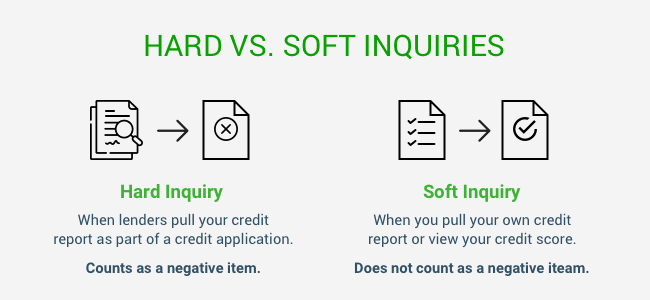
There are two types of credit inquiries: hard inquiries and soft inquiries. Account reviews and preapproved offers fall under the category of soft inquiries, which have no effect on your credit scores. Hard inquiries include applications for credit or certain services, and although their impact is minimal, they can temporarily affect your scores. It is good practice to get your credit report checked throughout the year to view hard and soft inquiries.

A hard inquiry appears on your credit report when a lender checks your credit in response to an application for a new loan, credit card or line of credit. Whenever you seek new credit, there’s the potential for a new debt, which may temporarily lower scores slightly until you can show that you are managing that new debt responsibly. Credit scoring models such as those from FICO or Vantage sometimes account for that increase in risk by lowering your scores slightly. Typically, most score models show hard inquiries typically lowering scores by less than five points.

Hard inquiries remain on your credit report for up to two years, but as long as you keep up with your payments, credit scores often rebound from an inquiry within a few months. And, most credit scoring models no longer count a hard inquiry in score calculations at all after 12 months.

Soft inquiries appear on your credit report when someone runs a credit check for reasons unrelated to lending you money. These events are not associated with greater repayment risk, so they have no effect on your credit scores. Common examples include but are not limited to: utility companies for services and equipment, auto insurance companies, credit card companies that you have accounts with currently, as well as a credit review with a lender in a bank or credit union.

It is ideal not to accumulate too many inquiries as they can lower your scores over time if one is rapidly shopping for credit. There are an exception to this however. If there are multiple inquires from a car dealership to other lenders when you finance a car (this is called shotgunning the credit as it goes to mulltiple lenders) within a certain period of time it is counted as one inquiry. Inversely, if there are multiple inquires foe different types of credit in a period of time that is a sign of concern to a lender. It is important to check your score reports at least once a year to ensure all inquires on your report were authorized as unfamiliar inquiry activity could be a sign of either an error or criminal activity. You can review your annual credit report for free Here.

Inquiries are as I call the “cost of admission to credit”. These inquires make up a small percentage of your credit score but it is important to not go overboard with shipping for credit and recognize that even if they are small, inquires can still have an effect on your credit score. Until the next time dear readers, excelsior.

Personal Accountability

Today’s times allow for a lot of things to be given to us quickly and efficiently. The food we order is fast, the internet used for work or home is high speed, and text or email messages can be received in seconds. There is one thing that isn’t quick to be taken up in recent years: personal accountability.

Today there is constant finger pointing and blaming for various issues. While there are many catalysts for different events, there is still the ability to ensure that your own contributions to the world around you are positive. Being accountable for ones actions and words helps make the lives of everyone involved in your life better.

How often do we leave a matter unattended for the next person to attend to? How much do we defer trivial matters to others and complain when things are not done to our specifications? How often do shift the blame to others and not realize that when one finger points to a target that there three pointing back at ourselves.

I attended a class known as QBQ (the question behind the question) several years ago and this class helped me identify where I as an individual could help in improving my own situation. It helped shift my thinking from “what are you doing to help this situation?” To “how can I help better this situation?” The most important aspect that I took away from this class was a more heightened sense of personal accountability in my work and my professional life.

Today’s times have shown that we can’t always wait for a change to happen in our lives. Waiting for proper windows of opportunity is an important thing but true change also begins with you. Be the change in the world you wish to see. Find ways to make a situation better for yourself by asking questions such as “how can I take ownership of this issue and solve it?” “How can I improve my situation?” Oftentimes we tend to let our circumstances dictate our outlook but we must be able to shape our outlook to better our circumstances. Once we take ownership of the situation and make ourselves accountable and put forth our best efforts in whatever the situation might be, there will be more positive results and an expanded way of thinking for future problems.

Taking personal accountability and ownership in life is key to success in business, in life and it helps shape your mindset in terms of how to deal with issues that arise in life. When we put off or pass the buck of responsibility we merely defer a situation until it gets worse. From putting off a budget, neglecting a project that your group had been working for several months and no one is getting ahead, changing careers because of minor interpersonal drama. Personal accountability and ownership will help shape your mind to ask the deeper questions and get to a solution rather than letting it sit. Until the next time dear readers. Excelsior!

Limited to limitless

In my realm of expertise, I have been exposed to credit ranges across the spectrum. Some are great, some are good, some are ok and some need work and that’s alright with me. Credit is something that some treat like a sprint, but it truly is more of a marathon. Some treat some items on their credit (collections, current payment history, credit card limits, etc.) as an individual guitar solo rather than looking at all the items on their credit report as a symphony. One common thing I come across is a combination of income and credit. You could make excellent money, but your credit could be excellent, fair, poor, or nonexistent. I have also seen the inverse with those that make less money as well in addition to those in the middle of the income ranges, I have seen. A concept that eludes some of us is the concept of having limited credit.

The terms “limited credit” and “no credit” are typically used synonymously to describe anyone who has not been the primary account holder on a credit card or loan for three years. This is something commonly seen with those that have bought everything with cash only or just never had a need to get anything on credit. Additionally, some lenders might not even report to the credit bureau which is what sometimes is referred to as “invisible credit”. If you suspect your credit history is insufficient because of a data problem, contact your lenders and check whether your personal information on file with them is correct (i.e. name, date of birth, social security number, etc.).

Lending companies/financial institutions give inexperienced consumers the benefit of the doubt to a certain extent in that the terms they offer them are better than those given to people with bad credit. However, you must demonstrate the ability to consistently make on-time payments to your monthly financial obligations as well as maintain balances below your credit limits in order to build the requisite credit history to be trusted with higher credit lines as well as competitive rates and rewards.  An example of this would be if someone with limited credit requests a loan for a new auto. With zero history (keeping in mind your credit report is like your report card for your credit) it isn’t normal to see high balance loans for an auto with such limited history (unless there is a very good strong cosigner or a significant down payment). Without a down payment or cosigner, there’s a good chance that you could end up with a smaller car loan to start out (even if you make excellent money) due to the lack of history to prove creditworthiness based on the risk to the lender or receive a denial for credit. Once the loan has been successfully paid off (and provided a great pay history) that loan could be used as the basis for another perhaps larger loan in the future.

No matter what age you are or where you are in your credit-building journey, a lender typically relies on a credit score to help decide whether to approve you for a credit card or loan. There are numerous ways today to build your credit. From online banks to even your own bank or credit union there are programs designed to start off your credit journey before your next big purchase. From share-secured loans to secured credit cards, there are ample opportunities to build credit in today’s times. Consult your local bank/credit union for different credit building products to help you in your financial journey. Until the next time dear readers. Excelsior!

A quick update

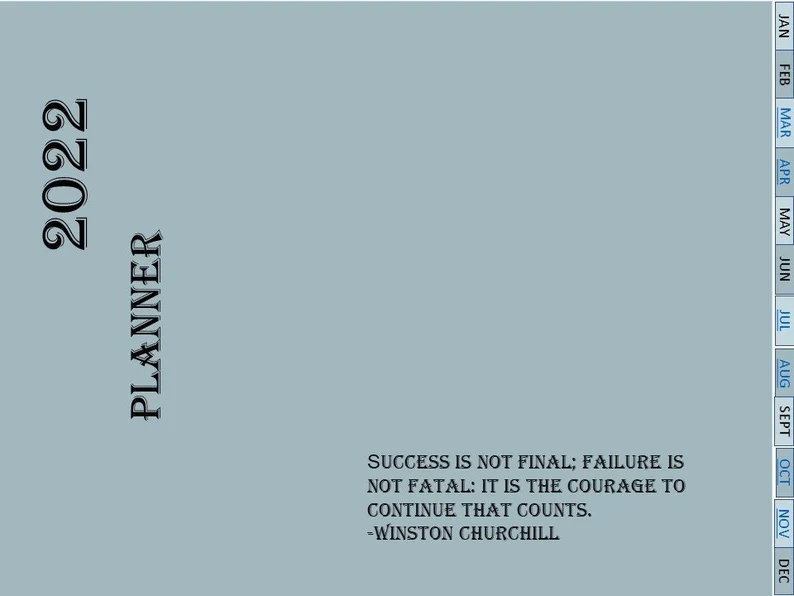
The last few weeks have been absolutely jam-packed full of activity but I wanted to share a quick project I have been working on. I recently created a digital planner for daily organization as well as short and long-term goal planning as well as a money tracker for monitoring spending habits. It is a useful productivity tool, maintaining an organized workflow and schedule is key to success. This is one of a few organizational tools I plan to unveil in the coming months via my Etsy shop. Stay tuned for updates when they become available. In the meantime, stay tuned for my next post dear reader, excelsior!

Your best financial behaviors

I have covered a variety of financial topics in many posts, but it has come to my attention that there is one topic that is the foundation of financial education. Everyone has a philosophy of life, habits, proclivities, and leanings towards various ways that they live life. This applies to money and our spending habits as well as our beliefs about money. This concept is known as behavioral economics, and this is prevalent in our day-to-day life in ways that you may not realize.

Behavioral economics studies the effects of psychological, cognitive, emotional, cultural, and social factors on the decisions of individuals and institutions and how those decisions vary from those implied by classical economic theory. This studies how people react when markets and other economic changes drive decision-making made amongst consumers. Common examples of this would be the supply and demand of PlayStation 5 consoles. There is consistent demand for the consoles and the supply is never stable enough courtesy of scalpers and others who have bought them. This would drive the consumer to either wait for the demand to drop and supply to increase (such as yours truly) or pay a higher premium for one from another source such as eBay. Another example would be the toilet paper shortage during the beginning of the coronavirus pandemic among other supply shortages courtesy of panic buying considering world events and fears of lacking supplies for survival. These purchases were made based on scarcity, excitement, and fear. Scarcity makes a consumer value something more because it’s in limited supply and some might be willing to pay more for it or if one is willing to wait, they can delay that gratification until a later date.

Our beliefs about money can be formed by the market as well as by those around us. Growing up, we’ve all seen how our parents have handled money and their financial choices for better or worse. These experiences can shape our own viewpoints and we can also study more on our own to learn more about finance. From a coupon clipper, a shopaholic, a minimalistic saver, or a person who likes to enjoy the finer things in life. This can be found in our spending as well as investing style from a more conservative investor buying growth/value stocks to a more aggressive investor looking for growth in more speculative stocks. Some may be more risk and loss averse while others may not be and that can shape decision-making in terms of investing and spending. Some may be more prone to impulse and spend their funds for whatever might be seen. Some may subscribe to the prospect of hustle culture and building streams of income. Some may be more content to have the essentials and nothing more and that is fine for them. Others might think that wealth corrupts and might be more financially inclined to not aspire for wealth to excess. Our social circles also can help determine our financial potential. From friends who always go on lavish nights on the town to those who are content to have a game night a home. The choices of those around us can be another influencing factor.

No matter the school of thought regarding money, it is imperative that we continue to educate ourselves about how money works and how to leverage it as needed. Without proper financial education, there is stagnation and no growth. Without that growth, we cannot reach our full financial potential in whatever walk of life we may be in. I encourage you, dear reader, to evaluate your feelings when making your next purchase. Is it vital to survival? Can the purchase be delayed if needed? Can you afford to go out on the town with friends? Are you hitting your savings and investing goals? I urge you to examine your spending habits and evaluate your goals and see how you can reach what you are seeking to accomplish financially. Until the next time dear reader. Excelsior!