Limited to limitless

In my realm of expertise, I have been exposed to credit ranges across the spectrum. Some are great, some are good, some are ok and some need work and that’s alright with me. Credit is something that some treat like a sprint, but it truly is more of a marathon. Some treat some items on their credit (collections, current payment history, credit card limits, etc.) as an individual guitar solo rather than looking at all the items on their credit report as a symphony. One common thing I come across is a combination of income and credit. You could make excellent money, but your credit could be excellent, fair, poor, or nonexistent. I have also seen the inverse with those that make less money as well in addition to those in the middle of the income ranges, I have seen. A concept that eludes some of us is the concept of having limited credit.

The terms “limited credit” and “no credit” are typically used synonymously to describe anyone who has not been the primary account holder on a credit card or loan for three years. This is something commonly seen with those that have bought everything with cash only or just never had a need to get anything on credit. Additionally, some lenders might not even report to the credit bureau which is what sometimes is referred to as “invisible credit”. If you suspect your credit history is insufficient because of a data problem, contact your lenders and check whether your personal information on file with them is correct (i.e. name, date of birth, social security number, etc.).

Lending companies/financial institutions give inexperienced consumers the benefit of the doubt to a certain extent in that the terms they offer them are better than those given to people with bad credit. However, you must demonstrate the ability to consistently make on-time payments to your monthly financial obligations as well as maintain balances below your credit limits in order to build the requisite credit history to be trusted with higher credit lines as well as competitive rates and rewards.  An example of this would be if someone with limited credit requests a loan for a new auto. With zero history (keeping in mind your credit report is like your report card for your credit) it isn’t normal to see high balance loans for an auto with such limited history (unless there is a very good strong cosigner or a significant down payment). Without a down payment or cosigner, there’s a good chance that you could end up with a smaller car loan to start out (even if you make excellent money) due to the lack of history to prove creditworthiness based on the risk to the lender or receive a denial for credit. Once the loan has been successfully paid off (and provided a great pay history) that loan could be used as the basis for another perhaps larger loan in the future.

No matter what age you are or where you are in your credit-building journey, a lender typically relies on a credit score to help decide whether to approve you for a credit card or loan. There are numerous ways today to build your credit. From online banks to even your own bank or credit union there are programs designed to start off your credit journey before your next big purchase. From share-secured loans to secured credit cards, there are ample opportunities to build credit in today’s times. Consult your local bank/credit union for different credit building products to help you in your financial journey. Until the next time dear readers. Excelsior!

A quick update

The last few weeks have been absolutely jam-packed full of activity but I wanted to share a quick project I have been working on. I recently created a digital planner for daily organization as well as short and long-term goal planning as well as a money tracker for monitoring spending habits. It is a useful productivity tool, maintaining an organized workflow and schedule is key to success. This is one of a few organizational tools I plan to unveil in the coming months via my Etsy shop. Stay tuned for updates when they become available. In the meantime, stay tuned for my next post dear reader, excelsior!

Your best financial behaviors

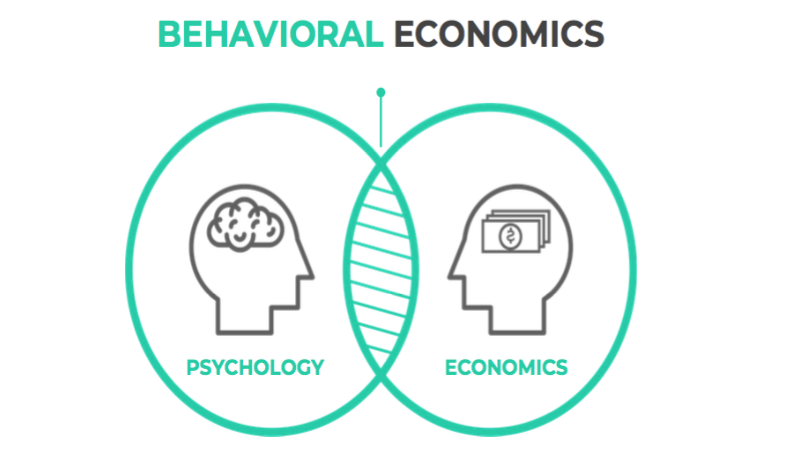
I have covered a variety of financial topics in many posts, but it has come to my attention that there is one topic that is the foundation of financial education. Everyone has a philosophy of life, habits, proclivities, and leanings towards various ways that they live life. This applies to money and our spending habits as well as our beliefs about money. This concept is known as behavioral economics, and this is prevalent in our day-to-day life in ways that you may not realize.

Behavioral economics studies the effects of psychological, cognitive, emotional, cultural, and social factors on the decisions of individuals and institutions and how those decisions vary from those implied by classical economic theory. This studies how people react when markets and other economic changes drive decision-making made amongst consumers. Common examples of this would be the supply and demand of PlayStation 5 consoles. There is consistent demand for the consoles and the supply is never stable enough courtesy of scalpers and others who have bought them. This would drive the consumer to either wait for the demand to drop and supply to increase (such as yours truly) or pay a higher premium for one from another source such as eBay. Another example would be the toilet paper shortage during the beginning of the coronavirus pandemic among other supply shortages courtesy of panic buying considering world events and fears of lacking supplies for survival. These purchases were made based on scarcity, excitement, and fear. Scarcity makes a consumer value something more because it’s in limited supply and some might be willing to pay more for it or if one is willing to wait, they can delay that gratification until a later date.

Our beliefs about money can be formed by the market as well as by those around us. Growing up, we’ve all seen how our parents have handled money and their financial choices for better or worse. These experiences can shape our own viewpoints and we can also study more on our own to learn more about finance. From a coupon clipper, a shopaholic, a minimalistic saver, or a person who likes to enjoy the finer things in life. This can be found in our spending as well as investing style from a more conservative investor buying growth/value stocks to a more aggressive investor looking for growth in more speculative stocks. Some may be more risk and loss averse while others may not be and that can shape decision-making in terms of investing and spending. Some may be more prone to impulse and spend their funds for whatever might be seen. Some may subscribe to the prospect of hustle culture and building streams of income. Some may be more content to have the essentials and nothing more and that is fine for them. Others might think that wealth corrupts and might be more financially inclined to not aspire for wealth to excess. Our social circles also can help determine our financial potential. From friends who always go on lavish nights on the town to those who are content to have a game night a home. The choices of those around us can be another influencing factor.

No matter the school of thought regarding money, it is imperative that we continue to educate ourselves about how money works and how to leverage it as needed. Without proper financial education, there is stagnation and no growth. Without that growth, we cannot reach our full financial potential in whatever walk of life we may be in. I encourage you, dear reader, to evaluate your feelings when making your next purchase. Is it vital to survival? Can the purchase be delayed if needed? Can you afford to go out on the town with friends? Are you hitting your savings and investing goals? I urge you to examine your spending habits and evaluate your goals and see how you can reach what you are seeking to accomplish financially. Until the next time dear reader. Excelsior!

The mental game

The pandemic has caused more stress levels about work, health, money, relationships, and other parts of life. The economy and world events and constant inflow of information on social media are causing a never-ending flood of stimulation. All of these factors and other underlying situations we find ourselves in will cause us to feel drained mentally, physically, spiritually, emotionally and this can cause us to be off-center in whatever it is we do in life. Unlike a cold or flu, one cannot always detect when we’re in need of a mental break, and keeping a strong mind is paramount in today’s times.

In the world of customer service and sales, there is constant switching of gears and situations that our minds must figure out in order to get through the day. I personally have my own ways to help me stay on top of my mental game for what I do for a living.  There are numerous ways to keep your mind functioning in tip-top shape but I will highlight some of my favorite methods in hope that you can see how they work for you or find some of your own.

Method 1: Physical exercise

I am a firm believer in having a healthy body. Gym or no gym I have a workout plan I utilized that yielded me good results. It is scientifically proven that exercise has numerous benefits such as benefits to bone health, energy levels and gets the blood flowing to wake you up more before you head to the shop, office, or wherever you work. Utilize various workouts from cardio, plyometrics, yoga, powerlifting, etc. no matter what keep moving and work that heart rate up. Your body will thank you for it.

Method 2: Remembering your why and positive self-talk

Goals are achieved by remembering what got you there and sticking to them. Maybe your goal is to close a million dollars in sales deals, win a sports competition, build a business. Whatever that goal is, remember to keep in mind WHY you are doing it. Is it to make a better life for yourself and your family? Is it to put your name in a record book for athletics? Is it to be the top salesman for your company to eventually become a sales manager? Keep your why in front of you and you will be able to keep onto your motivation to keep pressing forward. In conjunction with this, positive self-talk will help encourage you to keep up the great work. I recall a time in my childhood when my father would have me stand in the mirror and proclaim that “I am somebody, I am successful, I am capable” I would do this daily (and I still do to this day) and it would reinforce that no matter what I have what it takes to be successful in whatever I put my hand towards. These help with shaping confidence and instilling it deep within you. Even when you make a mistake treat it as a learning opportunity to improve, failure is fuel for eventual success.

Method 3: dealing with opposition (aka haters and doubters) are secret fans and blocking out excess noise

Focus is important in keeping your mental game in optimum efficiency. In life, you will have opposition and people who may prove to be naysayers and detractors. In life, there will be a constant conversation one any and everything and sometimes you might be the topic of conversation. It is important to block out the distractions that will take you off your path to achieving your goal (destructive habits/behaviors, associating with the wrong crowd, etc.) and forge ahead. There will be those that talk about you in the pursuit of your goals, give them something to talk about once you accomplish the goal you set out to accomplish. I am a believer that hecklers and naysayers are secretly a fan deep down somewhere inside and if you have some feel free to rejoice. To quote Winston Churchill “You’ve made enemies? Good. That means you’ve stood up for something sometime in your life.”

Method 4: knowing when to take a break and when to ask for help

It is important to be able to take a break as I have highlighted once before. I have learned that you cannot be switched to “on” 24/7 because our minds are like our bodies, there is a need for rest. Without taking a break (via a few minutes away from the work, taking that lunch break, going on vacation, or taking a day off) there is a risk of burnout. When burnout happens, it can hit like a truck and derail your ambitions to accomplish your goals. I believe in taking at least one personal day per month if I already don’t have a vacation planned out to give myself time to take care of myself and other matters of business if needed. Take time out to get a massage, cook a home-cooked meal, spend time with your loved ones or just read or spend time outdoors. It is also important to know if you get overwhelmed it is fine to ask for help. In our culture, we tend to neglect our vacation and sick time to take care of ourselves and we are prone not to ask for help and just try to take it all on alone. No man is an island, no one individual can make a car or even a pencil. It is fine to ask for help at work, with loved ones, or if needed professional help via a therapist.  It is ok to recognize that you need a break and need a second to breathe o need a little help. To continue to perform at high levels athletes need trainers to keep them sharp and recovery methods to keep their bodies in top form, the same applies for us as individuals.

I have shared some of the different ways that you can stay on top of your mental game and keep yourself in top form when getting to where you want to be in life. There is no one way to achieve having a better warranty on your mental health and these methods (and others) may vary in terms of your results. I encourage you to find ways that work for you if one doesn’t work for you. I hope that you can take what I have brought forth and use it to better your own mental state to stay sharp. Until next time dear readers, excelsior.

A little surprise

I am a firm believer in moving in silence. I keep my best work close to the chest. I have been working on a small project of mine for a little while and I have been waiting for the right time to share what I have been up to: I am officially a published author!

This is a short read but I am a believer in quality over quantity. I wanted to highlight some of my own life experiences during my initial foray into the corporate world. I elected to highlight my post college search for my first full time position and the lessons I have learned during that time. Originally, this was wrote in a journal format as I went along with my search. I had to make some modifications to the formatting to make it less like a journal and more like a guide with lessons Iearned during this point of my life.

I was quite nervous when the time came to publish but when I got the initial proofs I couldn’t help but to smile like a proud parent. This is the first work I’ve completed and I have more to come in the future. I have attached a link to find my work on Amazon here for those who would wish to see my latest work.. In the meantime, stay tuned for my next posting. Until the next time my friends, excelsior!

The wonderful world of refinancing

In the current landscape, refinancing is a useful tool for one’s financial journey. People refinance for a variety of reasons.  Many things such as home loans, car loans, student and personal loans can be refinanced. Let us look at what all goes into a refinance.

A refinance, or “refi” for short, refers to the process of revising and replacing the terms of an existing credit agreement, usually as it relates to a loan or mortgage. When a business or an individual decides to refinance a credit obligation, they effectively seek to make favorable changes to their interest rate, payment schedule, and/or other terms outlined in their contract. If approved, the borrower gets a new contract that takes the place of the original agreement. Borrowers often choose to refinance when the interest-rate environment changes substantially, causing potential savings on debt payments from a new agreement.

Consumers generally seek to refinance certain debt obligations in order to obtain more favorable borrowing terms, often in response to shifting economic conditions. Common goals from refinancing are to lower one’s fixed interest rate to reduce payments over the life of the loan, to change the duration of the loan, or to switch from a fixed-rate mortgage to an adjustable-rate mortgage (ARM) or vice versa (in regard to mortgages in particular). Note that during a refinance of a consumer loan (auto, personal, etc.) there are typically no closing costs associated with the refinance process unlike most mortgage loans

Borrowers may also refinance because their credit profile has improved, because of changes made to their long-term financial plans, or to pay off their existing debts by consolidating them into one low-priced loan. Changing interest rates in the economy are moving factors that people look for when shopping around for places to refinance. There must be a new or existing loan for there to be a refinance.

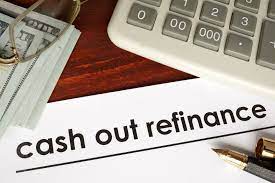
There are several types of refinancing one could take advantage of for their financial situation. One such refinance is a rate/term refinance for a better rate and a more advantageous term for repayment. Another is a cash-out refinance when your auto has more value (commonly referred to as loan to value or LTV) to pull a certain amount of funding against the worth of the vehicle. Another is a cash-in refinance where an individual can place money down to get to their ideal payment, rate, or term. Lastly, one could go for a debt consolidation refinance to help put their payments under one roof and one easy payment.

There are many benefits to a refinance such as lower payments, rates, and terms. Additionally, there is the convenience of consolidation of payments and an influx of cash for cash-out refinancing requests. There are some drawbacks to a refinance. One such drawback is if there is a movement back to the original term there is more interest to be paid during the life of the loan, shortened terms may increase payment potentially as well. If interest rates drop, you won’t get the benefit with a fixed-rate mortgage unless you refinance again and you could lose equity in your home depending on the mortgage refinance.

Refinancing is a powerful tool that can benefit you in the long run if done correctly. During my time in finance, I have seen many practical applications of refinancing that people use to their advantage. Until the next time dear readers, excelsior!

How sufficient is your credit?

A message on a credit report that can pop up is “insufficient credit”. This is a message commonly found for those who are young, operated primarily with buying things cash, or perhaps haven’t taken out a form of credit in a very long time. This isn’t necessarily a good or bad thing, but rather a good launching point towards developing health credit.

When applying for credit, lenders are only allowed to use a specific set of criteria to evaluate an application. Insufficient credit history indicates that the applicant doesn’t have enough accounts with a long enough payment history to approve an application. Banks, cell phone companies, and utility companies also look at this information when you set up a new account. As an applicant applies for bigger loans, lenders want to see that an applicant can handle multiple accounts responsibly. If someone only has a single credit card or too few accounts overall this could be a reason for rejection on a credit application.

On the other side of the coin, one wouldn’t want to go opening too many new accounts in a short time to build credit. On average it takes a minimum of 6 months for a new trade to make progress on an individual’s credit rating. Opening too many would be classified as an escalation of new debt. This could also be a reason to deny an applicant on a credit application. On another note, if there isn’t an update in activity (such as a credit limit increase or a new line of credit) for a substantial period, an individual’s credit could become stale and outdated causing it to be insufficient again. Keep in mind that the age of active credit lines also helps in building a score over time. These trades could be a line of credit or a credit card primarily.

Updating the personal information in one’s credit history is relatively easy. Building up one’s credit history takes more time and credit experts emphasize that there is no quick fix to a credit score. Experts typically recommend a few ways to help keep things in a positive light for one’s credit: 1) pay all bills on time to avoid them going into a collection action 2) opening a secured credit card or secure loan of some sort to start a history 3) reporting non-debt obligations If your lender uses a scoring system that counts that among other ways. Some lenders will overlook an insufficient credit history if the applicant is strong in other areas such as in debt-to-income ratios and stable proof of income to show how one could make payments.

Keep in mind that another common misconception is that checking accounts, debit cards and credit union accounts do not build credit. The checking account is designated for expenses and the debit card can be run as “credit” but is not truly linked to a credit line. Credit union accounts give you access to the credit union and all its services such as lending and credit building programs.   

Having insufficient credit can be difficult and confusing at times, but it doesn’t have to be. Feel free to reach out to your local financial experts at your financial institution and ask for ways to help establish a credit history for yourself. It will take time but the result of a healthy score and better rates are worth it. Until the next time dear readers, excelsior!

Debt vs income part 2: the less secure edition

Last time we discussed what the debt to income ratio was and how it effects one’s overall financial picture. This time we will discuss another ratio that effects your financial picture. The unsecured debt to income ratio is another important piece to understand your financial situation.

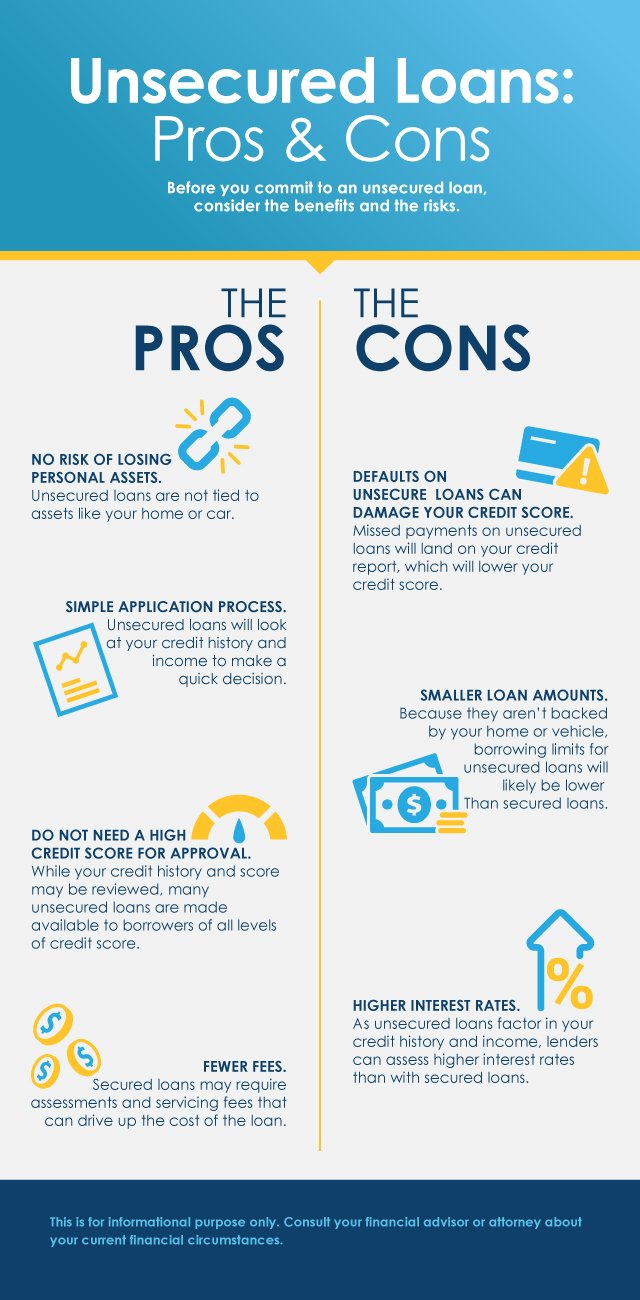
Unsecured debt is different from a secured debt as the debt isn’t tied to a piece of collateral such as a car or house. Types of unsecured debt would be credit cards, personal loans, lines of credit, etc. As such these debts are typically assessed higher interest rates than secured debt because of the risks associated with them in the event of a default of payment from a borrower or bankruptcy risk if the borrower ventured into this route.

The unsecured debt ratio (UDTI) equals the total of unsecured debt divided by the total annual income, multiplied by 100, which converts it to a percentage. For example, say Sarah carries $8,000 of credit card debt, $12,000 in personal loans and her annual income is $80,000. Divide the total unsecured debt of $20,000 by $80,000 to get 0.25. Then, multiply 0.25 by 100 to find that Sarah has an unsecured ratio is 25 percent. If Sarah increases her unsecured debt load her and her income remains the same her UDTI will increase. In the opposite scenario if Sarah’s income increases or her unsecured debt is paid down more her UDTI decreases.

Lenders don’t like to make additional unsecured loans to people with high existing unsecured ratios because that’s tacking on additional debt to someone who’s already overextended. Financial institutions often see unsecured ratios of above about 20% as potentially dangerous. When someone gets above 20 percent, the prospective lender might lower the amount it will lend or require the borrower to put up collateral. If the borrower exceeds 30 percent, they will likely encounter trouble just getting an unsecured loan, because lenders are concerned with the ability to repay and there is more risk associated with lending unsecured vs secured. It is ideal to be in a range that is reasonable for a borrowers existing debt and income level and to go beyond that could indicated many factors such as living off of credit cards and unsecured debt to a point where eventually it leads to an eventual endpoint of defaults, garnishments or legal actions to recoup losses from a borrower or even bankruptcy filled by a borrower who is unable to pay. None of which are a desirable outcome for the institution or the borrow to end up.

The unsecured debt to income ratio is an important snapshot of one’s financial picture in the eyes of a lender. It is important to know how it can help or hurt your overall credit and financial situation. I have included a link to assist in calculating your unsecured debt to income ratio as well. Please uses these tools to help with understanding where you are with your own debts to gain a firm grasp on what was covered today. Until the next time dear reader. Excelsior!

Debts vs income

From a credit perspective any things can be weighed in to determine how a lender can look at to determine eligibility for a loan. One such variable is what is called the debt-to-income ratio. This ratio is something that can determine your inflow vs outflow of money that you use for paying any debtor.

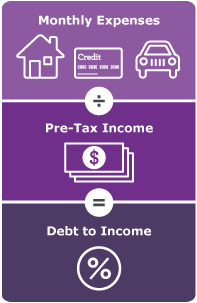
The debt-to-income ratio (commonly referred to as DTI ratio for short) is the percentage of your gross monthly income that goes to paying your monthly debt payments and is used by lenders to determine your borrowing risk. A low DTI ratio demonstrates a good balance between debt and income, while a higher ratio determines there is more going on behind the scenes.  The maximum DTI ratio varies from lender to lender. However, the lower the debt-to-income ratio, the better the chances that the borrower will be approved, or at least considered, for the credit application.  An ideal formula for determining DTI would be to divide the number of the total monthly debt payments (credit cards, loans, mortgages, rent etc.) over the total of gross monthly income (your income before tax and deductions). For example, if john owes $1200 in his monthly bills and his gross income is $2700 per month his overall DTI would be $1200/2700=0.44 or 44%. John has a more moderate debt to income ratio based on these figures.

Calculate Your Debt-to-Income Ratio – Wells Fargo

One can lower their debt-to-income ratio by reducing their monthly recurring debt or increasing their gross monthly income. Using the above example, if John has the same recurring monthly debt of $2,000 but his gross monthly income increases to $8,000, his DTI ratio calculation will change to $2,000/$8,000 for a debt-to-income ratio of 0.25 or 25%. Similarly, if John’s income stays the same at $6,000, but he can pay off his car loan, his monthly recurring debt payments would fall to $1,500 since the car payment was $500 per month. John’s DTI ratio would be calculated as $1,500/$6,000 = 0.25 or 25%. If John can both reduce his monthly debt payments to $1,500 and increase his gross monthly income to $8,000, his DTI ratio would be calculated as $1,500/$8,000, which equals 0.1875 or 18.75%. Ideally renegotiating interest rates, aggressive payment schedules including principal payments and generating more income through a second job or a side gig for other active or passive income are some ways that people have taken to rapidly clear up debt and improve their ratios

The DTI calculation in assessing the risk that a borrower poses to a lender in terms of their ability to repay. The lower their ratio (such as 35% or less as noted by an average between different lending companies and financial institutions) can be considered more favorable. Meanwhile a DTI of 36-49% leaves room for improvement and can be steered into a more manageable direction with proper education and action plans. For a DTI above 50% it is generally considered difficult for a borrower or spend or save as their money for unforeseen circumstances. The higher the DTI the more likely a borrower could be inversely impacted by any major financial event and presents more of a risk of default to a lender. The ideal situation for a customer and a lender is to be at a point where any new debt ought not to put the borrower or the organization doing the lending in an adverse situation that would harm the institution with a loss or damage an individual’s credit.

The Debt-to-income ratio is a commonly questioned concept for credit building and lending by consumers. I hope my summary of what DTI is and how it affects you will give you more insight to how to further gain more perspective on your own credit journey. For your convenience I have also included a link for a DTI calculator for you to plug and play with figures to see how your own DTI is faring. Until the next time dear readers. Excelsior!

Credit utilization

A common tactic utilized to build a credit history is typically acquiring a credit card of some sort. this along with other credit building programs begins one’s journey for getting into a more favorable credit range. Credit card usage is a factor that helps with establishing a score, but there are things about the usage that one must know.

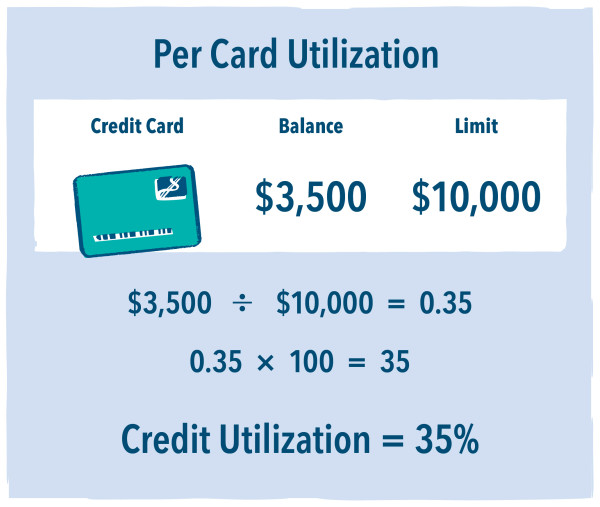
A credit card is a revolving tradeline (a trade line that when it is used and repaid you acquire a certain amount of the credit back). Credit cards have a capacity of use that displays how much of the overall limit has been used in a specific period. Credit utilization measures the balances you owe on your credit cards relative to the cards’ credit limits. If you never use your credit cards and there’s no balance on them, your credit utilization would be zero. If you typically carry a balance on one or more cards, you are ‘utilizing’ some of your available credit and credit score providers will take note. Credit utilization is a key piece of your credit score puzzle. Both FICO and Vantage, two big credit scoring agencies, list credit utilization as the second highest factor they consider when determining credit score. If your utilization ratio is high, it indicates that you may be overspending and that can negatively impact your score. This utilization ratio, as a rule of thumb, is recommended to be around 30 percent or less and is calculated by the total amount of card balances vs the amount of available credit. This means not maxing out existing credit cards. This utilization ratio can be improved by a variety of methods including, but not limited to; paying down current debt past the minimum payment, consolidation of credit card debts, getting another credit card, getting a credit limit increase, or leaving open existing cards once they’re paid amongst other methods.

How Does Credit Utilization Work?

Now that you know how to improve your credit utilization, it’s important to keep track of your progress. Check your credit card balances monthly and keep tabs on your utilization ratios. Many card issuers offer balance alerts via text or email, making it even easier to prevent your utilization ratio from creeping up. Monitoring your credit score can also provide motivation to keep your utilization in check. This was a short lesson, but vital nonetheless. Until the next time dear reader. Excelsior!