Limited to limitless

In my realm of expertise, I have been exposed to credit ranges across the spectrum. Some are great, some are good, some are ok and some need work and that’s alright with me. Credit is something that some treat like a sprint, but it truly is more of a marathon. Some treat some items on their credit (collections, current payment history, credit card limits, etc.) as an individual guitar solo rather than looking at all the items on their credit report as a symphony. One common thing I come across is a combination of income and credit. You could make excellent money, but your credit could be excellent, fair, poor, or nonexistent. I have also seen the inverse with those that make less money as well in addition to those in the middle of the income ranges, I have seen. A concept that eludes some of us is the concept of having limited credit.

The terms “limited credit” and “no credit” are typically used synonymously to describe anyone who has not been the primary account holder on a credit card or loan for three years. This is something commonly seen with those that have bought everything with cash only or just never had a need to get anything on credit. Additionally, some lenders might not even report to the credit bureau which is what sometimes is referred to as “invisible credit”. If you suspect your credit history is insufficient because of a data problem, contact your lenders and check whether your personal information on file with them is correct (i.e. name, date of birth, social security number, etc.).

Lending companies/financial institutions give inexperienced consumers the benefit of the doubt to a certain extent in that the terms they offer them are better than those given to people with bad credit. However, you must demonstrate the ability to consistently make on-time payments to your monthly financial obligations as well as maintain balances below your credit limits in order to build the requisite credit history to be trusted with higher credit lines as well as competitive rates and rewards.  An example of this would be if someone with limited credit requests a loan for a new auto. With zero history (keeping in mind your credit report is like your report card for your credit) it isn’t normal to see high balance loans for an auto with such limited history (unless there is a very good strong cosigner or a significant down payment). Without a down payment or cosigner, there’s a good chance that you could end up with a smaller car loan to start out (even if you make excellent money) due to the lack of history to prove creditworthiness based on the risk to the lender or receive a denial for credit. Once the loan has been successfully paid off (and provided a great pay history) that loan could be used as the basis for another perhaps larger loan in the future.

No matter what age you are or where you are in your credit-building journey, a lender typically relies on a credit score to help decide whether to approve you for a credit card or loan. There are numerous ways today to build your credit. From online banks to even your own bank or credit union there are programs designed to start off your credit journey before your next big purchase. From share-secured loans to secured credit cards, there are ample opportunities to build credit in today’s times. Consult your local bank/credit union for different credit building products to help you in your financial journey. Until the next time dear readers. Excelsior!
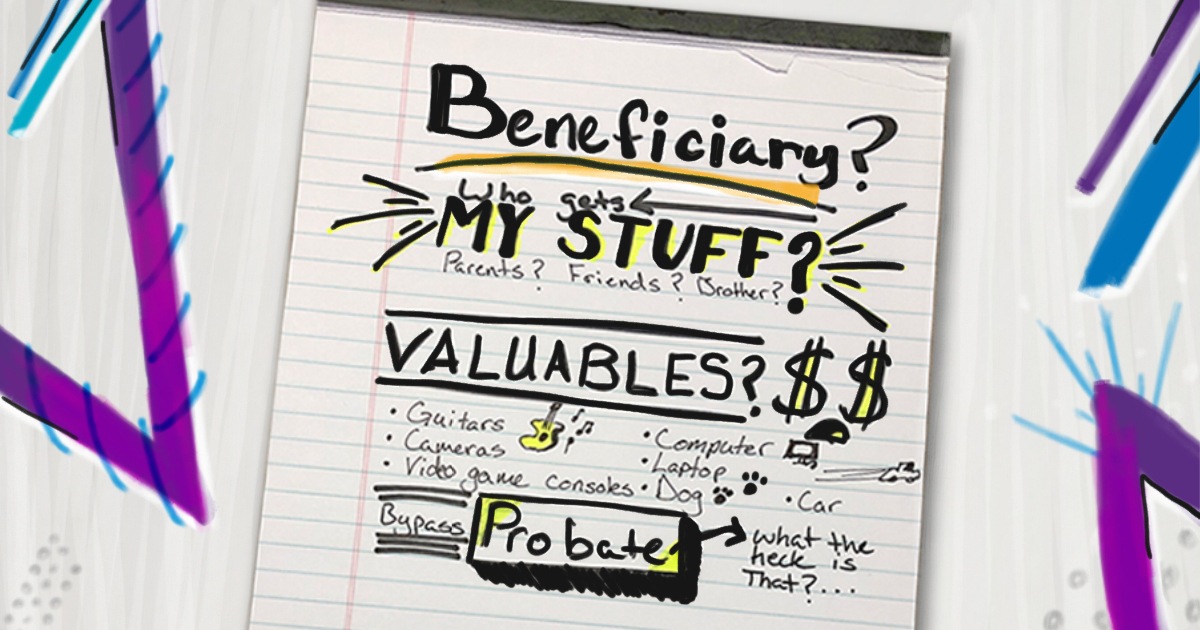
Beneficiaries: Assigning your money to infinity from beyond

What Is a Beneficiary and How Do I Choose One? | DaveRamsey.com

In my few years in my banking career I have seen many things but one thing that breaks my heart it is seeing someone without a beneficiary for their funds. This simple step can lead you to avoiding months if not years of hassle with the courts (or even court costs if necessary). It is relatively simple process that I preach on constantly whenever I see it, so get ready for me to get back on my soap box once again.

Intellectual Property: Don't Forget to Cover Your (Other) Assets ...

During this trying time, bank accounts, insurance accounts, brokerage accounts, retirement accounts, you name it. The sheer number of financial institutions that count us as customers may seem staggering and in the rush to open an account, we may have forgotten to add a beneficiary, or even simply postponed that last little detail until it was more convenient (or maybe someone hasn’t thought of one yet). Simply taking the time to ask about it, either you or the agent, will help move the conversation in the right direction for several reasons.

The first reason is that you want to make sure you want the people of your choosing to inherit your money. The person you can list can be a spouse, a child, a relative you trust, or even your trust (we’ll come back to that later don’t you worry). By naming your beneficiaries, you ensure that your money goes where you intend for it to go. That could be to a relative who really needs the financial assistance, a charity that’s close to your heart or whomever you want the money directed to. Without clear directions as to your wishes, executors or the state will follow only what the law says in distributing your assets and that’s not fun. You can name as many beneficiaries as necessary to split the proceeds as well if you would like as well. But do keep in mind if a beneficiary passes or any circumstance arise to compromise the beneficiary that these can be changed in most cases. This way everyone can speed up the probate process (because probate court is not a fun time for your family or the financial institutions reporting process) in addition there’s less going to a court appointed estate to be taken care of.

Legacy Planning Advisors, Inc.

The second reason is being able to update it on an annual basis. If you’re married, you can almost always change the beneficiary of your accounts without your spouse’s permission. In fact, this is one of the first recommendations I make in a divorce process. The worst that can happen is being forced to put the beneficiary designation back to the previous spouse if ordered by the court or other arrangements. You can change a beneficiary so make sure to periodically check to see if you have a beneficiary listed or if you need to change or add one (my recommendation is once a year or every six months if needed.) This will help for several reasons: 1) it keeps your information up to date 2) you can also use this way to limit family fighting over your assets once you’re gone. 3) Beneficiaries trump wills as well, so make sure you plan accordingly. (contact your estate planer regarding this to make sure things are done appropriately.

 Naming a beneficiary is an easy thing to skip over when opening an account, but this small step can save a huge headache – and potentially a lot of money – later. So take an inventory of your financial accounts today, and ensure that your wishes are up to date. Then resolve to keep the accounts updated annually so that you continue to avoid problems for yourself and your heirs. During this time, I urge you now, more than ever. Please get your beneficiaries in order if you haven’t considered it before because we are all human and a simple two-minute process can help save your loved ones from a longer time trying to take care of your estate. Until the next time friends. Stay safe and healthy, Excelsior!

Mucho Mullah Money Markets

Image result for money market accounts"

Savings accounts come in different shapes and sizes. One very good savings account type is a money market savings account. A money market account or money market deposit account is a deposit account that pays interest based on current interest rates in the money markets.

Now I am sure you are thinking “if markets are in the name doesn’t that mean my money is in the stock market?”, not quite my friend; those are money market funds that invest in money market securities. That is another animal to tackle later. These are governed similar to regular savings accounts. They are insured by the FDIC (unlike money market funds) and, although they may provide checking services, the restrictions of Federal Reserve Regulation D, a federal law that limits transfers and withdrawals from money market accounts, discourage their use for day-to-day payment purposes. In practice, money market accounts are distinguished from ordinary savings accounts by their higher balance requirements and more complex interest rate structure.

Image result for money market accounts"

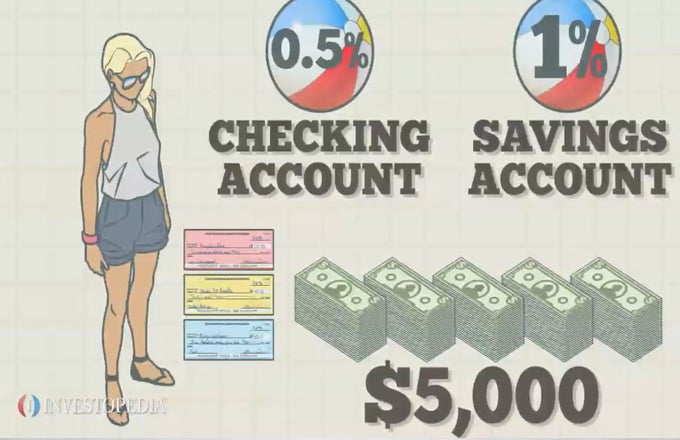
A money market account is like having a savings account with the flexibility of a checking account. And it almost always offers higher-than-usual interest rates (as an annual percentage yield) than savings checking accounts. You can write checks off a money market account and even use a debit card in some cases. These accounts are also insured under NCUA/FDIC as well

The downside is that with a money market account, you only get six transactions (transfers or withdrawals) per month, or per account cycle of at least four weeks. A transaction could mean writing a check, moving money from one account to another, or using a debit card to make a purchase. If you go beyond the transaction limit, you may get hit with a fee. For example, US Bank charges $15 each time you go over the limit of six. In addition to this, some will give you fees or not give you dividends for dipping below a minimum balance for the account. These are also subject to inflation as well and that could increase or diminish returns.

These accounts work very well with those who keep high checking balances, write few checks and make few debits out of their account each month, and desire to keep funds as liquid as possible if you have no interest in an IRA or a CD. These work very well for those that want to get the most for their money and save for special purposes as well such as an emergency fund, a vacation, a wedding or a new vehicle. There are other alternatives to these accounts such as rewards checking accounts, high yield savings, and even passbook savings accounts. These accounts have competitive rates, do some research and find what kind of accounts might work out for you!

After a month’s worth of writer’s block I hope I was able to give you an informative lesson on money markets. This month will be a double dose of learning so stay tuned for the next entry, excelsior!


The truth behind debit cards

As times change, technologies change, and we develop things to help make our lives easier and more convenient. One such example is the introduction of the debit card. This handy little piece of plastic eliminates the need to carry cash but, like anything else in life, it has its pros and cons. We will look at how debit cards work and some myths and facts about them as well.

Image result for debit card transactions

Debit cards are primarily tied to your checing account for purchasing. You can also access funds at the ATM with your debit card as well. There are multiple parts in a debit card transaction, and we’ll break down how the process works. When someone swipes a debit card through a merchant’s terminal, the terminal reads the magnetic stripe (or chip) in the card and transmits the data to a card processing network, this is called authorization. There are several card processing networks commonly found on the emblem on your card (Visa, MasterCard, star network, maestro, etc.).  The network ensures the pieces of transaction data are correctly formatted. Then, it performs a fraud analysis and forwards the information to the bank that issued the debit card. The issuer then validates that the card hasn’t been reported as stolen or lost, confirms whether funds are available in the cardholder’s account and then notifies the merchant, again through the network, whether the transaction has been approved.

Image result for debit card processing

Once authorized, the card transaction will need to be sent through the card processing network to be sent through to their bank. This might take several tries throughout the day, once sent through the transactions are recompiled and sent to the issuers. Once this is done the issuer posts the transaction to the customer’s account. That’s what is called clearing the transaction. Once cleared, the network will calculate how much the issuer owes the merchant and vice versa and payment is made. This could be done on the same day, next day or several days. Once the merchant is paid by the acquiring financial institution and the network is paid the transaction is settled.

Your 16-digit card number on your debit card is crucial in the transaction process. Typically, the 16 digits are comprised of a 6-digit bank verification number (to identify your issuing bank) to help verify the account being debited. The back of the card carries a magnetic stripe, signature panel or a code or a chip. Sometimes the issuer of the card will put a hold onto the funds on the card being used until the transaction is authorized and the transaction settles. To illustrate I have two examples of this: An authorization to purchase gasoline up to a certain dollar amount might be adjusted after the fuel is pumped into the tank, and an authorization to pay a certain dollar amount for a meal at a restaurant might be adjusted after the diner adds a tip to the total. This is what causes transactions to sometimes “disappear and reappear” on your transaction history on your accounts.

Image result for pin based transaction

Visa and MasterCard tend to process signature-based transactions, which typically use a so-called two-message process in which authorization and settlement are performed separately. The smaller networks usually handle PIN-based purchases, which occur via a single message that incorporates both authorization and settlement. Signature transactions are more widely accepted by different merchants while pin transactions are typically found at major retailers, gas stations and supermarkets. But as times go on the distinction between pin and signature transactions gets more intertwined with more places being more “swipe and go” and pin-based charges not needing a pin or a signature transaction not needing a signature.

Image result for disputing debit card transactions

Oftentimes there is confusion about debit card transactions on an account. When you look at your statement, the transactions down with a debit card may show up as POS transactions, with the merchant listed on the account. If you see an ACH transaction, this means that the money was directly debited from your account and that you did not use your debit card to complete your transaction. Understanding this can help you if you are trying to find out if someone accessed your account without your permission. It can also help you identify spending if something is not labeled correctly. For example, your local fast-food restaurants may be doing business under another name.

Image result for overdrafting account

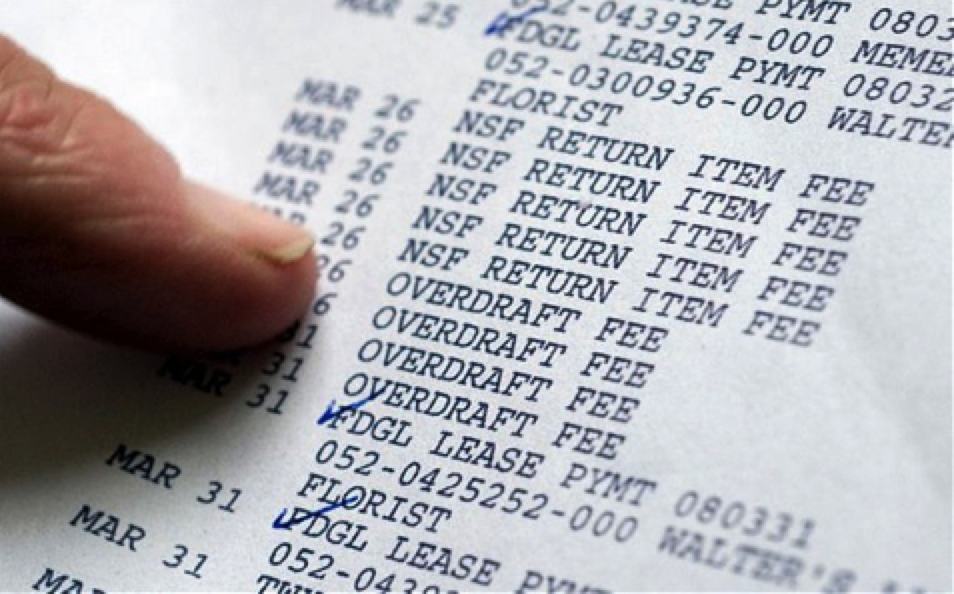
You can overdraw your account with a debit card. Some banks allow you to overdraw your account to a certain dollar amount and simply charge you fees for each transaction that they pay into the negative. Additionally, if you have checks clear later that night, you can find yourself overdrawn while using your debit card. It is important to keep a running balance on the account so that you know how much money you have available to you. Some charges may drop off the hold before they clear your account. It makes the money available again, which means that you can overdraw your account while using a debit card. Additionally, a check may not have cleared, which allows you to overdraw. Tracking your purchases yourself on paper or with an app is the best way to protect your money.

One of the biggest precautions you need to take with your debit card is to make sure that it or the information on it is not stolen. If your card is physically stolen, you need to call the bank immediately and cancel the card. Criminals might hack a website and steal the card information and then use it to make purchases online. Your bank may have sent you a new debit card at some point because there was a data breach at a merchant. If you find unauthorized transactions in your account, you need to call the bank immediately to find out what happened.

Another way that criminals are getting the information is through card skimming (one of the different types of fraud I discussed in my previous post on fraud.  The person can either swipe your card through the machine themselves (this happens at restaurants or other places where they take your card from you momentarily) or they can attach a skimmer to a machine where you use your card (like an ATM, vending machine, or RedBox). The skimmers are very small and blend in well. They can be difficult to spot. However, if one of these looks off to you, especially where you swipe the card, you should likely use a different ATM or vending machine. It is important to check your account regularly and watch out for unauthorized transactions, because the sooner you spot the problem, the easier it will be to resolve.

Debit cards are handy tools that can be used to may your day to day business as paper-free as possible. There are pros and cons to utilizing one and now with the knowledge of how these cards work, you can now operate with a better insight as to how these cards work and what all goes into each transaction. That is all I have for today, until the next time, invest wisely my friends.