Savings with a purpose

Savings are an important thing in life that is often neglected. Did you know the average American has less than $400 in their savings? This is an alarming number due to the simple fact that life is full of unexpected things and anything can and will happen so you must be prepared. Learning how to save no matter your situation will help you in the long run. Oftentimes I’ve heard “I’ll start saving later”, sometimes later could be too late. Too often do we wonder “where has my money gone?” it’s time to stop wondering and time to start telling your money where it needs to go. With that, there is no time like the present so let’s begin, shall we?

Image result for budgeting

The first step in achieving your savings goal is to make a budget. Making a budget isn’t difficult, but it can seem daunting if your finances need a big overhaul and you’re desperately trying to build up your net worth. There are plenty of helpful budgeting tools to get you on the right path, but the most important thing to remember is to make your budget realistic. When you’re trying to decide what to cut from your current spending, look for things you know you can live comfortably without. That means getting rid of your magazine subscriptions, cable, home phone, trips to the nail salon, or anything else that’s more of a want than a need. After you’ve made those cuts, divide your income into three piles: one to pay your bills and necessities with, one for savings, and one just for fun. Too strict of a budget will drive you crazy, and the best way to maintain good financial habits is by rewarding yourself, even if it’s just with a fancy latte or new outfit from time to time. It’s important to keep yourself financially healthy but it’s also important to treat yourself from time to time for your hard work.

Image result for focus on your goals

One thing to keep in mind is your why: why are you saving? Keep a goal in mind and you’ll be more likely to reach it by tracking it with your budget.  Even if you make the most amazing budget in the world, without setting any specific savings goals, the chances of you sticking to your budget are slim. Do you want to save up to buy a home? Pay down your student loan or credit card debt? Quit your job so you can backpack around Southeast Asia for a year? Keep yourself a rainy-day fund?  Whatever your goals are, give them price tags and deadlines to give your budget purpose and to keep you motivated.

Image result for emergency fund

There are several “terms” of savings to keep in mind here: emergency, short term savings, midterm, long term, and retirement. The emergency fund is, as the name implies, is for EMERGENCIES only. Things such as your car breaking down and needing repair, your furnace at home breaking, medical emergencies and other things of that nature. When life throws a wrench into your works you need to be prepared to get the wrench out.

Image result for long term savings

Short term savings are for things you know are coming up very soon (like within the next weeks or months up to 3 years max) these funds are readily available to be used for things that are small but you know they’re things that could happen but you are prepared for them. I call it the “surprise!” fund but others could call it the sinking fund. Things that pop up such as a family member in need, a bridal shower gift you forgot to get, or things to that extent. This is commonly referred to as the sinking fund which is separate from the emergency fund due to it being something you can use for more fun things as well such as a vacation.  Ideally, you want to be prepared for big emergencies, so the “surprise” fund is something I’d put second to your emergency fund.

Midterm savings are things you would plan for that aren’t an immediate event such as buying a new or used vehicle cash or having the startup funds for a business. These things are a year to 5 years out even up to 10 years. Instead of getting into debt with a loan it can help to establish savings for those big-ticket items so that way you have little to no debt for those larger expenditures.

Long term savings are more dedicated to things happening 10 or more years out. One such thing would be your planning to buy a home. Some save up for cash down payments on their home and you can also buy your home outright depending on the home’s price. A good way to ensure good savings for this goal would be a CD so your money is earning more interest while you’re waiting or placing it into an investment fund on some sort depending on your risk tolerance.

Another form of long-term savings is your retirement savings. As I mentioned with my previous IRA series you also have your 401k if your employer offers it or any other type of employer-sponsored retirement plan. You can also invest in a mutual fund or brokerage account with countless firms and funds for your retirement supplementation. Your employer might offer you matching for your retirement plan, it would be ideal to take the maximum match for stuffing your nest egg. Fidelity recommends placing at least 15 percent of your income into a retirement plan, this sounds like a lot but with payroll deductions and automatic transfers into such an account, it makes it easier to put away for retirement.

 

Image result for no excuses

I know what you might be thinking: how do I do that with all my different expenses and such? The answer lies in several different methods. One method would be having multiple savings accounts for your different purposes, akin to Dave Ramsey’s envelope system but only digitally. Setting up automatic transfers into these separate savings accounts will help you fill the different buckets for achieving your goals. Other cool tools are CDs for mid and long-term saving tools that you cannot touch without penalty to give you more incentive not to touch the money you’ve purposed. Even establishing a separate account for out of sight out of mind savings helps keep you honest and on task.

I hope this basic overview of savings helps spark an idea as to how you can save money for your future. Money is the most renewable resource that someone can obtain. No matter how much you earn you can save with a plan and dedication. Commit to save and you can achieve your goals. That is all for now, until the next time, invest wisely my friends.

Excess IRA Contributions

The last two sections of the IRA series were the heavy meat and potatoes of my 4-part IRA series, let’s get to dessert, shall we? So far, we have discussed what IRAs are and what they can do for you. We have also discussed how contributions and distributions typically work. What happens if there is an excess of what is supposed to be contributed into an IRA?

Image result for what do i do?

There are a number of ways that an IRA can receive an excess contribution and, if left unchecked, can cost you a six percent penalty on the excess contribution. The IRS provides specific procedures for removing excess contributions. Annual Contributions are excess contributions if the exceed the statutory contribution limit or the amount that the owner is eligible to contribute. If discovered before the tax return due date, with any extensions, the IRA owner may remove the excess without incurring the six percent penalty. The IRA owner may also distribute valid (not excess) contributions before the tax return due date, this is called a “deemed excess”.

Sometimes there are ineligible assets such as RMDs from their IRA/retirement plan accounts. Ineligible rollover amounts become regular contributions to IRAs and financial organizations must report only eligible rollover amounts as regular contributions. If the IRA owners are not eligible to contribute or have already made their annual contribution these regular contributions become excess contributions.

Image result for excess ira contributions

The IRA owner must decide how to correct their contributions. The allowed method depends on whether the excess contribution is corrected on or before the owner’s tax return date plus extensions or after the deadline. If it is corrected before the deadline, the six percent penalty will not apply and if it is not caught in time the owner must pay the six percent for each year that the excess remains after December 31. The extended deadline is generally October 15th., in addition, financial organizations can document elections of the IRA owners’ excess contributions on the proper authorization/ recharacterizations to be reported to the IRS.

Image result for excess ira  tax

Excess contributions removed on or before the deadline must be removed with the NIA (net income attributable). Many financial organizations assist IRA owners in calculating the NIA by using excess contribution form or other means. IRA owners have with eligibility being determined by an individual modified adjusted gross income can also utilize recharacterization to handle excess contributions. Roth IRA excess due to MAGI restrictions can generally be converted into a traditional IRA. Income restrictions do not apply to traditional IRA contributions, although certain restrictions exist for deductions in this case.  IRA owners may elect to recharacterize valid contributions as well.

Image result for deadline tax

After the deadline IRA owners can carry the excess forward by the owner treating the excesses an eligible contribution for the subsequent year and address it on their income tax return. The financial organization can also report it for the year of the contribution on a form 5498 but not do any additional reporting for the amount carried over for subsequent year contributions. The owner can also elect for the financial organization to distribute the excess amount but not the NIA or report it on the form 1099-R.

That concludes my IRA series. I hope you learned some valuable information on IRAs. These are amazing savings tools to help supplement your retirement savings. Please take advantage of these tools for your benefit. That’s all for now until the next time folks, invest wisely. Ciao!


IRA Distributions

In my previous entry I discussed contributing to the different types of IRAs. Once you hit the appropriate age you will need to make a distribution from your IRA. You might need to withdraw earlier but it all depends on your situation. There are many factors involved with IRA distributions so let us dive in shall we?

Image result for ira taxes

IRA owners generally must include traditional IRA distributions in their taxable gross income. There are, however, some exceptions to the rule: rollovers (if done properly), transfers, recharacterization, removal of excess contributions, revocation of regular/spousal/catch up contributions, distribution of basis (nondeductible traditional IRA contributions and after-tax rollover contributions). Taxable traditional IRA distributions taken before age 59 ½ are generally subject to an additional 10 percent early distribution tax, this is to encourage you not to take an early distribution if you can help it. This early distribution tax is paid when the persona taking out the early distribution files their federal tax return. The penalty tax does not apply, however in special circumstances such as age 59 1/1, death, disability, certain medical expenses, IRS levy, and qualified reservist distributions.  There are also waivers for the penalty tax in instances of taking qualified hurricane distributions provided by the disaster tax relief and other provisions provided during qualified natural disasters.

A Roth IRA qualified distribution may be taken tax and penalty free as long as: there is a 5-year waiting period, the owner is 59 ½, death, disability, or is a first-time home buyer. If these criteria aren’t met it is a non-qualified distribution. Roth IRAs are distributed in the following order: annual contributions, conversion and retirement plan rollover assets (by year), and earnings. These can also get the same penalty tax waivers as a traditional IRA. Both types of IRAs are subject to federal tax withholding up to 10 percent of the distribution unless the IRA owner elects the IRA owner elects not to have income tax withheld or have more than 10 percent of income tax withheld.

Traditional IRAs are subject to required minimum distributions (RMD) that means when you turn 70 ½ you must take a certain amount of funds from your IRA. Typically, these must be taken out by April 1st of the following year they become 70 ½ this the required beginning date (RBD), all required RMDs must be taken out by December 31st. You can also donate $100,000 of your IRA funds tax free to charity if you’re age 70 1/2 , these go directly to charity and are reported to the IRA owner to claim on their taxes. An RMD is calculated by the balance of the IRA and the distribution period. The distribution period is calculated by a number using the IRS life expectancy table. If you fail to take your RMD you will be subject to an excess accumulation tax equal to 50% of the amount that was needed to be taken out. for the sake of simplicity i’ve included a copy of the life expectancy table here.

Image result for ir designate beneficiary

When an IRA owner dies their beneficiaries are entitled to the remaining balance of the IRA. IF there are no beneficiaries, the owner’s estate Is generally entitled to the funds but in some cases the funds will just defer to the living spouse based on documentation. The IRA plan will specify how assets will be paid out when a beneficiary is names. Beneficiaries should also provide copies of the owner’s death certificate to the financial organization where the IRA is housed. Once obtain. need and all beneficiaries have been verified, funds can be distributed amongst the beneficiaries. If there is more than one beneficiary, the funds will be split reasonably between all beneficiaries. Depending on when the owner dies, distribution of funds for beneficiaries can get tricky in such events like the owner dying before the required beginning date. The IRS has developed a table for traditional IRA beneficiary options including default life expectancy payments if a beneficiary isn’t named by December 31st of that year. I have made this available for your viewing pleasure here

The beneficiary may take out distributions of any amount as long as the entire amount is withdrawn December 31st of the year containing the owners 5th anniversary of their death. Beneficiaries can also have life expectancy payments payed out starting December 31st of the year following the year of the IRA owner’s death based on the life expectancy of the beneficiary. As a beneficiary you can also move your deceased spouse’s IRA into your own through a direct transfer and distribute at any time or roll it over into their IRA, minus their RMD due for that year. You can also have a non-person beneficiary such as an estate or a trust if it is qualified and valid with identifiable beneficiaries listed. The same rules apply for Roth IRAs as well.

We’re reaching the end of my series on IRAs. I hope that the journey so far has been enjoyable. I also hope that I made these fun retirement assets as easy to understand and that you might even be considering getting yourself an IRA if you don’t already have one. Tune in next time for my next entry my friends. Invest wisely, ciao!

Image result for to be continued

IRA contributions

Image result for contribute to ira

In my last entry, I went over what IRAs are and why they matter. This entry will cover contributions to your IRA. You can’t retire without money and to fund an IRA you need to make sure you’re able to stay within certain limits set in place by the IRS. I know what some of you are thinking: “why do I have to limit what I put into my IRA? It’s my retirement money after all!” rest assured I will explain what this entails shortly.

Image result for ira contribution limit

As of this year, the IRS limits up to $6000 to be placed into an IRA each calendar year for regular contributions and $1000 max for catch up distributions. People with eligible compensation (like your earnings from work) of less than their max contribution can only contribute into their IRA equal to their work wages. You can also own a traditional and a Roth IRA, but you cannot go past the $6000 annual limit. Additionally, if you’re 50 or older before the end of the tax year you can make a catch-up contribution into your IRA as well. The deadline for contributions (regular, catch-up, prior year, etc.) is April 15th to the following calendar year.

Image result for modified adjusted gross income (magi)

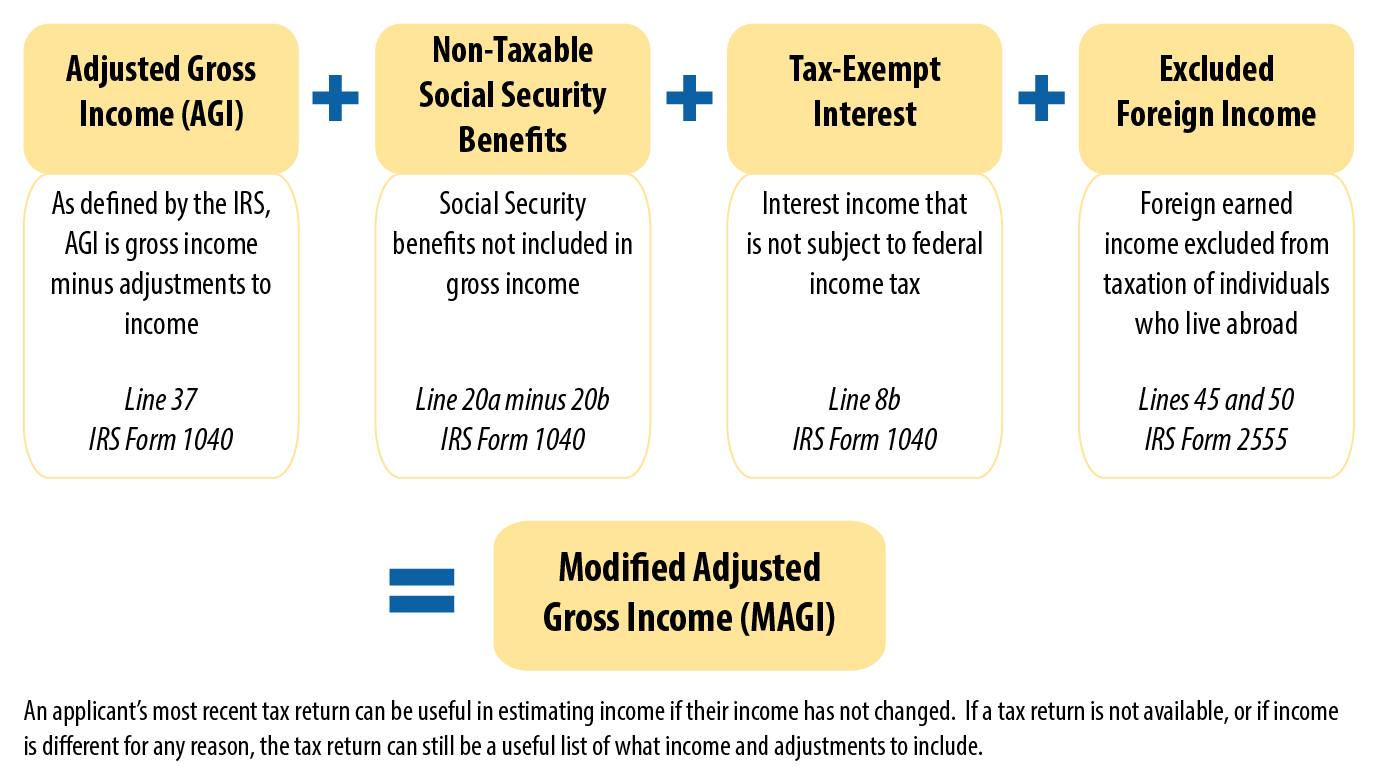
To contribute to a traditional IRA, you must be less than 70 ½ years old and eligible earned funds (usually from work) to place into the IRA. The same rule applies if your spouse wishes to contribute to your IRA but in addition, they must file joint on their tax return with you. Now there are factors regarding your contribution regarding deductions on your taxes. Such factors include having an employer sponsored retirement plan (i.e. 401k), marital status and modified adjusted gross income. Your financial custodian over your IRA cannot determine or track deductible contributions so keep that in mind as you contribute this will need to be done yourself. To further break down modified adjusted gross income you will want to make sure to account for having an employer sponsored retirement plan because there are different ranges for those different income tiers. The same rules apply to Roth IRAs as well. Roth IRA accounts can also receive transfer contributions, rollovers, and conversions (from traditional to Roth and vice versa). Your income has phase out ranges for Roth IRA contribution eligibility, this means however much you make could disqualify you for making a Roth IRA contribution. If your adjusted gross income is within the proper phase out range, however, the eligible contribution amount for a person is reduced. These levels can vary from year to year.

Image result for ira custodian

For financial organizations accepting IRA contributions it is required that they keep records of the contributions, the type and the year it was made. This is important for your records and on a typical form for collecting information you’ll see things pertaining to the IRA type, how much you’re putting in, the contribution type and when it was made, as well as any other info including your signature for the records. These contributions can also be reported to the IRS via a form 5498 and have their own tax form for each year you contribute. this information is compared to an individual’s income tax return to determine what’s taxable or tax advantaged as well.  Under some state laws it is possible to have a saver’s credit for contributions (see your states contribution rules for this). Typically. these are low to moderate income individuals and the credit is typically nonrefundable and not to exceed $1000. This is based on the annual adjusted gross income figures calculated by the IRS and cost of living adjustments. To be eligible you must be 18 before the end of the tax year (April 15th), not be a dependent or full-time students (sorry kiddos) and have adjusted gross income in the acceptable limits (depending on the year this could vary). This info can be found on the IRS publication 590-A and 8880 for credit for qualified retirement savings contributions.

I knew I threw a lot of material at you today, I wanted to condense this as best as possible. Tune in next time when I discuss the distributions from an IRA and what that means to you. Until then, invest wisely my friends, ciao!

Image result for to be continued

IRA Fundamentals part 1: Introduction

Image result for individual retirement account

An introduction

All good things come to an end. Nothing lasts forever, not even diamonds if you ask me. We all age, get a little slower and eventually can’t work to the same level we used to. It’s time to discuss the important topic of retirement. I know it’s something no one usually thinks about but it’s a thing that you should probably consider if you haven’t thought of it already. Time stands still for no one and each passing day is an opportunity lost fore retirement savings, allow me to share a little savings tool known as the IRA.

An Individual Retirement Account, IRA for short, is a special domestic trust, custodial account or annuity established for saving for retirement. This is not a CD, a money market account, or any special type of investment (though you can make investments held under the IRA, more on that later). These types of accounts are established in banks, credit unions, loan associations, insurance companies, brokerage firms or any organization that can demonstrate they can lawfully administer the trust.

Image result for individual retirement account

Retirement savings

IRAs were created to help supplement retirement savings, promote economic growth, and lessen the burden on social programs (SSI, SSA, etc.). Most people will have 4 primary sources of income for retirement: 1) social security income 2) employer sponsored retirement plan benefits (i.e. 401k) 3) IRA and other personal savings and 4) wages. Some people will need all 4 of these retirement incomes necessary to retain their current lifestyle after retirement.

Image result for taxes

IRAs and the US tax law

IRAs are subject to tax law and all kinds of fun legalities such as contribution limits and changes made by the government to make getting an IRA more desirable and increase rollovers into an IRA. There are 2 main types of IRA: traditional or roth IRA. Traditional IRAs have the benefit of being tax deductible if eligible, has tax deferred earnings and potential tax credits if eligible as well. Traditional IRA contributions are tax-deductible on both state and federal tax returns for the year you make the contribution; withdrawals in retirement are taxed at ordinary income tax rates. Roth IRAs offer tax deferred earnings, tax free earnings if there are qualified distributions and, if eligible, tax credits as well. Roth IRAs provide no tax break for contributions, but earnings and withdrawals are generally tax-free. There are other types of IRAs created by changes in tax laws such as savings match incentive programs for employers (SIMPLE) IRAs, SEP IRAs, Self-Directed IRAs, and others.

Image result for financial disclosure documents

Full disclosure

When setting up an IRA you need three key documents to provide to your customer: the plan agreement (contract) between the customer and the financial organization, the disclosure statement expressing the details of the IRA in non-technical terms, and a financial disclosure displaying the projection of the growth of the IRA investment (such as a CD, or money market account within the IRA)  if desired as well. These are provided to the IRA owner for their records and there is a copy retained for the financial organization as well.

Image result for beneficiaries

Ownership and successorship

When setting up an IRA you also have the option for setting up beneficiaries. As an account service specialist,  I STRONGLY recommend placing a beneficiary (or several) on your different accounts in the event of your death. Save your loved ones the trouble of dealing with the courts to get your IRA or any other account closed and add a beneficiary. With an IRA you can add primary beneficiaries as well as contingent beneficiaries in the event of the primary beneficiary passing as well. Each beneficiary will receive a portion of the IRA funds upon your death. In some states you also have what is called spousal consent; this essentially requires your spouses consent on major changes to your IRA including adding beneficiaries. Certain states adhere to the spousal consent rule, check with your financial institution to see what regulations are in place for marital /community property are in your state when setting up your IRA.

Setting up and IRA and all their Intricacies can be daunting but I am hoping, by the end of my series on IRAs, that you’ll have a better handle on what these tools are and how to use them. I will say there is a lot of tax law involved with these so depending on your tax needs I would always say do your homework and if need be seek the advice of a tax consultant if you’re unsure of what retirement plan will suit your situation. Tune in next time when I present part 2 of my IRA series, until then, invest wisely my friends.

Image result for to be continued