Your best financial behaviors

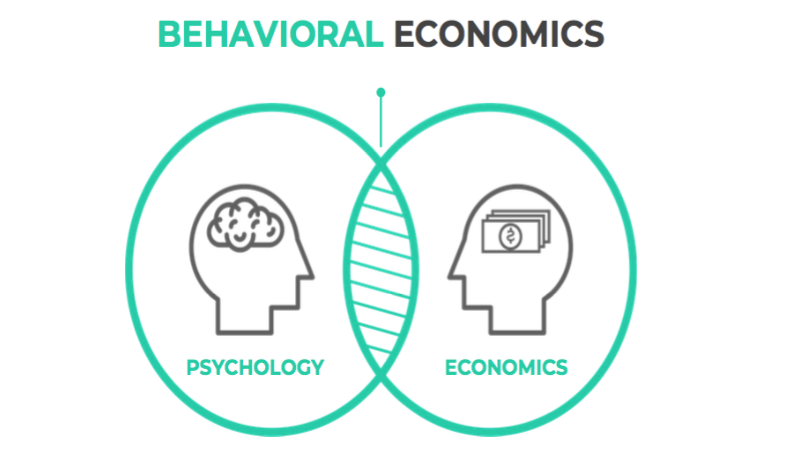
I have covered a variety of financial topics in many posts, but it has come to my attention that there is one topic that is the foundation of financial education. Everyone has a philosophy of life, habits, proclivities, and leanings towards various ways that they live life. This applies to money and our spending habits as well as our beliefs about money. This concept is known as behavioral economics, and this is prevalent in our day-to-day life in ways that you may not realize.

Behavioral economics studies the effects of psychological, cognitive, emotional, cultural, and social factors on the decisions of individuals and institutions and how those decisions vary from those implied by classical economic theory. This studies how people react when markets and other economic changes drive decision-making made amongst consumers. Common examples of this would be the supply and demand of PlayStation 5 consoles. There is consistent demand for the consoles and the supply is never stable enough courtesy of scalpers and others who have bought them. This would drive the consumer to either wait for the demand to drop and supply to increase (such as yours truly) or pay a higher premium for one from another source such as eBay. Another example would be the toilet paper shortage during the beginning of the coronavirus pandemic among other supply shortages courtesy of panic buying considering world events and fears of lacking supplies for survival. These purchases were made based on scarcity, excitement, and fear. Scarcity makes a consumer value something more because it’s in limited supply and some might be willing to pay more for it or if one is willing to wait, they can delay that gratification until a later date.

Our beliefs about money can be formed by the market as well as by those around us. Growing up, we’ve all seen how our parents have handled money and their financial choices for better or worse. These experiences can shape our own viewpoints and we can also study more on our own to learn more about finance. From a coupon clipper, a shopaholic, a minimalistic saver, or a person who likes to enjoy the finer things in life. This can be found in our spending as well as investing style from a more conservative investor buying growth/value stocks to a more aggressive investor looking for growth in more speculative stocks. Some may be more risk and loss averse while others may not be and that can shape decision-making in terms of investing and spending. Some may be more prone to impulse and spend their funds for whatever might be seen. Some may subscribe to the prospect of hustle culture and building streams of income. Some may be more content to have the essentials and nothing more and that is fine for them. Others might think that wealth corrupts and might be more financially inclined to not aspire for wealth to excess. Our social circles also can help determine our financial potential. From friends who always go on lavish nights on the town to those who are content to have a game night a home. The choices of those around us can be another influencing factor.

No matter the school of thought regarding money, it is imperative that we continue to educate ourselves about how money works and how to leverage it as needed. Without proper financial education, there is stagnation and no growth. Without that growth, we cannot reach our full financial potential in whatever walk of life we may be in. I encourage you, dear reader, to evaluate your feelings when making your next purchase. Is it vital to survival? Can the purchase be delayed if needed? Can you afford to go out on the town with friends? Are you hitting your savings and investing goals? I urge you to examine your spending habits and evaluate your goals and see how you can reach what you are seeking to accomplish financially. Until the next time dear reader. Excelsior!

The mental game

The pandemic has caused more stress levels about work, health, money, relationships, and other parts of life. The economy and world events and constant inflow of information on social media are causing a never-ending flood of stimulation. All of these factors and other underlying situations we find ourselves in will cause us to feel drained mentally, physically, spiritually, emotionally and this can cause us to be off-center in whatever it is we do in life. Unlike a cold or flu, one cannot always detect when we’re in need of a mental break, and keeping a strong mind is paramount in today’s times.

In the world of customer service and sales, there is constant switching of gears and situations that our minds must figure out in order to get through the day. I personally have my own ways to help me stay on top of my mental game for what I do for a living.  There are numerous ways to keep your mind functioning in tip-top shape but I will highlight some of my favorite methods in hope that you can see how they work for you or find some of your own.

Method 1: Physical exercise

I am a firm believer in having a healthy body. Gym or no gym I have a workout plan I utilized that yielded me good results. It is scientifically proven that exercise has numerous benefits such as benefits to bone health, energy levels and gets the blood flowing to wake you up more before you head to the shop, office, or wherever you work. Utilize various workouts from cardio, plyometrics, yoga, powerlifting, etc. no matter what keep moving and work that heart rate up. Your body will thank you for it.

Method 2: Remembering your why and positive self-talk

Goals are achieved by remembering what got you there and sticking to them. Maybe your goal is to close a million dollars in sales deals, win a sports competition, build a business. Whatever that goal is, remember to keep in mind WHY you are doing it. Is it to make a better life for yourself and your family? Is it to put your name in a record book for athletics? Is it to be the top salesman for your company to eventually become a sales manager? Keep your why in front of you and you will be able to keep onto your motivation to keep pressing forward. In conjunction with this, positive self-talk will help encourage you to keep up the great work. I recall a time in my childhood when my father would have me stand in the mirror and proclaim that “I am somebody, I am successful, I am capable” I would do this daily (and I still do to this day) and it would reinforce that no matter what I have what it takes to be successful in whatever I put my hand towards. These help with shaping confidence and instilling it deep within you. Even when you make a mistake treat it as a learning opportunity to improve, failure is fuel for eventual success.

Method 3: dealing with opposition (aka haters and doubters) are secret fans and blocking out excess noise

Focus is important in keeping your mental game in optimum efficiency. In life, you will have opposition and people who may prove to be naysayers and detractors. In life, there will be a constant conversation one any and everything and sometimes you might be the topic of conversation. It is important to block out the distractions that will take you off your path to achieving your goal (destructive habits/behaviors, associating with the wrong crowd, etc.) and forge ahead. There will be those that talk about you in the pursuit of your goals, give them something to talk about once you accomplish the goal you set out to accomplish. I am a believer that hecklers and naysayers are secretly a fan deep down somewhere inside and if you have some feel free to rejoice. To quote Winston Churchill “You’ve made enemies? Good. That means you’ve stood up for something sometime in your life.”

Method 4: knowing when to take a break and when to ask for help

It is important to be able to take a break as I have highlighted once before. I have learned that you cannot be switched to “on” 24/7 because our minds are like our bodies, there is a need for rest. Without taking a break (via a few minutes away from the work, taking that lunch break, going on vacation, or taking a day off) there is a risk of burnout. When burnout happens, it can hit like a truck and derail your ambitions to accomplish your goals. I believe in taking at least one personal day per month if I already don’t have a vacation planned out to give myself time to take care of myself and other matters of business if needed. Take time out to get a massage, cook a home-cooked meal, spend time with your loved ones or just read or spend time outdoors. It is also important to know if you get overwhelmed it is fine to ask for help. In our culture, we tend to neglect our vacation and sick time to take care of ourselves and we are prone not to ask for help and just try to take it all on alone. No man is an island, no one individual can make a car or even a pencil. It is fine to ask for help at work, with loved ones, or if needed professional help via a therapist.  It is ok to recognize that you need a break and need a second to breathe o need a little help. To continue to perform at high levels athletes need trainers to keep them sharp and recovery methods to keep their bodies in top form, the same applies for us as individuals.

I have shared some of the different ways that you can stay on top of your mental game and keep yourself in top form when getting to where you want to be in life. There is no one way to achieve having a better warranty on your mental health and these methods (and others) may vary in terms of your results. I encourage you to find ways that work for you if one doesn’t work for you. I hope that you can take what I have brought forth and use it to better your own mental state to stay sharp. Until next time dear readers, excelsior.

How sufficient is your credit?

A message on a credit report that can pop up is “insufficient credit”. This is a message commonly found for those who are young, operated primarily with buying things cash, or perhaps haven’t taken out a form of credit in a very long time. This isn’t necessarily a good or bad thing, but rather a good launching point towards developing health credit.

When applying for credit, lenders are only allowed to use a specific set of criteria to evaluate an application. Insufficient credit history indicates that the applicant doesn’t have enough accounts with a long enough payment history to approve an application. Banks, cell phone companies, and utility companies also look at this information when you set up a new account. As an applicant applies for bigger loans, lenders want to see that an applicant can handle multiple accounts responsibly. If someone only has a single credit card or too few accounts overall this could be a reason for rejection on a credit application.

On the other side of the coin, one wouldn’t want to go opening too many new accounts in a short time to build credit. On average it takes a minimum of 6 months for a new trade to make progress on an individual’s credit rating. Opening too many would be classified as an escalation of new debt. This could also be a reason to deny an applicant on a credit application. On another note, if there isn’t an update in activity (such as a credit limit increase or a new line of credit) for a substantial period, an individual’s credit could become stale and outdated causing it to be insufficient again. Keep in mind that the age of active credit lines also helps in building a score over time. These trades could be a line of credit or a credit card primarily.

Updating the personal information in one’s credit history is relatively easy. Building up one’s credit history takes more time and credit experts emphasize that there is no quick fix to a credit score. Experts typically recommend a few ways to help keep things in a positive light for one’s credit: 1) pay all bills on time to avoid them going into a collection action 2) opening a secured credit card or secure loan of some sort to start a history 3) reporting non-debt obligations If your lender uses a scoring system that counts that among other ways. Some lenders will overlook an insufficient credit history if the applicant is strong in other areas such as in debt-to-income ratios and stable proof of income to show how one could make payments.

Keep in mind that another common misconception is that checking accounts, debit cards and credit union accounts do not build credit. The checking account is designated for expenses and the debit card can be run as “credit” but is not truly linked to a credit line. Credit union accounts give you access to the credit union and all its services such as lending and credit building programs.   

Having insufficient credit can be difficult and confusing at times, but it doesn’t have to be. Feel free to reach out to your local financial experts at your financial institution and ask for ways to help establish a credit history for yourself. It will take time but the result of a healthy score and better rates are worth it. Until the next time dear readers, excelsior!

Debt vs income part 2: the less secure edition

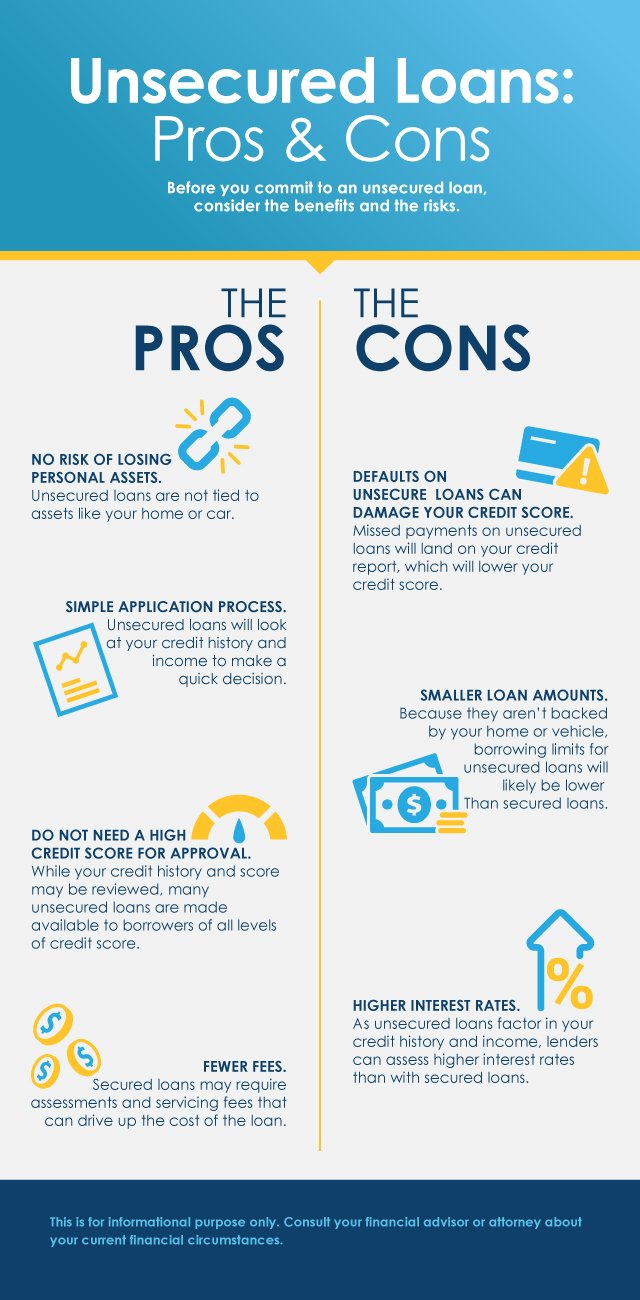
Last time we discussed what the debt to income ratio was and how it effects one’s overall financial picture. This time we will discuss another ratio that effects your financial picture. The unsecured debt to income ratio is another important piece to understand your financial situation.

Unsecured debt is different from a secured debt as the debt isn’t tied to a piece of collateral such as a car or house. Types of unsecured debt would be credit cards, personal loans, lines of credit, etc. As such these debts are typically assessed higher interest rates than secured debt because of the risks associated with them in the event of a default of payment from a borrower or bankruptcy risk if the borrower ventured into this route.

The unsecured debt ratio (UDTI) equals the total of unsecured debt divided by the total annual income, multiplied by 100, which converts it to a percentage. For example, say Sarah carries $8,000 of credit card debt, $12,000 in personal loans and her annual income is $80,000. Divide the total unsecured debt of $20,000 by $80,000 to get 0.25. Then, multiply 0.25 by 100 to find that Sarah has an unsecured ratio is 25 percent. If Sarah increases her unsecured debt load her and her income remains the same her UDTI will increase. In the opposite scenario if Sarah’s income increases or her unsecured debt is paid down more her UDTI decreases.

Lenders don’t like to make additional unsecured loans to people with high existing unsecured ratios because that’s tacking on additional debt to someone who’s already overextended. Financial institutions often see unsecured ratios of above about 20% as potentially dangerous. When someone gets above 20 percent, the prospective lender might lower the amount it will lend or require the borrower to put up collateral. If the borrower exceeds 30 percent, they will likely encounter trouble just getting an unsecured loan, because lenders are concerned with the ability to repay and there is more risk associated with lending unsecured vs secured. It is ideal to be in a range that is reasonable for a borrowers existing debt and income level and to go beyond that could indicated many factors such as living off of credit cards and unsecured debt to a point where eventually it leads to an eventual endpoint of defaults, garnishments or legal actions to recoup losses from a borrower or even bankruptcy filled by a borrower who is unable to pay. None of which are a desirable outcome for the institution or the borrow to end up.

The unsecured debt to income ratio is an important snapshot of one’s financial picture in the eyes of a lender. It is important to know how it can help or hurt your overall credit and financial situation. I have included a link to assist in calculating your unsecured debt to income ratio as well. Please uses these tools to help with understanding where you are with your own debts to gain a firm grasp on what was covered today. Until the next time dear reader. Excelsior!
Credit utilization

A common tactic utilized to build a credit history is typically acquiring a credit card of some sort. this along with other credit building programs begins one’s journey for getting into a more favorable credit range. Credit card usage is a factor that helps with establishing a score, but there are things about the usage that one must know.

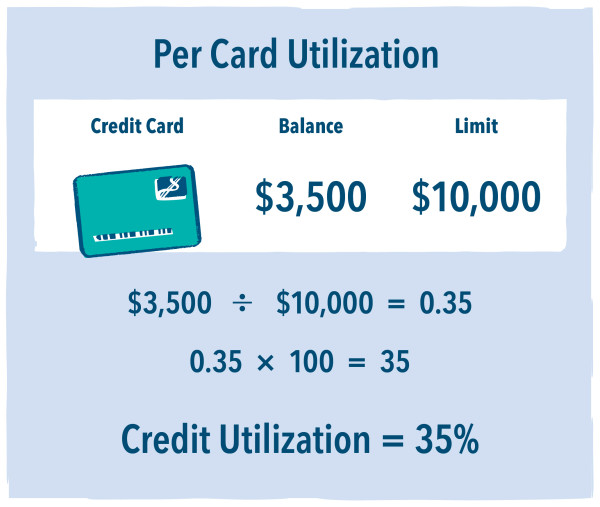
A credit card is a revolving tradeline (a trade line that when it is used and repaid you acquire a certain amount of the credit back). Credit cards have a capacity of use that displays how much of the overall limit has been used in a specific period. Credit utilization measures the balances you owe on your credit cards relative to the cards’ credit limits. If you never use your credit cards and there’s no balance on them, your credit utilization would be zero. If you typically carry a balance on one or more cards, you are ‘utilizing’ some of your available credit and credit score providers will take note. Credit utilization is a key piece of your credit score puzzle. Both FICO and Vantage, two big credit scoring agencies, list credit utilization as the second highest factor they consider when determining credit score. If your utilization ratio is high, it indicates that you may be overspending and that can negatively impact your score. This utilization ratio, as a rule of thumb, is recommended to be around 30 percent or less and is calculated by the total amount of card balances vs the amount of available credit. This means not maxing out existing credit cards. This utilization ratio can be improved by a variety of methods including, but not limited to; paying down current debt past the minimum payment, consolidation of credit card debts, getting another credit card, getting a credit limit increase, or leaving open existing cards once they’re paid amongst other methods.

How Does Credit Utilization Work?

Now that you know how to improve your credit utilization, it’s important to keep track of your progress. Check your credit card balances monthly and keep tabs on your utilization ratios. Many card issuers offer balance alerts via text or email, making it even easier to prevent your utilization ratio from creeping up. Monitoring your credit score can also provide motivation to keep your utilization in check. This was a short lesson, but vital nonetheless. Until the next time dear reader. Excelsior!
Challenges of the young professional

The workplace can be a difficult terrain to navigate for any and everyone. It does not matter if it is a blue collar construction job or a white collar administrator role. Every position and environment has their own challenges. Throw in a new batch of college or high school graduates into the mix and you have an interesting mix of dynamics in the work place. Being a young professional in the workplace myself, here are some first and second hand illustrations of potential challenges and how to get through them.

A common struggle is the matter of being discounted due to age. Everyone has a beginning and needs to learn but after a while, skills are obtained and innovations and insights are developed. For those who are young (or in some cases young looking) there is a need to take an extra step and work a little harder to establish credibility. You’re a seasoned, skilled professional with years of valuable experience under your belt. These tips can make sure all of those things shine through at work—even if your gray hair doesn’t.

Navigating the professional world can be a little tough so it is important to have a career plan and set yourself in the trajectory to reach your career goals via advocating for yourself and setting clear cut goals for yourself. Build your network and share your motivation with your manager/supervisor to help with crafting an action plan to get you where you want to be. Even if you’re starting your own business make sure to get connected and voice your aspirations with those who are and have been where you want to go.

Another important aspect in being a young professional is presenting yourself as such from your dress style, email and text etiquette, and how you communicate with others in a working capacity. That includes leaving the slang at the door during work hours because not everyone in the office is privy to the lexicon used on Instagram and other social media. Do not overconpensate by acting cocky but yet if you are skilled let it be on display in a way that doesn’t make you seem arrogant. And above all else be patient and humble and deliver constant results to show that despite your youthfulnes, you are a force to be reckoned with and the sky is the limit.

To the young and the young in heart I encourage you to use these principles and see how far they take you. Often times I hear “I’m/you’re too young/old” I am a believer that that is a crutch that is used to hold us back from your dreams. If a 20 year old can become a music producer and make over $160,000 a year, or a 80 year old pass the New York bar exam or start a business at 30 anything is possible. It all depends on the willingness to make things happen and the hunger to not stop until the goal is met and when the goal is reached they exceed it! Until next time readers. Excelsior!

Opinion: The Retail Investors vs the hedge funds (the short squeeze)

Wallstreetbets a popular reddit forum

In my years of studying/working in finance, I’ve seen a few things but never as eventful as this. From what started as a far fetched speculation of GameStop shares going up to the discussion on Reddit forum r/wallstreetbets about an impending short on the gaming retail store, has evolved into one of the most interesting topics I’ve read all month. In the span of a month retail traders, billionaires, celebrities, and people in overseas markets have joined in on the events transpiring. If you would have asked me if GameStop would have hit $400 a share I would have thought that was a great joke but here we are in a time where GME stock was over $400 a share last week. The sheer leaps this stock has taken in a month have been mind-blowing and has been a part of some feedback, both positive and negative. From the media slamming those involved as “unsophisticated investors” who manipulated the market (while trading platforms such as Robinhood have blocked new shares from being bought which one would consider manipulation) to those that just like the stock and see the potential for the retailer to grow with the new console releases and acquisition of new talent on their team.

As an investor myself, I am a firm believer in letting people trade to their heart’s content. It’s a risk that most everyone involved should already know. It’s speculative and volatile and for the paper-thin arguments for platform restriction on stocks like GME, AMC and others are blatant manipulation to protect hedge funds from losses but also the media slanting is heavily skewed against the retail investors who have been apart of this. Needless to say, there are talks of class action lawsuits against Robinhood for restrictions on trade and it will not be the last I suspect. I suspect this time to be a transfer of generational wealth and people are missing the good people have been doing with their newfound wealth. If you get you to give. And that is what is happening here. I say let them trade. My only other word of wisdom with this is doing your homework and don’t just get on the bandwagon for the kicks and giggles. This is a great time to witness history and I cannot wait to see the final chapter in this saga. As always my friends invest responsibly and stay safe out there. Excelsior.

Evaluating the current estate of affairs

Estate of the Union (@EstateOtheUnion) | Twitter

I am not the type to wax political but given the upcoming election and this topic I could not resist this title of the article and photo. All jokes aside, the title of my final entry in the “legacy of your pocketbook” series will cover the topic of estates. You might have heard the term “estate sale” and may have bought some things from there (I know I certainly have), but what is an estate and how does it function?

An Estate, in laymen’s terms, is everything comprising the net worth of an individual. These things could include things such as land and real estate, possessions, financial securities, cash and any other assets that a person owns or has controlling interest in; basically, anything they own.  The value of an estate typically shows up in two instances: when the person with an estate declares bankruptcy and when that person passes away. When declaring bankruptcy, the assets in the estate are looked at to judge which debts outstanding will be reasonably expected to be paid on. The legal process involved is rigorous. Estates are most relevant when a person dies. Prior to this there may be estate planning that takes place. Planning the estate is simply managing the division and inheritance of the persons estate and planning the financial aspects of a person’s life. Generally speaking, a personal draws up a will which explains the individual’s intent on dividing up the estate upon death (otherwise known as a beneficiary).

Estates are, in almost all cases, divided among the deceased’s family. This tends to keep wealth within the family for generations after the fact. An inheritance tends to account for a massive proportion of total wealth in the US and around the world and is in part responsible for income inequality (in addition to other factors). Despite this there is an inheritance/ estate tax on the estate and assets could sometimes be required to be sold to help pay on these taxes imposed on beneficiaries. It is also advisable for people with estates to consult an estate attorney to aid in navigating the complex world of estate law (the same applies to trusts as well).

Estates can be a daunting topic to delve into but with an understanding of what an estate is and how it works (and some sound legal counsel) it does not have to be. That is all I have for now in this “legacy of your pocketbook” series. Until the next time dear reader excelsior!

Trust funds baby!

Trust - Should I create one? A NYC Guide - Regina Kiperman, RK Law PC

In my last post on estate planning, I discussed what a beneficiary was and what it does. This time I will continue with my series on personal finance in regard to another topic when it comes to future planning. We often hear the term trusts, trust funds, and maybe even the term “trust fund baby”; what exactly is a trust? Let’s explore what a trust is and what it does. I’m also going to be using more of the legal definition with some paraphrasing along with some links for certain terms for easier reading.

A trust, per the diction definition, is a fiduciary relationship in which one party, known as a trustor, gives another party, the trustee, the right to hold title to property or assets for the benefit of a third party, the beneficiary. Trusts are established to provide legal protection for the trustor’s assets, to make sure those assets are distributed according to the wishes of the trustor, and to save time, reduce paperwork and, in some cases, avoid or reduce inheritance or estate taxes.

Trusts are created by settlors (an individual along with their lawyer) who decide how to transfer parts or all of their assets to trustees. These trustees hold on to the assets for the beneficiaries of the trust. The rules of a trust depend on the terms on which it was built. In some areas, it is possible for older beneficiaries to become trustees. For example, in some jurisdictions, the grantor can be a lifetime beneficiary and a trustee at the same time.

A trust can be used to determine how a person’s money should be managed and distributed while that person is alive, or after their death. A trust helps avoid taxes and probate. It can protect assets from creditors, and it can dictate the terms of an inheritance for beneficiaries. The disadvantages of trusts are that they require time and money to create, and they cannot be easily revoked.

There are several different kinds of trusts: living trusts which distribute assets while a person is alive and transfer to beneficiaries upon death. Revocable trusts can be changed during the trustor during their lifetime. Irrevocable trusts are unable to be changed once set even if the trustor is still alive and after death. Depending on a person’s needs a trust can be set up however they wish. Trusts have many purposes: privacy for distribution of assets, estate planning, tax planning, and the list goes on.

And there you have it dear readers, a quick and simple explanation of what trusts are and different things they do. I hope this abridged walkthrough sheds more light on a complicated topic. Until the next time dear reader, excelsior!

Excess IRA Contributions

The last two sections of the IRA series were the heavy meat and potatoes of my 4-part IRA series, let’s get to dessert, shall we? So far, we have discussed what IRAs are and what they can do for you. We have also discussed how contributions and distributions typically work. What happens if there is an excess of what is supposed to be contributed into an IRA?

Image result for what do i do?

There are a number of ways that an IRA can receive an excess contribution and, if left unchecked, can cost you a six percent penalty on the excess contribution. The IRS provides specific procedures for removing excess contributions. Annual Contributions are excess contributions if the exceed the statutory contribution limit or the amount that the owner is eligible to contribute. If discovered before the tax return due date, with any extensions, the IRA owner may remove the excess without incurring the six percent penalty. The IRA owner may also distribute valid (not excess) contributions before the tax return due date, this is called a “deemed excess”.

Sometimes there are ineligible assets such as RMDs from their IRA/retirement plan accounts. Ineligible rollover amounts become regular contributions to IRAs and financial organizations must report only eligible rollover amounts as regular contributions. If the IRA owners are not eligible to contribute or have already made their annual contribution these regular contributions become excess contributions.

Image result for excess ira contributions

The IRA owner must decide how to correct their contributions. The allowed method depends on whether the excess contribution is corrected on or before the owner’s tax return date plus extensions or after the deadline. If it is corrected before the deadline, the six percent penalty will not apply and if it is not caught in time the owner must pay the six percent for each year that the excess remains after December 31. The extended deadline is generally October 15th., in addition, financial organizations can document elections of the IRA owners’ excess contributions on the proper authorization/ recharacterizations to be reported to the IRS.

Image result for excess ira  tax

Excess contributions removed on or before the deadline must be removed with the NIA (net income attributable). Many financial organizations assist IRA owners in calculating the NIA by using excess contribution form or other means. IRA owners have with eligibility being determined by an individual modified adjusted gross income can also utilize recharacterization to handle excess contributions. Roth IRA excess due to MAGI restrictions can generally be converted into a traditional IRA. Income restrictions do not apply to traditional IRA contributions, although certain restrictions exist for deductions in this case.  IRA owners may elect to recharacterize valid contributions as well.

Image result for deadline tax

After the deadline IRA owners can carry the excess forward by the owner treating the excesses an eligible contribution for the subsequent year and address it on their income tax return. The financial organization can also report it for the year of the contribution on a form 5498 but not do any additional reporting for the amount carried over for subsequent year contributions. The owner can also elect for the financial organization to distribute the excess amount but not the NIA or report it on the form 1099-R.

That concludes my IRA series. I hope you learned some valuable information on IRAs. These are amazing savings tools to help supplement your retirement savings. Please take advantage of these tools for your benefit. That’s all for now until the next time folks, invest wisely. Ciao!