Notoryius: An overview of the Notary Public

Image result for what does a notary do

This month I would like to discuss the importance of the Notary Public. This is an often misunderstood topic and from my own experience, it can be a little challenging at times to understand what details go into such a thing as a Notary. Let’s dive right into the exciting world of notarization, you never know when you could need one.

The National Notary Association defines a Notary Public is an official of integrity appointed by state government —typically by the secretary of state — to serve the public as an impartial witness in performing a variety of official fraud-deterrent acts related to the signing of important documents. These official acts are called notarizations, or notarial acts. Notaries are publicly commissioned as “ministerial” officials, meaning that they are expected to follow written rules without the exercise of significant personal discretion, as would otherwise be the case with a “judicial” official. To put it simply, a Notary Public is an official unbiased witness to the signing of an important document. Notaries can also do a slew of other things including but not limited to: administering oaths and affirmations, taking affidavits and statutory declarations, take acknowledges of deeds, protest bills and notes of exchange, and even provide notices of foreign drafts.

The Notary Public is to screen the signers of the document to ensure there is no sort of fraud, duress, of incoherence taking place in the signing of documents. These documents could be things such as power of attorney documents, quitclaim deeds, unclaimed property documents and much more.  Some notarizations also require the Notary to put the signer under an oath, declaring under penalty of perjury that the information contained in a document is true and correct.

Notaries are also duty-bound not to act in situations of which they have a personal interest (such as notarizing a quitclaim deed for a rental property that their parents are buying or their own documents, etc.). A Notary Public must be impartial and not act in their own self-interest for the sake of public trust and must not refuse to take a notarization due to race, nationality, religion, politics, sexual orientation or status as a non-customer. This is important because the documents that notaries sign can be life-changing (power of attorney, trusts, deeds, etc.) because they have on civilians.

Official documents (such as documents closing the sale of a house) must be notarized. Notarization is the official fraud-deterrent process that assures the parties of a transaction that a document is authentic and can be trusted. It is a three-part process, performed by a Notary Public, that includes vetting, certifying and record-keeping. This is to screen willingness, awareness, and identity to the individuals signing any important documents. The Notary keeps a journal of all the individuals that sign a document for review if needed. Upon all signatures being on the documented the Notary will stamp and/or seal the document making it officially notarized.

As a Notary Public, I will also share some do’s and don’ts when it comes to meeting with a Notary. Firstly, the document must not be signed before coming to a notary; that defeats the purpose of the notary and renders the document invalid and the notary will have you get a new document to be signed. Secondly, the Notary Public is to verify and deter fraud happening on documents on transactions they are being apart of, not assist in filling out the paperwork. Third, you must have valid identification present to have documents notarized as well, this is essential to the verification process.

The Notary Public is an important part of many important transactions. You can find notaries in many places such as clerk offices, banks, and credit unions, and there are even websites dedicated to finding a Notary in your area. That is all I have for the overview of what a Notary does, until the next time. Excelsior!

The Savvy vs The Shyster

Every day, someone is a victim of some form of fraud. It’s something that hurts when it happens and can really set you back when it does. There are many ways that fraud can happen but, at the same time, there are many ways to protect yourself against it from happening to you.

Image result for swiper no swiping

One common method of fraud involves your debit/credit card use. This is a common one I see daily. You find things being purchased on obscure sites and even sites you might even use frequently but haven’t touched in a while. On way this can happen is via data breach in a website or a company database. Any cards that were utilized could be subject to risk of fraud in those situations. One such example of this would be you use your card at the store and your financial institution shuts the card down due to notification of someone breaching the stores systems. The same concept could also be applied for online retailers if there is a notice of breach given as well.

Image result for debit card fraud

In addition to a merchant database being compromised there is also the possibility of “skimming”. Skimming is lifting data from the card via magnetic stripe or via RFID scan. A skimmer can be placed anywhere a magnetic stripe can be swiped on a card. Thigs such as the gas pump and even the terminal at a restaurant where the card can be swiped. One way to protect yourself from this kind of skimming would be to utilize your chip enabled debit/credit card(s). EVM chip cards have been around for several years and overseas they’ve been around even longer. There are some groups who are skeptical of the chip card but these are much more secure than the magnetic stripe due to how similar they work to Apple Pay. There is a unique code that is ran each time the chip is ran and that code will no longer be used once the card is ran through the terminal. In response fraudsters will try using RFID scanning sensors to get your card info. To protect yourself from this, a simple lined wallet with an RFID proof lining will deflect the RFID ray from a skimmer. These special wallets can be in the form of a regular wallet or a car carrying wallet. These are relatively inexpensive but a worthwhile investment. As a word of advice, never share your pin to your card with anyone because if fraud happens with the card it lowers the likelyhood of regaining the lost funds from the transactions. If you find yourself a victim of  debit/credit card fraud, contact your financial institution and dispute the charge. Once the dispute complete you would be able to recover funds and even acquire a new card.

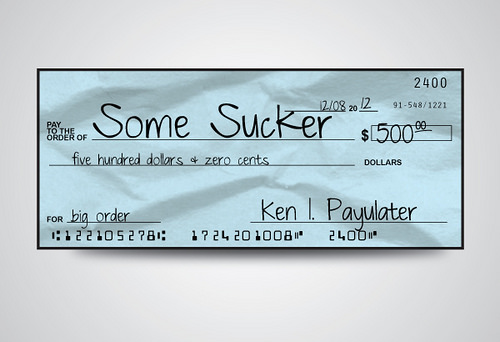
Image result for check fraud

Another type of fraud that occurs would be in the form of a check. The check could be made out for several reasons. One such would be communication via email for a “job” and you need to do some purchasing or send money to someone. Another way would be via overnight delivery service and having a check wrote for an amount that is more than an item you paid for online or even from someone unrelated to any business you had dealings with. These typically happen during online sales on sites such as eBay or craigslist. The person you are corresponding with may also get you to send money overseas as well via some sort of international lottery that you never signed up for but allegedly won. A frequent one that comes up would also be being asked to send funds overseas for an inheritance from another country (commonly called the Nigerian prince scam). You also might be solicited for accepting money transfers through your bank and/or PayPal account to receive a “commission” of some sort. There might also be people asking you to cash or deposit a check through your account, or the alternative of usingyour debit card to deposit a check in the ATM. Lastly, and one of the most frequent I’ve seen, would be via online dating sites and the person you’re “dating” is sending or requesting funds to or from you. If that check is cashed or deposited the item will return as fraudulent and you will be out of the funds you’ve deposited/ cashed on top of a returned item fee from your institution. These instances will leave you with the bill and the person you’ve aided several hundred (or thousand) dollars richer. If you come across anything like this report it to your financial institution and local law enforcement. They would be able to assist you in determining if what is happening is a legitimate transaction or someone trying to set you up for failure.

Image result for email fraud

In the digital age there are so many ways we can communicate and access information; but there is a price to consider when we have all this power at our fingertips.  Scammers are always looking to find ways to get into your information and do damage. On method used is called “Phishing” aka email fraud; this involves a scammer pretending to be sending correspondence from a trusted source such as the government or your local doctors office. They might try to direct to a site to “verify” personal information or reset your password. Do not fall for this trap! If you notice an email for confirming certain information do not click on it, instead use a legitimate website or phone number to reach the organization in question. Also look for the “look” icon on your browsers status bar and see if the URL uses “https” in it’s addresses and check the spelling of the site to see if there is anything out of place. Pharming is also a form of information fraud in which a scammer will divert you to a copycat web site that looks legitimate but is not. Be on the look out for emails coming unexpectedly and treat it as a phishing attempt. There is also malware aka “spyware” that comes in the form of spam emails and that software can leak data and take control of your computer and leave you at the fraudster’s mercy.

Image result for protect your information

Keeping your computer safe is paramount in mitigating electronic information fraud. In this day and age you’ll want to consider investing in good antivirus and antimalware programs and keep up to date with your computer’s OS and software patches. Do not judge by initial appearance because there are plenty of software options for a shyster to make a site look legitimate and catch you in a trap! Be diligent in how much information you put online as well as exercising caution on giving personal data. You will also want to use secure passwords for different software that you use. You shouldn’t keep the same pin or password for everything, which many people do because it is easy to remeber, because if one site is compromised the rest could be in danger as well! Never leave your passwords wrote down in the open that will set you up for compromise as well.  Invest in a firewall to keep the bad guys out but above all else, you are your own human firewall, so you must know the signs and know how to protect yourself from internet fraud!

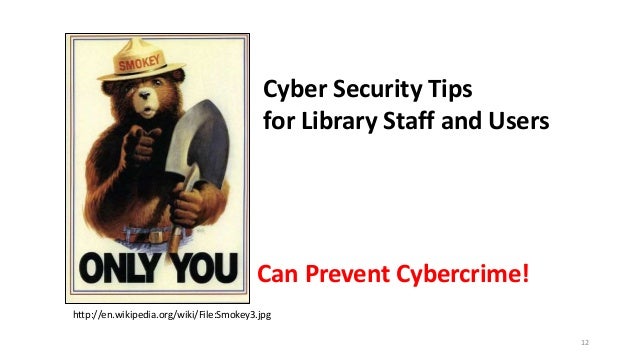
Image result for only you can prevent cyber crime

If you or anyone you know are a victim, or potential victim of fraud on the internet you will want to visit the internet crime complaint center (ic3). This is designed to report complaints of cybercrimes and alert authorities of suspected violations. The center identifies current crime trends on the web as well as aid local law enforcement in investigating the bad guys involved. This overall will help with reducing losses that you, your loved ones, your work or anywhere else could lose due to cybercrime. The website is www.ic3.gov and it is a valuable tool in the fight against fraud. Use these tools and knowledge to protect yourself and your information and money. Be careful out there and stay savvy my friend.