A year in review

Goodbye 2020 Funny Illustration - Vector Download
Photo credit Vexels

As this year comes to a close let’s look back at the past year. Look at the world around us and the current circumstances. Look at your situation. Look at the road ahead. We live in an uncertain time with a plethora of things that can happen. Life comes hard and fast, but we cannot let things that are important to slip by in the rapidly accelerating stream of time. Things such as family and friends, your goals and dreams, your finances and future.

This year I made several posts on personal finance, taking a departure from personal development topics, in an attempt to raise awareness and education on financial topics that are often not taught and/or oftentimes neglected. Personal finance is an important topic that is not meant to be taken lightly. It is something that has been in our past, working in our present and shaping our future. This year I have shared my expertise and knowledge of finance from my education and expertise working in the finance sector for the past few years now.

I encourage you, dear reader, to read my past posts on personal finance if you have not already. These are very insightful topics that will help with gaining more understanding on this topic. It has been a delight to bring such material to a wider audience and gain more readers. I will be uploading more regular content in the upcoming year for personal finance as well as bringing back more personal development content for your reading pleasure.

Before this year draws to a close, I will share one last lesson for the year. And that is the importance of the emergency fund. In a previous post of mine, I mentioned the importance of establishing emergency savings. This year is the prime example of why everyone can benefit from an emergency fund. If one would not believe me look at the current state that we are in as a country and as a civilization worldwide. We live in an uncertain time and we must make decisions and investments and goals to help us out when we need it the most. From your insurance to your warranty, to your very own shoebox under the mattress if need be. Everyone needs their ace in hand at the ready because you will never know when it is time to use it. Stay healthy and safe dear reader. Happy holidays and I wish you a happy new year. Here is to a better year and a better road ahead through taking control of one’s financial future. Excelsior!

IRA Distributions

In my previous entry I discussed contributing to the different types of IRAs. Once you hit the appropriate age you will need to make a distribution from your IRA. You might need to withdraw earlier but it all depends on your situation. There are many factors involved with IRA distributions so let us dive in shall we?

Image result for ira taxes

IRA owners generally must include traditional IRA distributions in their taxable gross income. There are, however, some exceptions to the rule: rollovers (if done properly), transfers, recharacterization, removal of excess contributions, revocation of regular/spousal/catch up contributions, distribution of basis (nondeductible traditional IRA contributions and after-tax rollover contributions). Taxable traditional IRA distributions taken before age 59 ½ are generally subject to an additional 10 percent early distribution tax, this is to encourage you not to take an early distribution if you can help it. This early distribution tax is paid when the persona taking out the early distribution files their federal tax return. The penalty tax does not apply, however in special circumstances such as age 59 1/1, death, disability, certain medical expenses, IRS levy, and qualified reservist distributions.  There are also waivers for the penalty tax in instances of taking qualified hurricane distributions provided by the disaster tax relief and other provisions provided during qualified natural disasters.

A Roth IRA qualified distribution may be taken tax and penalty free as long as: there is a 5-year waiting period, the owner is 59 ½, death, disability, or is a first-time home buyer. If these criteria aren’t met it is a non-qualified distribution. Roth IRAs are distributed in the following order: annual contributions, conversion and retirement plan rollover assets (by year), and earnings. These can also get the same penalty tax waivers as a traditional IRA. Both types of IRAs are subject to federal tax withholding up to 10 percent of the distribution unless the IRA owner elects the IRA owner elects not to have income tax withheld or have more than 10 percent of income tax withheld.

Traditional IRAs are subject to required minimum distributions (RMD) that means when you turn 70 ½ you must take a certain amount of funds from your IRA. Typically, these must be taken out by April 1st of the following year they become 70 ½ this the required beginning date (RBD), all required RMDs must be taken out by December 31st. You can also donate $100,000 of your IRA funds tax free to charity if you’re age 70 1/2 , these go directly to charity and are reported to the IRA owner to claim on their taxes. An RMD is calculated by the balance of the IRA and the distribution period. The distribution period is calculated by a number using the IRS life expectancy table. If you fail to take your RMD you will be subject to an excess accumulation tax equal to 50% of the amount that was needed to be taken out. for the sake of simplicity i’ve included a copy of the life expectancy table here.

Image result for ir designate beneficiary

When an IRA owner dies their beneficiaries are entitled to the remaining balance of the IRA. IF there are no beneficiaries, the owner’s estate Is generally entitled to the funds but in some cases the funds will just defer to the living spouse based on documentation. The IRA plan will specify how assets will be paid out when a beneficiary is names. Beneficiaries should also provide copies of the owner’s death certificate to the financial organization where the IRA is housed. Once obtain. need and all beneficiaries have been verified, funds can be distributed amongst the beneficiaries. If there is more than one beneficiary, the funds will be split reasonably between all beneficiaries. Depending on when the owner dies, distribution of funds for beneficiaries can get tricky in such events like the owner dying before the required beginning date. The IRS has developed a table for traditional IRA beneficiary options including default life expectancy payments if a beneficiary isn’t named by December 31st of that year. I have made this available for your viewing pleasure here

The beneficiary may take out distributions of any amount as long as the entire amount is withdrawn December 31st of the year containing the owners 5th anniversary of their death. Beneficiaries can also have life expectancy payments payed out starting December 31st of the year following the year of the IRA owner’s death based on the life expectancy of the beneficiary. As a beneficiary you can also move your deceased spouse’s IRA into your own through a direct transfer and distribute at any time or roll it over into their IRA, minus their RMD due for that year. You can also have a non-person beneficiary such as an estate or a trust if it is qualified and valid with identifiable beneficiaries listed. The same rules apply for Roth IRAs as well.

We’re reaching the end of my series on IRAs. I hope that the journey so far has been enjoyable. I also hope that I made these fun retirement assets as easy to understand and that you might even be considering getting yourself an IRA if you don’t already have one. Tune in next time for my next entry my friends. Invest wisely, ciao!

Image result for to be continued

IRA contributions

Image result for contribute to ira

In my last entry, I went over what IRAs are and why they matter. This entry will cover contributions to your IRA. You can’t retire without money and to fund an IRA you need to make sure you’re able to stay within certain limits set in place by the IRS. I know what some of you are thinking: “why do I have to limit what I put into my IRA? It’s my retirement money after all!” rest assured I will explain what this entails shortly.

Image result for ira contribution limit

As of this year, the IRS limits up to $6000 to be placed into an IRA each calendar year for regular contributions and $1000 max for catch up distributions. People with eligible compensation (like your earnings from work) of less than their max contribution can only contribute into their IRA equal to their work wages. You can also own a traditional and a Roth IRA, but you cannot go past the $6000 annual limit. Additionally, if you’re 50 or older before the end of the tax year you can make a catch-up contribution into your IRA as well. The deadline for contributions (regular, catch-up, prior year, etc.) is April 15th to the following calendar year.

Image result for modified adjusted gross income (magi)

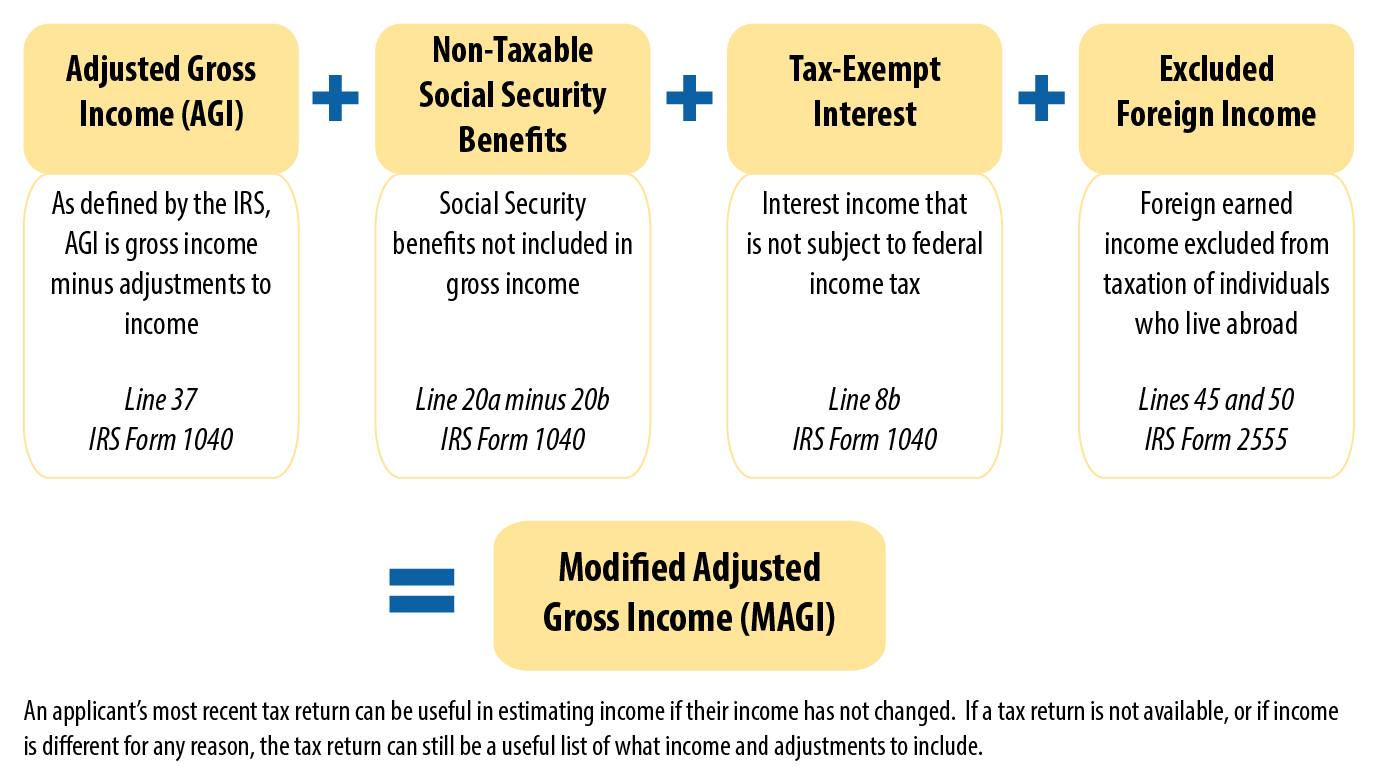
To contribute to a traditional IRA, you must be less than 70 ½ years old and eligible earned funds (usually from work) to place into the IRA. The same rule applies if your spouse wishes to contribute to your IRA but in addition, they must file joint on their tax return with you. Now there are factors regarding your contribution regarding deductions on your taxes. Such factors include having an employer sponsored retirement plan (i.e. 401k), marital status and modified adjusted gross income. Your financial custodian over your IRA cannot determine or track deductible contributions so keep that in mind as you contribute this will need to be done yourself. To further break down modified adjusted gross income you will want to make sure to account for having an employer sponsored retirement plan because there are different ranges for those different income tiers. The same rules apply to Roth IRAs as well. Roth IRA accounts can also receive transfer contributions, rollovers, and conversions (from traditional to Roth and vice versa). Your income has phase out ranges for Roth IRA contribution eligibility, this means however much you make could disqualify you for making a Roth IRA contribution. If your adjusted gross income is within the proper phase out range, however, the eligible contribution amount for a person is reduced. These levels can vary from year to year.

Image result for ira custodian

For financial organizations accepting IRA contributions it is required that they keep records of the contributions, the type and the year it was made. This is important for your records and on a typical form for collecting information you’ll see things pertaining to the IRA type, how much you’re putting in, the contribution type and when it was made, as well as any other info including your signature for the records. These contributions can also be reported to the IRS via a form 5498 and have their own tax form for each year you contribute. this information is compared to an individual’s income tax return to determine what’s taxable or tax advantaged as well.  Under some state laws it is possible to have a saver’s credit for contributions (see your states contribution rules for this). Typically. these are low to moderate income individuals and the credit is typically nonrefundable and not to exceed $1000. This is based on the annual adjusted gross income figures calculated by the IRS and cost of living adjustments. To be eligible you must be 18 before the end of the tax year (April 15th), not be a dependent or full-time students (sorry kiddos) and have adjusted gross income in the acceptable limits (depending on the year this could vary). This info can be found on the IRS publication 590-A and 8880 for credit for qualified retirement savings contributions.

I knew I threw a lot of material at you today, I wanted to condense this as best as possible. Tune in next time when I discuss the distributions from an IRA and what that means to you. Until then, invest wisely my friends, ciao!

Image result for to be continued

CDs are in!

Image result for CDs vs stocks

I can imagine you are probably wondering, if you don’t already know already, why should you care about a CD? The answer is quite simple: CDs are great listening for long road trips and save on your battery life on your phone! Case closed.

I am obviously kidding here; CDs in this context are great financial tools that come in handy for a period of time when you have adequate funds that you don’t feel like taking a big market risk by putting them into the market. Keep in mind that markets can have an effect on banks, credit unions and other financial institutions but CDs are not likely to go up and down as much as your stock in apple or JC penny on a daily basis.

Image result for certificate of deposit

A CD (certificate of deposit) is a savings certificate with a fixed maturity date and specified fixed interest rate that can be issued in any denomination aside from minimum investment requirements. A CD restricts access to the funds until the maturity date of the investment. CDs are generally issued by commercial banks and are insured by the Federal Deposit Insurance Corporation (FDIC) up to $250,000 per individual.

A certificate of deposit (CD) is a promissory note issued by a bank or credit union. It is a time deposit that restricts holders from withdrawing funds on demand. A CD is typically issued electronically and may automatically renew upon the maturity of the original CD. When the CD matures, the entire amount of principal, as well as interest earned, is available for withdrawal. CDs typically do not have a fee unless withdrawn before the maturity date. Most CDs offer higher interest rates than those available from savings and money market accounts.
Image result for certificate of deposit vs savings account

There are some pros and cons to using a CD so you want to do your homework to make sure that a CD will work for you. One thing to keep in mind with a CD is that is not accessible until it’s maturity date without some kind of penalty being incurred, the early withdraw penalty varies depending on your financial institution. The moment money is put into a CD it loses liquidity, the ability to be touched at any time penalty free. CDs operate under the premise that you forfeit liquidity for a higher return. Under typical market conditions, long-term CDs have higher interest rates when compared to short-term CDs. There is more uncertainty and risk associated with holding the investment for a long period of time. In addition, because you are forgoing the opportunity to utilize the funds for a specific period, you are compensated by earning more interest.

Although CDs do not provide a high return, especially compared to investing the same amount in the stock market, investing in CDs is considered relatively safe. The funds are insured, and, assuming there are no early withdrawal penalties, the investment is considered to be as safe as cash in a savings or checking account. As CDs typically pay higher interest than savings accounts, but offer lower returns than stocks, they are a good option for those who don’t need access to the cash for a set period and want to minimize risk. A five-year CD with a 3.15% annual percentage yield (APY) compounded monthly will earn $4,258.48 on a $25,000 initial deposit. The same amount of money kept in a savings account that pays 2.25% would earn just $2,973.86, assuming the interest rate stays the same, something that is not guaranteed with a savings account. Online banks tend to have the most competitive rates for both CDs and savings accounts.

Image result for lets negotiate

There are also additional benefits to having a CD in terms of negotiability and the style of the CD. Most CDs are non-negotiable, meaning they can’t be transferred, sold, bought or exchanged. In most cases, non-negotiable CDs can be cashed in before maturity by paying an early withdrawal penalty. Negotiable CDs, also known as NCDs, are just the opposite. They can be sold in the secondary market but can’t be cashed in before they mature. With few exceptions, NCDs are issued in large denominations of $100,000 or more. Another feature of NCDs is that they are short term and have maturity dates of between two weeks and one year.

Most financial institutions also offer promotional rates on CDs depending on the amount brought and have specific stipulations as well. Those stipulations can include the term, if a percentage of it are new funds to be deposited, or even in some cases, a rate match from a rival institution. There are also special CDs you can get depending on your institution. Here are some of the different types:

  1. Liquid CDs: These feature low or no penalty for early withdrawal, overcoming one of the main objections people have about CDs. This feature comes at a cost, including a lower rate of return, and, in many cases, a minimum balance requirement. Even with those caveats, in a fluctuating interest environment, liquid CDs enable you to move your funds to a higher-paying certificate when opportunity presents itself.
  2. Bump-Up CDs: Like liquid CDs, these have a lower interest rate than fixed-rate CDs but let you take advantage of a new higher interest rate and apply that rate to your existing CD. As with liquid CDs, bump-up CDs may also require a high minimum deposit. Bump-up CDs also typically limit the number of times a higher rate can be activated, depending on the length of the term.
  3. Step-Up CDs: These are often confused with bump-up certificates, although they are not the same. Unlike bump-up CDs, which allow you to take advantage of a higher rate, step-up CDs raise rates at regular intervals on a preset basis. It’s important to know what the overall (blended) interest rate is and compare that with a regular CD of the same term length.
  4. IRA CDs: These are regular CDs held in a tax-advantaged individual retirement account (IRA). As CDs offer relatively low interest rates compared to other investments, taking up a significant part of your annual IRA contribution limit with CDs could lead to much-lower-than-expected returns in your IRA retirement account. These are a personal favorite of mine
  5. Brokered CDs: These are sold through brokerage accounts and sometimes offer better rates than those sold through a bank or credit union. It’s important to make sure the brokered CD is FDIC insured or offers a high enough interest rate to outweigh the risk when it isn’t insured. It’s also worth noting that brokered CDs can be difficult to get out of when you want to exit the investment.

There are also other types of CDs such as save to win CDs (these give you a chance to deposit multiple times into a 1-year CD program and every set amount is deposited you get an entry into a sweepstakes for cash prize, think lottery but no way to lose) and other CDs your institution may offer that haven’t been brought out to the public yet.

As someone who has a CD and helps people obtain them I can confidently say that these are excellent saving tools. These are for the more risk adverse and those who want to diversify their investments. Additionally, these funds can be pledged on secured loans as well and be used as collateral. That can helpful in seeking a lower rate of interest on your loan and help build up your credit. CDs are a cool thing and you can expect these to stay in style for a while. Invest wisely my friends. Excelsior!