What is a line of credit?

As a finance professionL I am asked a myriad of different questions in regards to personal finance. From simple questions on account balances to the fine workings of credit, there is never a dull moment or a dull question. One common misconception I have seen is what a line of credit is and exactly how it works.

A line of credit is a revolving line of credit (similiar to a credit card) that allows you to access money as you need it up to a certain limit. You can borrow up to that limit again as the money is repaid over time. A line of credit requires approval by a bank or credit union through various criteria such as credit, income, and other factors that a lender may require. Once funds from a line of credit are used, interest will accrue until the loan is repaid.

Unlike traditional personal loans (and most credit cards), the interest rate on a line of credit is generally variable, meaning it could change as broader interest rates change. This can make it difficult to predict what the money you borrow will end up costing you over time.

Generally speaking, lines of credit aren’t as common as their counterparts know as home equity lines of credit or HELOCS (we’ll visit this later). These see usage for various things such as home improvement projects, weddings, unexpected repairs, and other things that might not have a certain upfront cost. Additionally, there may be other costs associated with the line of credit, such as maintenance fees. Be sure to consult your lender in regards to learning all fees associated with a line of credit. Credit cards will always have minimum monthly payments, and companies will significantly increase the interest rate if those payments are not met. Lines of credit may or may not have similar immediate monthly repayment requirements.

In summary, lines of credit are useful tools that can benefit you if there are things that are appropriate to use it for. They aren’t common, but whether it be for a person or for a business, a line of credit can be a viable asset to move things along. Until the next time dear readers. Excelsior!

Aging like fine wine

Building credit takes time. As I often tell my clients: credit building is a marathon rather than a sprint. The age of credit is an often misunderstood concept as in today’s fast paced society it is something that can be very important to improve credit history.

The average age of accounts is one of the factors that contribute to your overall Length of Credit History, which itself accounts for 15% of your total FICO credit score. This is calculated as a simple, non-weighted average; it’s the sum of the ages of your credit accounts divided by the number of accounts that you hold. These are also ranked in importance: the age of your oldest account, average age of accounts, and age of your newest account.

When you close a credit card, it can stay on your credit report and continue to age for 10 years. This means that you could open a credit card today, cancel it tomorrow, and 9 years from now, it would still show up on your credit report and contribute to your credit history.

An example of this would the average of your credit cards. Card 1 is 7 years old, card 2 is 3 years old and card 3 is 2 years old. We could take the average between the 3 cards to obtain an average age of 4 years between all credit cards. If you close one of the cards and fast forward 10 years card number 1 is now 17 years old, card 2 is 13 years old and card 3 is 12 years old. Taking your average age of accounts to 14 years old. This can still be in effect due to credit card accounts lingering on your credit report can still effect your history for up to 10 years. The most important concept to remember is not to close the longest (oldest) open trade as this will hurt your average age of your accounts and your credit score. Closing the newer cards will have less of an impact due to them being newer, but it is important to remember when closing a credit card that there is credit capacity (amount of available credit vs amount of credit used) that is lost when this happens. If the capacity is reduced thus will also hurt your score if your balances are too high on your remaining cards. Only close out credit accounts as needed (if they’re not installment loans of course).

Credit utilization can be tricky but if one knows how to navigate the complexities it can be a rewarding tool. Letting time work it’s magic on your open credit accounts cab do wonders for your score. Until the next time dear readers excelsior.

Inquiring minds

In the world of credit there are many different factors that build and tear down a score. One common conversation I often have in regards to credit is regarding inquiries. There are many misconceptions as to what an inquiry is and I will explain and debunk these misconceptions in this post.

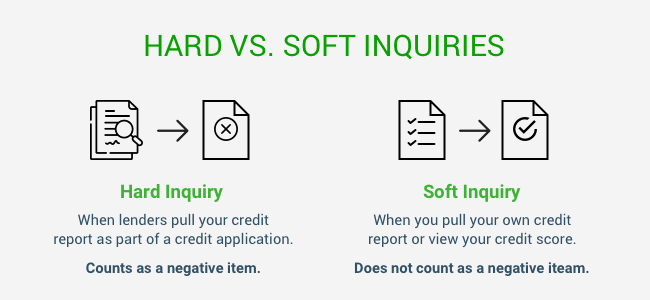
Inquiries are entries that appear on your credit report when your credit information is accessed by a legally authorized person or organization (including yourself). Most commonly, inquiries are the result of an application for credit, goods or services, an account review made by a company that you already do business with, or a preapproved offer of credit that has been sent to you.

There are two types of credit inquiries: hard inquiries and soft inquiries. Account reviews and preapproved offers fall under the category of soft inquiries, which have no effect on your credit scores. Hard inquiries include applications for credit or certain services, and although their impact is minimal, they can temporarily affect your scores. It is good practice to get your credit report checked throughout the year to view hard and soft inquiries.

A hard inquiry appears on your credit report when a lender checks your credit in response to an application for a new loan, credit card or line of credit. Whenever you seek new credit, there’s the potential for a new debt, which may temporarily lower scores slightly until you can show that you are managing that new debt responsibly. Credit scoring models such as those from FICO or Vantage sometimes account for that increase in risk by lowering your scores slightly. Typically, most score models show hard inquiries typically lowering scores by less than five points.

Hard inquiries remain on your credit report for up to two years, but as long as you keep up with your payments, credit scores often rebound from an inquiry within a few months. And, most credit scoring models no longer count a hard inquiry in score calculations at all after 12 months.

Soft inquiries appear on your credit report when someone runs a credit check for reasons unrelated to lending you money. These events are not associated with greater repayment risk, so they have no effect on your credit scores. Common examples include but are not limited to: utility companies for services and equipment, auto insurance companies, credit card companies that you have accounts with currently, as well as a credit review with a lender in a bank or credit union.

It is ideal not to accumulate too many inquiries as they can lower your scores over time if one is rapidly shopping for credit. There are an exception to this however. If there are multiple inquires from a car dealership to other lenders when you finance a car (this is called shotgunning the credit as it goes to mulltiple lenders) within a certain period of time it is counted as one inquiry. Inversely, if there are multiple inquires foe different types of credit in a period of time that is a sign of concern to a lender. It is important to check your score reports at least once a year to ensure all inquires on your report were authorized as unfamiliar inquiry activity could be a sign of either an error or criminal activity. You can review your annual credit report for free Here.

Inquiries are as I call the “cost of admission to credit”. These inquires make up a small percentage of your credit score but it is important to not go overboard with shipping for credit and recognize that even if they are small, inquires can still have an effect on your credit score. Until the next time dear readers, excelsior.

Limited to limitless

In my realm of expertise, I have been exposed to credit ranges across the spectrum. Some are great, some are good, some are ok and some need work and that’s alright with me. Credit is something that some treat like a sprint, but it truly is more of a marathon. Some treat some items on their credit (collections, current payment history, credit card limits, etc.) as an individual guitar solo rather than looking at all the items on their credit report as a symphony. One common thing I come across is a combination of income and credit. You could make excellent money, but your credit could be excellent, fair, poor, or nonexistent. I have also seen the inverse with those that make less money as well in addition to those in the middle of the income ranges, I have seen. A concept that eludes some of us is the concept of having limited credit.

The terms “limited credit” and “no credit” are typically used synonymously to describe anyone who has not been the primary account holder on a credit card or loan for three years. This is something commonly seen with those that have bought everything with cash only or just never had a need to get anything on credit. Additionally, some lenders might not even report to the credit bureau which is what sometimes is referred to as “invisible credit”. If you suspect your credit history is insufficient because of a data problem, contact your lenders and check whether your personal information on file with them is correct (i.e. name, date of birth, social security number, etc.).

Lending companies/financial institutions give inexperienced consumers the benefit of the doubt to a certain extent in that the terms they offer them are better than those given to people with bad credit. However, you must demonstrate the ability to consistently make on-time payments to your monthly financial obligations as well as maintain balances below your credit limits in order to build the requisite credit history to be trusted with higher credit lines as well as competitive rates and rewards.  An example of this would be if someone with limited credit requests a loan for a new auto. With zero history (keeping in mind your credit report is like your report card for your credit) it isn’t normal to see high balance loans for an auto with such limited history (unless there is a very good strong cosigner or a significant down payment). Without a down payment or cosigner, there’s a good chance that you could end up with a smaller car loan to start out (even if you make excellent money) due to the lack of history to prove creditworthiness based on the risk to the lender or receive a denial for credit. Once the loan has been successfully paid off (and provided a great pay history) that loan could be used as the basis for another perhaps larger loan in the future.

No matter what age you are or where you are in your credit-building journey, a lender typically relies on a credit score to help decide whether to approve you for a credit card or loan. There are numerous ways today to build your credit. From online banks to even your own bank or credit union there are programs designed to start off your credit journey before your next big purchase. From share-secured loans to secured credit cards, there are ample opportunities to build credit in today’s times. Consult your local bank/credit union for different credit building products to help you in your financial journey. Until the next time dear readers. Excelsior!

Debt vs income part 2: the less secure edition

Last time we discussed what the debt to income ratio was and how it effects one’s overall financial picture. This time we will discuss another ratio that effects your financial picture. The unsecured debt to income ratio is another important piece to understand your financial situation.

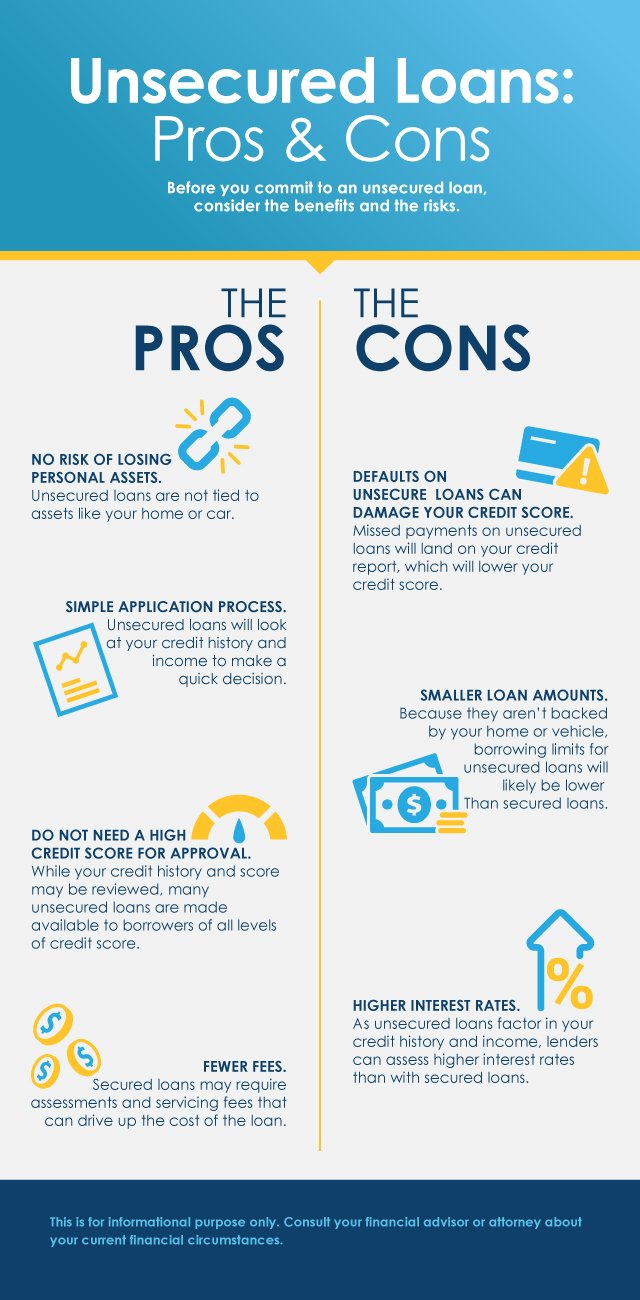
Unsecured debt is different from a secured debt as the debt isn’t tied to a piece of collateral such as a car or house. Types of unsecured debt would be credit cards, personal loans, lines of credit, etc. As such these debts are typically assessed higher interest rates than secured debt because of the risks associated with them in the event of a default of payment from a borrower or bankruptcy risk if the borrower ventured into this route.

The unsecured debt ratio (UDTI) equals the total of unsecured debt divided by the total annual income, multiplied by 100, which converts it to a percentage. For example, say Sarah carries $8,000 of credit card debt, $12,000 in personal loans and her annual income is $80,000. Divide the total unsecured debt of $20,000 by $80,000 to get 0.25. Then, multiply 0.25 by 100 to find that Sarah has an unsecured ratio is 25 percent. If Sarah increases her unsecured debt load her and her income remains the same her UDTI will increase. In the opposite scenario if Sarah’s income increases or her unsecured debt is paid down more her UDTI decreases.

Lenders don’t like to make additional unsecured loans to people with high existing unsecured ratios because that’s tacking on additional debt to someone who’s already overextended. Financial institutions often see unsecured ratios of above about 20% as potentially dangerous. When someone gets above 20 percent, the prospective lender might lower the amount it will lend or require the borrower to put up collateral. If the borrower exceeds 30 percent, they will likely encounter trouble just getting an unsecured loan, because lenders are concerned with the ability to repay and there is more risk associated with lending unsecured vs secured. It is ideal to be in a range that is reasonable for a borrowers existing debt and income level and to go beyond that could indicated many factors such as living off of credit cards and unsecured debt to a point where eventually it leads to an eventual endpoint of defaults, garnishments or legal actions to recoup losses from a borrower or even bankruptcy filled by a borrower who is unable to pay. None of which are a desirable outcome for the institution or the borrow to end up.

The unsecured debt to income ratio is an important snapshot of one’s financial picture in the eyes of a lender. It is important to know how it can help or hurt your overall credit and financial situation. I have included a link to assist in calculating your unsecured debt to income ratio as well. Please uses these tools to help with understanding where you are with your own debts to gain a firm grasp on what was covered today. Until the next time dear reader. Excelsior!

Streams of flowing income

What is Multiple Streams of Internet Income (MSII)? Why is it important to  have MSII? – The Internet Income Academy

This time a year ago the entire world was turned upside down by a pandemic. Lockdowns ensued and people lost jobs, lives, and there was so much panic and confusion and uncertainty. Fast forward a year later and we are still feeling the effects of this ongoing issue in every way possible. One of the lessons that cannot be emphasized enough is the need for an alternative stream of income in the even one stream dries up there are others to keep funds flowing through into your accounts.

There are several different types of income, the first of which is the most common being earned income. We earn it by the hour, by the sale, by the project or by the salary. We get up most days to report to our employers to earn this income. The second type of income is profit income. When goods and services are sold there are costs associated. When businesses sell at a price higher than the cost incurred there is profit earned on the sale of the good or service. These are what are called active income streams because when one is trying to obtain income  they are actively pursuing it.

Another type of income earned is what is called passive income, this comes without action and money is made typically around the clock. One type of passive income is interest income from placing money in an interest-bearing account such as a high yield savings account or CD or any other interest-bearing products offered by your financial institution. (if you have not read my article on money market savings or CD accounts please refer to those articles for more information). Another passive income source is dividend income which comes from investments in stocks or bonds or mutual funds which pay out a dividend on a regular basis. This goes hand and hand alongside capital gains income from buying and selling assets can provide you with an income (you buy stocks and shares worth $100 and then sell them on for $120, the capital gain is $20.). Another passive income type is real estate income from the sale and renting of property to tenants and buyers. Lastly, royalty income from intellectual property such as books, film and music being sold or used by third parties. There are so many ways to make an alternative stream of income some big, small conventional or unique.

In light of this past year and the years to come, now more than ever, is this a time to keep an eye open for opportunities to obtain income. Diversification is useful in today’s times given the current state of the world. After reading this I hope this inspires you to open your mind to the different possibilities of generating income and maintaining a living in a way that works best for you. In the meantime, stay inspired and motivated. Excelscior!

A year in review

Goodbye 2020 Funny Illustration - Vector Download
Photo credit Vexels

As this year comes to a close let’s look back at the past year. Look at the world around us and the current circumstances. Look at your situation. Look at the road ahead. We live in an uncertain time with a plethora of things that can happen. Life comes hard and fast, but we cannot let things that are important to slip by in the rapidly accelerating stream of time. Things such as family and friends, your goals and dreams, your finances and future.

This year I made several posts on personal finance, taking a departure from personal development topics, in an attempt to raise awareness and education on financial topics that are often not taught and/or oftentimes neglected. Personal finance is an important topic that is not meant to be taken lightly. It is something that has been in our past, working in our present and shaping our future. This year I have shared my expertise and knowledge of finance from my education and expertise working in the finance sector for the past few years now.

I encourage you, dear reader, to read my past posts on personal finance if you have not already. These are very insightful topics that will help with gaining more understanding on this topic. It has been a delight to bring such material to a wider audience and gain more readers. I will be uploading more regular content in the upcoming year for personal finance as well as bringing back more personal development content for your reading pleasure.

Before this year draws to a close, I will share one last lesson for the year. And that is the importance of the emergency fund. In a previous post of mine, I mentioned the importance of establishing emergency savings. This year is the prime example of why everyone can benefit from an emergency fund. If one would not believe me look at the current state that we are in as a country and as a civilization worldwide. We live in an uncertain time and we must make decisions and investments and goals to help us out when we need it the most. From your insurance to your warranty, to your very own shoebox under the mattress if need be. Everyone needs their ace in hand at the ready because you will never know when it is time to use it. Stay healthy and safe dear reader. Happy holidays and I wish you a happy new year. Here is to a better year and a better road ahead through taking control of one’s financial future. Excelsior!

Collect call

What Happens If You Don't Pay a Debt Collection

Dealing with credit can be tricky, there are different types of factors that build your credit and factors that hurt it. One such factor that hurts your score is having collections out against you. Collections are oftentimes neglected and can come back around in the future.Did you know that 71 million Americans have collection debt of some sort or another? (courtesy of urban.org)

Collections come from when a loan or bill has gone unpaid or was charged off/ listed as a loss on a company’s profit and loss statement and is given over to a collection agency. The collection agency then goes to contact you to collect the debt to be paid off. Once the collection is paid then it is cleared from the book of the collection agency and is reflected on your credit report if it is paid off. The same applies if a bill is listed as a collection on your credit report.

In my field of expertise, I have come to know that letting collections sit is not conducive to a healthy credit rating and can serve as an annoying anchor weight stopping your credit from reaching new heights. It is imperative to get rid of collections as soon as they are discovered or If something is going towards collections. Even if a bill disappears somehow and it was not paid there could be a chance it was sent to a collection agency to pester you to get their payment. These are not to be taken lightly. Even if a collection is paid it remains on a credit report for seven years but despite this, it could show that it was paid and prevent a collection agency from bothering you about the same debt. This is because a collection agency has seven years to collect this debt before they lose their chance to get paid. If it is coming down to the wire the collection agency can sell this debt to another agency and the “doctor’s bill from 10 years ago” could be lurking around for the next 20 years! Like dirt under a rug, it is waiting to be disturbed and make a mess again.

Collections can hurt your FICO credit score, contrary to a commonly held belief I have come across in my time in the field and research. The claim is that when updated from “unpaid” to “paid,” the collection can appear to the scoring formula as having originated more recently than it did, which, if true, could lower the score. However, the “assigned” date on the credit report does not change when the collection status is updated, nor do the credit scoring formulas give fewer points for a paid than an unpaid collection. Due to the length of time since the debt was assigned to a collection agency weighs so heavily on a credit score, the removal of the most recent collections can often be expected to raise a score. On the other hand, if there are multiple collections and it’s the older ones that you’re able to get removed, such as via a “pay for delete,” you may not see any improvement in your score following the removal of these older collections. So there is no evidence to support the myth that paying a collection can lower a score.

Collections can happen to anyone, whether you are already managing your credit responsibly or have hit hard times financially. Separating the facts from the fallacies about collections and credit scores can help you make more of the right moves and avoid some of the bad ones that can have an undesirable result. One way to check on the impact a collection might be having on your credit is to obtain your credit report from your bank, credit union, or from even the bureaus themselves. You can also go to sites like annualcreditreport.com to get your report for free as well. Do not let collections sneak up on you, something that might seem insignificant can still have an impact in the long run. Until the next time friends, excelsior!  

Savings with a purpose

Savings are an important thing in life that is often neglected. Did you know the average American has less than $400 in their savings? This is an alarming number due to the simple fact that life is full of unexpected things and anything can and will happen so you must be prepared. Learning how to save no matter your situation will help you in the long run. Oftentimes I’ve heard “I’ll start saving later”, sometimes later could be too late. Too often do we wonder “where has my money gone?” it’s time to stop wondering and time to start telling your money where it needs to go. With that, there is no time like the present so let’s begin, shall we?

Image result for budgeting

The first step in achieving your savings goal is to make a budget. Making a budget isn’t difficult, but it can seem daunting if your finances need a big overhaul and you’re desperately trying to build up your net worth. There are plenty of helpful budgeting tools to get you on the right path, but the most important thing to remember is to make your budget realistic. When you’re trying to decide what to cut from your current spending, look for things you know you can live comfortably without. That means getting rid of your magazine subscriptions, cable, home phone, trips to the nail salon, or anything else that’s more of a want than a need. After you’ve made those cuts, divide your income into three piles: one to pay your bills and necessities with, one for savings, and one just for fun. Too strict of a budget will drive you crazy, and the best way to maintain good financial habits is by rewarding yourself, even if it’s just with a fancy latte or new outfit from time to time. It’s important to keep yourself financially healthy but it’s also important to treat yourself from time to time for your hard work.

Image result for focus on your goals

One thing to keep in mind is your why: why are you saving? Keep a goal in mind and you’ll be more likely to reach it by tracking it with your budget.  Even if you make the most amazing budget in the world, without setting any specific savings goals, the chances of you sticking to your budget are slim. Do you want to save up to buy a home? Pay down your student loan or credit card debt? Quit your job so you can backpack around Southeast Asia for a year? Keep yourself a rainy-day fund?  Whatever your goals are, give them price tags and deadlines to give your budget purpose and to keep you motivated.

Image result for emergency fund

There are several “terms” of savings to keep in mind here: emergency, short term savings, midterm, long term, and retirement. The emergency fund is, as the name implies, is for EMERGENCIES only. Things such as your car breaking down and needing repair, your furnace at home breaking, medical emergencies and other things of that nature. When life throws a wrench into your works you need to be prepared to get the wrench out.

Image result for long term savings

Short term savings are for things you know are coming up very soon (like within the next weeks or months up to 3 years max) these funds are readily available to be used for things that are small but you know they’re things that could happen but you are prepared for them. I call it the “surprise!” fund but others could call it the sinking fund. Things that pop up such as a family member in need, a bridal shower gift you forgot to get, or things to that extent. This is commonly referred to as the sinking fund which is separate from the emergency fund due to it being something you can use for more fun things as well such as a vacation.  Ideally, you want to be prepared for big emergencies, so the “surprise” fund is something I’d put second to your emergency fund.

Midterm savings are things you would plan for that aren’t an immediate event such as buying a new or used vehicle cash or having the startup funds for a business. These things are a year to 5 years out even up to 10 years. Instead of getting into debt with a loan it can help to establish savings for those big-ticket items so that way you have little to no debt for those larger expenditures.

Long term savings are more dedicated to things happening 10 or more years out. One such thing would be your planning to buy a home. Some save up for cash down payments on their home and you can also buy your home outright depending on the home’s price. A good way to ensure good savings for this goal would be a CD so your money is earning more interest while you’re waiting or placing it into an investment fund on some sort depending on your risk tolerance.

Another form of long-term savings is your retirement savings. As I mentioned with my previous IRA series you also have your 401k if your employer offers it or any other type of employer-sponsored retirement plan. You can also invest in a mutual fund or brokerage account with countless firms and funds for your retirement supplementation. Your employer might offer you matching for your retirement plan, it would be ideal to take the maximum match for stuffing your nest egg. Fidelity recommends placing at least 15 percent of your income into a retirement plan, this sounds like a lot but with payroll deductions and automatic transfers into such an account, it makes it easier to put away for retirement.

 

Image result for no excuses

I know what you might be thinking: how do I do that with all my different expenses and such? The answer lies in several different methods. One method would be having multiple savings accounts for your different purposes, akin to Dave Ramsey’s envelope system but only digitally. Setting up automatic transfers into these separate savings accounts will help you fill the different buckets for achieving your goals. Other cool tools are CDs for mid and long-term saving tools that you cannot touch without penalty to give you more incentive not to touch the money you’ve purposed. Even establishing a separate account for out of sight out of mind savings helps keep you honest and on task.

I hope this basic overview of savings helps spark an idea as to how you can save money for your future. Money is the most renewable resource that someone can obtain. No matter how much you earn you can save with a plan and dedication. Commit to save and you can achieve your goals. That is all for now, until the next time, invest wisely my friends.


Excess IRA Contributions

The last two sections of the IRA series were the heavy meat and potatoes of my 4-part IRA series, let’s get to dessert, shall we? So far, we have discussed what IRAs are and what they can do for you. We have also discussed how contributions and distributions typically work. What happens if there is an excess of what is supposed to be contributed into an IRA?

Image result for what do i do?

There are a number of ways that an IRA can receive an excess contribution and, if left unchecked, can cost you a six percent penalty on the excess contribution. The IRS provides specific procedures for removing excess contributions. Annual Contributions are excess contributions if the exceed the statutory contribution limit or the amount that the owner is eligible to contribute. If discovered before the tax return due date, with any extensions, the IRA owner may remove the excess without incurring the six percent penalty. The IRA owner may also distribute valid (not excess) contributions before the tax return due date, this is called a “deemed excess”.

Sometimes there are ineligible assets such as RMDs from their IRA/retirement plan accounts. Ineligible rollover amounts become regular contributions to IRAs and financial organizations must report only eligible rollover amounts as regular contributions. If the IRA owners are not eligible to contribute or have already made their annual contribution these regular contributions become excess contributions.

Image result for excess ira contributions

The IRA owner must decide how to correct their contributions. The allowed method depends on whether the excess contribution is corrected on or before the owner’s tax return date plus extensions or after the deadline. If it is corrected before the deadline, the six percent penalty will not apply and if it is not caught in time the owner must pay the six percent for each year that the excess remains after December 31. The extended deadline is generally October 15th., in addition, financial organizations can document elections of the IRA owners’ excess contributions on the proper authorization/ recharacterizations to be reported to the IRS.

Image result for excess ira  tax

Excess contributions removed on or before the deadline must be removed with the NIA (net income attributable). Many financial organizations assist IRA owners in calculating the NIA by using excess contribution form or other means. IRA owners have with eligibility being determined by an individual modified adjusted gross income can also utilize recharacterization to handle excess contributions. Roth IRA excess due to MAGI restrictions can generally be converted into a traditional IRA. Income restrictions do not apply to traditional IRA contributions, although certain restrictions exist for deductions in this case.  IRA owners may elect to recharacterize valid contributions as well.

Image result for deadline tax

After the deadline IRA owners can carry the excess forward by the owner treating the excesses an eligible contribution for the subsequent year and address it on their income tax return. The financial organization can also report it for the year of the contribution on a form 5498 but not do any additional reporting for the amount carried over for subsequent year contributions. The owner can also elect for the financial organization to distribute the excess amount but not the NIA or report it on the form 1099-R.

That concludes my IRA series. I hope you learned some valuable information on IRAs. These are amazing savings tools to help supplement your retirement savings. Please take advantage of these tools for your benefit. That’s all for now until the next time folks, invest wisely. Ciao!