Your best financial behaviors

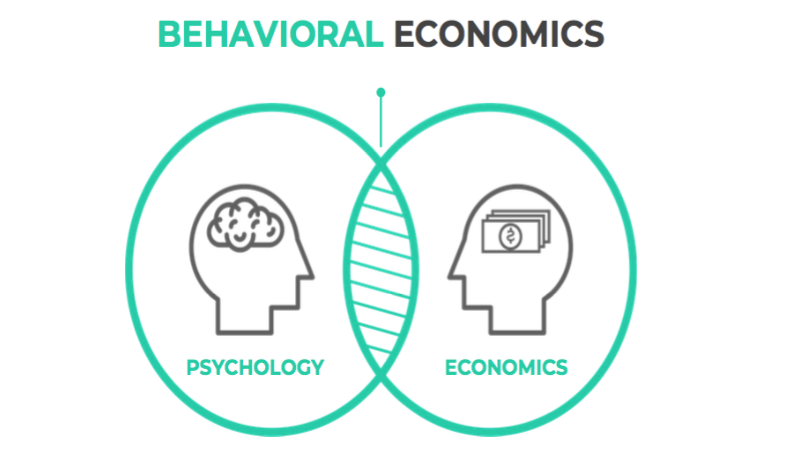
I have covered a variety of financial topics in many posts, but it has come to my attention that there is one topic that is the foundation of financial education. Everyone has a philosophy of life, habits, proclivities, and leanings towards various ways that they live life. This applies to money and our spending habits as well as our beliefs about money. This concept is known as behavioral economics, and this is prevalent in our day-to-day life in ways that you may not realize.

Behavioral economics studies the effects of psychological, cognitive, emotional, cultural, and social factors on the decisions of individuals and institutions and how those decisions vary from those implied by classical economic theory. This studies how people react when markets and other economic changes drive decision-making made amongst consumers. Common examples of this would be the supply and demand of PlayStation 5 consoles. There is consistent demand for the consoles and the supply is never stable enough courtesy of scalpers and others who have bought them. This would drive the consumer to either wait for the demand to drop and supply to increase (such as yours truly) or pay a higher premium for one from another source such as eBay. Another example would be the toilet paper shortage during the beginning of the coronavirus pandemic among other supply shortages courtesy of panic buying considering world events and fears of lacking supplies for survival. These purchases were made based on scarcity, excitement, and fear. Scarcity makes a consumer value something more because it’s in limited supply and some might be willing to pay more for it or if one is willing to wait, they can delay that gratification until a later date.

Our beliefs about money can be formed by the market as well as by those around us. Growing up, we’ve all seen how our parents have handled money and their financial choices for better or worse. These experiences can shape our own viewpoints and we can also study more on our own to learn more about finance. From a coupon clipper, a shopaholic, a minimalistic saver, or a person who likes to enjoy the finer things in life. This can be found in our spending as well as investing style from a more conservative investor buying growth/value stocks to a more aggressive investor looking for growth in more speculative stocks. Some may be more risk and loss averse while others may not be and that can shape decision-making in terms of investing and spending. Some may be more prone to impulse and spend their funds for whatever might be seen. Some may subscribe to the prospect of hustle culture and building streams of income. Some may be more content to have the essentials and nothing more and that is fine for them. Others might think that wealth corrupts and might be more financially inclined to not aspire for wealth to excess. Our social circles also can help determine our financial potential. From friends who always go on lavish nights on the town to those who are content to have a game night a home. The choices of those around us can be another influencing factor.

No matter the school of thought regarding money, it is imperative that we continue to educate ourselves about how money works and how to leverage it as needed. Without proper financial education, there is stagnation and no growth. Without that growth, we cannot reach our full financial potential in whatever walk of life we may be in. I encourage you, dear reader, to evaluate your feelings when making your next purchase. Is it vital to survival? Can the purchase be delayed if needed? Can you afford to go out on the town with friends? Are you hitting your savings and investing goals? I urge you to examine your spending habits and evaluate your goals and see how you can reach what you are seeking to accomplish financially. Until the next time dear reader. Excelsior!

How sufficient is your credit?

A message on a credit report that can pop up is “insufficient credit”. This is a message commonly found for those who are young, operated primarily with buying things cash, or perhaps haven’t taken out a form of credit in a very long time. This isn’t necessarily a good or bad thing, but rather a good launching point towards developing health credit.

When applying for credit, lenders are only allowed to use a specific set of criteria to evaluate an application. Insufficient credit history indicates that the applicant doesn’t have enough accounts with a long enough payment history to approve an application. Banks, cell phone companies, and utility companies also look at this information when you set up a new account. As an applicant applies for bigger loans, lenders want to see that an applicant can handle multiple accounts responsibly. If someone only has a single credit card or too few accounts overall this could be a reason for rejection on a credit application.

On the other side of the coin, one wouldn’t want to go opening too many new accounts in a short time to build credit. On average it takes a minimum of 6 months for a new trade to make progress on an individual’s credit rating. Opening too many would be classified as an escalation of new debt. This could also be a reason to deny an applicant on a credit application. On another note, if there isn’t an update in activity (such as a credit limit increase or a new line of credit) for a substantial period, an individual’s credit could become stale and outdated causing it to be insufficient again. Keep in mind that the age of active credit lines also helps in building a score over time. These trades could be a line of credit or a credit card primarily.

Updating the personal information in one’s credit history is relatively easy. Building up one’s credit history takes more time and credit experts emphasize that there is no quick fix to a credit score. Experts typically recommend a few ways to help keep things in a positive light for one’s credit: 1) pay all bills on time to avoid them going into a collection action 2) opening a secured credit card or secure loan of some sort to start a history 3) reporting non-debt obligations If your lender uses a scoring system that counts that among other ways. Some lenders will overlook an insufficient credit history if the applicant is strong in other areas such as in debt-to-income ratios and stable proof of income to show how one could make payments.

Keep in mind that another common misconception is that checking accounts, debit cards and credit union accounts do not build credit. The checking account is designated for expenses and the debit card can be run as “credit” but is not truly linked to a credit line. Credit union accounts give you access to the credit union and all its services such as lending and credit building programs.   

Having insufficient credit can be difficult and confusing at times, but it doesn’t have to be. Feel free to reach out to your local financial experts at your financial institution and ask for ways to help establish a credit history for yourself. It will take time but the result of a healthy score and better rates are worth it. Until the next time dear readers, excelsior!

Streams of flowing income

What is Multiple Streams of Internet Income (MSII)? Why is it important to  have MSII? – The Internet Income Academy

This time a year ago the entire world was turned upside down by a pandemic. Lockdowns ensued and people lost jobs, lives, and there was so much panic and confusion and uncertainty. Fast forward a year later and we are still feeling the effects of this ongoing issue in every way possible. One of the lessons that cannot be emphasized enough is the need for an alternative stream of income in the even one stream dries up there are others to keep funds flowing through into your accounts.

There are several different types of income, the first of which is the most common being earned income. We earn it by the hour, by the sale, by the project or by the salary. We get up most days to report to our employers to earn this income. The second type of income is profit income. When goods and services are sold there are costs associated. When businesses sell at a price higher than the cost incurred there is profit earned on the sale of the good or service. These are what are called active income streams because when one is trying to obtain income  they are actively pursuing it.

Another type of income earned is what is called passive income, this comes without action and money is made typically around the clock. One type of passive income is interest income from placing money in an interest-bearing account such as a high yield savings account or CD or any other interest-bearing products offered by your financial institution. (if you have not read my article on money market savings or CD accounts please refer to those articles for more information). Another passive income source is dividend income which comes from investments in stocks or bonds or mutual funds which pay out a dividend on a regular basis. This goes hand and hand alongside capital gains income from buying and selling assets can provide you with an income (you buy stocks and shares worth $100 and then sell them on for $120, the capital gain is $20.). Another passive income type is real estate income from the sale and renting of property to tenants and buyers. Lastly, royalty income from intellectual property such as books, film and music being sold or used by third parties. There are so many ways to make an alternative stream of income some big, small conventional or unique.

In light of this past year and the years to come, now more than ever, is this a time to keep an eye open for opportunities to obtain income. Diversification is useful in today’s times given the current state of the world. After reading this I hope this inspires you to open your mind to the different possibilities of generating income and maintaining a living in a way that works best for you. In the meantime, stay inspired and motivated. Excelscior!