What is a line of credit?

As a finance professionL I am asked a myriad of different questions in regards to personal finance. From simple questions on account balances to the fine workings of credit, there is never a dull moment or a dull question. One common misconception I have seen is what a line of credit is and exactly how it works.

A line of credit is a revolving line of credit (similiar to a credit card) that allows you to access money as you need it up to a certain limit. You can borrow up to that limit again as the money is repaid over time. A line of credit requires approval by a bank or credit union through various criteria such as credit, income, and other factors that a lender may require. Once funds from a line of credit are used, interest will accrue until the loan is repaid.

Unlike traditional personal loans (and most credit cards), the interest rate on a line of credit is generally variable, meaning it could change as broader interest rates change. This can make it difficult to predict what the money you borrow will end up costing you over time.

Generally speaking, lines of credit aren’t as common as their counterparts know as home equity lines of credit or HELOCS (we’ll visit this later). These see usage for various things such as home improvement projects, weddings, unexpected repairs, and other things that might not have a certain upfront cost. Additionally, there may be other costs associated with the line of credit, such as maintenance fees. Be sure to consult your lender in regards to learning all fees associated with a line of credit. Credit cards will always have minimum monthly payments, and companies will significantly increase the interest rate if those payments are not met. Lines of credit may or may not have similar immediate monthly repayment requirements.

In summary, lines of credit are useful tools that can benefit you if there are things that are appropriate to use it for. They aren’t common, but whether it be for a person or for a business, a line of credit can be a viable asset to move things along. Until the next time dear readers. Excelsior!
Inquiring minds

In the world of credit there are many different factors that build and tear down a score. One common conversation I often have in regards to credit is regarding inquiries. There are many misconceptions as to what an inquiry is and I will explain and debunk these misconceptions in this post.

Inquiries are entries that appear on your credit report when your credit information is accessed by a legally authorized person or organization (including yourself). Most commonly, inquiries are the result of an application for credit, goods or services, an account review made by a company that you already do business with, or a preapproved offer of credit that has been sent to you.

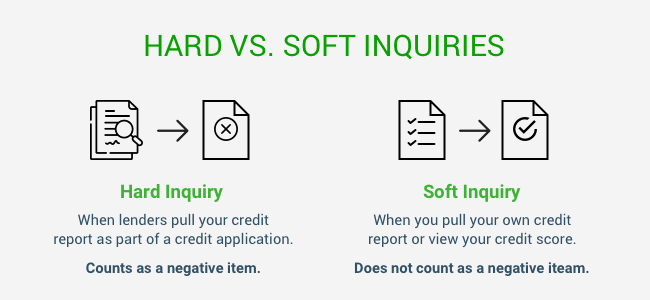
There are two types of credit inquiries: hard inquiries and soft inquiries. Account reviews and preapproved offers fall under the category of soft inquiries, which have no effect on your credit scores. Hard inquiries include applications for credit or certain services, and although their impact is minimal, they can temporarily affect your scores. It is good practice to get your credit report checked throughout the year to view hard and soft inquiries.

A hard inquiry appears on your credit report when a lender checks your credit in response to an application for a new loan, credit card or line of credit. Whenever you seek new credit, there’s the potential for a new debt, which may temporarily lower scores slightly until you can show that you are managing that new debt responsibly. Credit scoring models such as those from FICO or Vantage sometimes account for that increase in risk by lowering your scores slightly. Typically, most score models show hard inquiries typically lowering scores by less than five points.

Hard inquiries remain on your credit report for up to two years, but as long as you keep up with your payments, credit scores often rebound from an inquiry within a few months. And, most credit scoring models no longer count a hard inquiry in score calculations at all after 12 months.

Soft inquiries appear on your credit report when someone runs a credit check for reasons unrelated to lending you money. These events are not associated with greater repayment risk, so they have no effect on your credit scores. Common examples include but are not limited to: utility companies for services and equipment, auto insurance companies, credit card companies that you have accounts with currently, as well as a credit review with a lender in a bank or credit union.

It is ideal not to accumulate too many inquiries as they can lower your scores over time if one is rapidly shopping for credit. There are an exception to this however. If there are multiple inquires from a car dealership to other lenders when you finance a car (this is called shotgunning the credit as it goes to mulltiple lenders) within a certain period of time it is counted as one inquiry. Inversely, if there are multiple inquires foe different types of credit in a period of time that is a sign of concern to a lender. It is important to check your score reports at least once a year to ensure all inquires on your report were authorized as unfamiliar inquiry activity could be a sign of either an error or criminal activity. You can review your annual credit report for free Here.

Inquiries are as I call the “cost of admission to credit”. These inquires make up a small percentage of your credit score but it is important to not go overboard with shipping for credit and recognize that even if they are small, inquires can still have an effect on your credit score. Until the next time dear readers, excelsior.

The wonderful world of refinancing

In the current landscape, refinancing is a useful tool for one’s financial journey. People refinance for a variety of reasons.  Many things such as home loans, car loans, student and personal loans can be refinanced. Let us look at what all goes into a refinance.

A refinance, or “refi” for short, refers to the process of revising and replacing the terms of an existing credit agreement, usually as it relates to a loan or mortgage. When a business or an individual decides to refinance a credit obligation, they effectively seek to make favorable changes to their interest rate, payment schedule, and/or other terms outlined in their contract. If approved, the borrower gets a new contract that takes the place of the original agreement. Borrowers often choose to refinance when the interest-rate environment changes substantially, causing potential savings on debt payments from a new agreement.

Consumers generally seek to refinance certain debt obligations in order to obtain more favorable borrowing terms, often in response to shifting economic conditions. Common goals from refinancing are to lower one’s fixed interest rate to reduce payments over the life of the loan, to change the duration of the loan, or to switch from a fixed-rate mortgage to an adjustable-rate mortgage (ARM) or vice versa (in regard to mortgages in particular). Note that during a refinance of a consumer loan (auto, personal, etc.) there are typically no closing costs associated with the refinance process unlike most mortgage loans

Borrowers may also refinance because their credit profile has improved, because of changes made to their long-term financial plans, or to pay off their existing debts by consolidating them into one low-priced loan. Changing interest rates in the economy are moving factors that people look for when shopping around for places to refinance. There must be a new or existing loan for there to be a refinance.

There are several types of refinancing one could take advantage of for their financial situation. One such refinance is a rate/term refinance for a better rate and a more advantageous term for repayment. Another is a cash-out refinance when your auto has more value (commonly referred to as loan to value or LTV) to pull a certain amount of funding against the worth of the vehicle. Another is a cash-in refinance where an individual can place money down to get to their ideal payment, rate, or term. Lastly, one could go for a debt consolidation refinance to help put their payments under one roof and one easy payment.

There are many benefits to a refinance such as lower payments, rates, and terms. Additionally, there is the convenience of consolidation of payments and an influx of cash for cash-out refinancing requests. There are some drawbacks to a refinance. One such drawback is if there is a movement back to the original term there is more interest to be paid during the life of the loan, shortened terms may increase payment potentially as well. If interest rates drop, you won’t get the benefit with a fixed-rate mortgage unless you refinance again and you could lose equity in your home depending on the mortgage refinance.

Refinancing is a powerful tool that can benefit you in the long run if done correctly. During my time in finance, I have seen many practical applications of refinancing that people use to their advantage. Until the next time dear readers, excelsior!

Debt vs income part 2: the less secure edition

Last time we discussed what the debt to income ratio was and how it effects one’s overall financial picture. This time we will discuss another ratio that effects your financial picture. The unsecured debt to income ratio is another important piece to understand your financial situation.

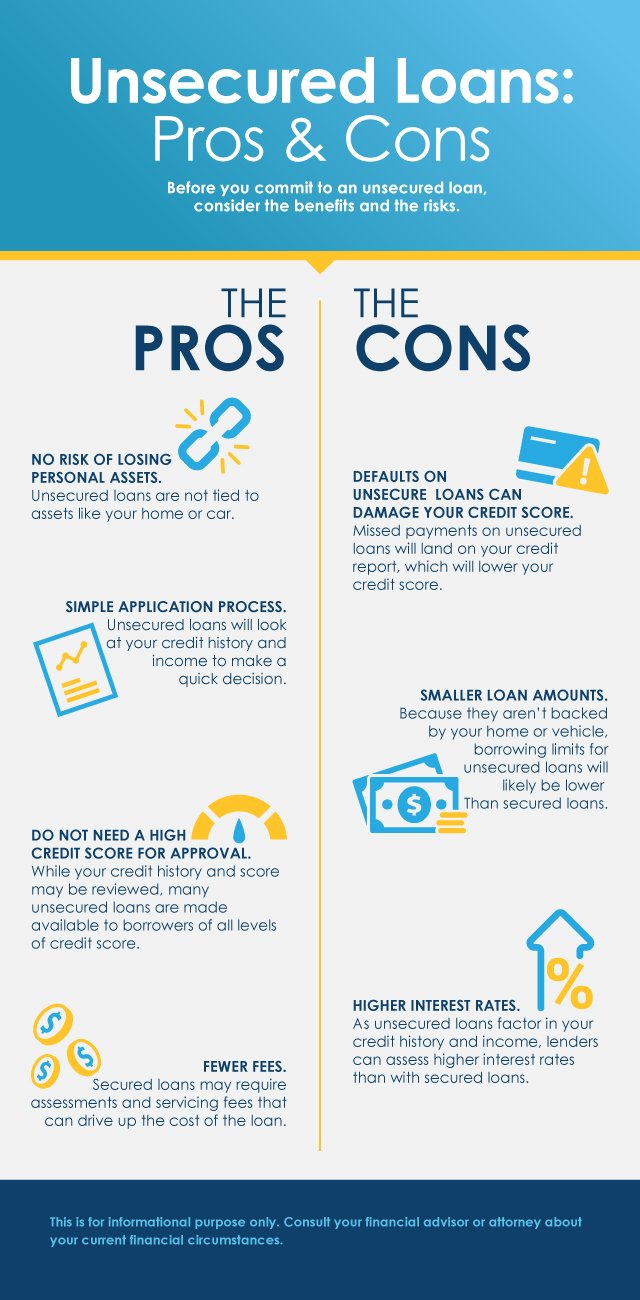
Unsecured debt is different from a secured debt as the debt isn’t tied to a piece of collateral such as a car or house. Types of unsecured debt would be credit cards, personal loans, lines of credit, etc. As such these debts are typically assessed higher interest rates than secured debt because of the risks associated with them in the event of a default of payment from a borrower or bankruptcy risk if the borrower ventured into this route.

The unsecured debt ratio (UDTI) equals the total of unsecured debt divided by the total annual income, multiplied by 100, which converts it to a percentage. For example, say Sarah carries $8,000 of credit card debt, $12,000 in personal loans and her annual income is $80,000. Divide the total unsecured debt of $20,000 by $80,000 to get 0.25. Then, multiply 0.25 by 100 to find that Sarah has an unsecured ratio is 25 percent. If Sarah increases her unsecured debt load her and her income remains the same her UDTI will increase. In the opposite scenario if Sarah’s income increases or her unsecured debt is paid down more her UDTI decreases.

Lenders don’t like to make additional unsecured loans to people with high existing unsecured ratios because that’s tacking on additional debt to someone who’s already overextended. Financial institutions often see unsecured ratios of above about 20% as potentially dangerous. When someone gets above 20 percent, the prospective lender might lower the amount it will lend or require the borrower to put up collateral. If the borrower exceeds 30 percent, they will likely encounter trouble just getting an unsecured loan, because lenders are concerned with the ability to repay and there is more risk associated with lending unsecured vs secured. It is ideal to be in a range that is reasonable for a borrowers existing debt and income level and to go beyond that could indicated many factors such as living off of credit cards and unsecured debt to a point where eventually it leads to an eventual endpoint of defaults, garnishments or legal actions to recoup losses from a borrower or even bankruptcy filled by a borrower who is unable to pay. None of which are a desirable outcome for the institution or the borrow to end up.

The unsecured debt to income ratio is an important snapshot of one’s financial picture in the eyes of a lender. It is important to know how it can help or hurt your overall credit and financial situation. I have included a link to assist in calculating your unsecured debt to income ratio as well. Please uses these tools to help with understanding where you are with your own debts to gain a firm grasp on what was covered today. Until the next time dear reader. Excelsior!

Credit utilization

A common tactic utilized to build a credit history is typically acquiring a credit card of some sort. this along with other credit building programs begins one’s journey for getting into a more favorable credit range. Credit card usage is a factor that helps with establishing a score, but there are things about the usage that one must know.

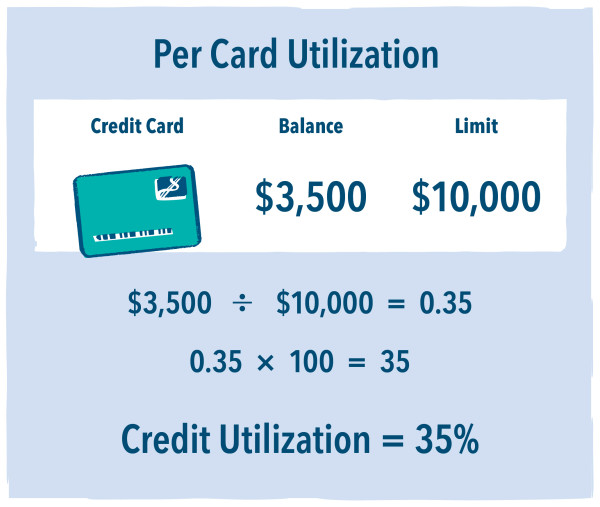
A credit card is a revolving tradeline (a trade line that when it is used and repaid you acquire a certain amount of the credit back). Credit cards have a capacity of use that displays how much of the overall limit has been used in a specific period. Credit utilization measures the balances you owe on your credit cards relative to the cards’ credit limits. If you never use your credit cards and there’s no balance on them, your credit utilization would be zero. If you typically carry a balance on one or more cards, you are ‘utilizing’ some of your available credit and credit score providers will take note. Credit utilization is a key piece of your credit score puzzle. Both FICO and Vantage, two big credit scoring agencies, list credit utilization as the second highest factor they consider when determining credit score. If your utilization ratio is high, it indicates that you may be overspending and that can negatively impact your score. This utilization ratio, as a rule of thumb, is recommended to be around 30 percent or less and is calculated by the total amount of card balances vs the amount of available credit. This means not maxing out existing credit cards. This utilization ratio can be improved by a variety of methods including, but not limited to; paying down current debt past the minimum payment, consolidation of credit card debts, getting another credit card, getting a credit limit increase, or leaving open existing cards once they’re paid amongst other methods.

How Does Credit Utilization Work?

Now that you know how to improve your credit utilization, it’s important to keep track of your progress. Check your credit card balances monthly and keep tabs on your utilization ratios. Many card issuers offer balance alerts via text or email, making it even easier to prevent your utilization ratio from creeping up. Monitoring your credit score can also provide motivation to keep your utilization in check. This was a short lesson, but vital nonetheless. Until the next time dear reader. Excelsior!

Inquiring minds would like to know

The Difference Between Hard and Soft Credit Inquiries - Rich Money

Credit is a topic that has several different facets that make it up. One factor that makes up a credit score (as much as 10 percent) is an inquiry. An inquiry is the beginning stage of beginning a new line of credit and shows how one is looking to seek a new line of credit.

A credit inquiry is a request by an institution for credit report information from a credit-reporting agency. Credit inquiries can be from all types of entities for various reasons, but they are typically made by financial institutions. They are classified as either a hard inquiry or a soft inquiry. Hard inquiries are a key part of the underwriting process for all types of credit. Soft inquiries help credit companies to market their products and can be used to help consumers and are good for reviewing with customers/clients.

Hard inquiries are requested from a credit bureau whenever a borrower completes a new credit application. They are retrieved using a customer’s Social Security number and are required for the credit underwriting process. Hard inquiries provide a creditor with a full credit report on a borrower. This report will include a borrower’s credit and details on their credit history. These are typically displayed on a credit report for approximately 24 months before falling off. Hard inquiries can be harmful to a borrower’s credit score. Each hard inquiry usually causes a small credit score to decrease for a borrower. Hard inquiries remain on one’s credit report for two years. Generally, a high number of hard credit inquiries in a short period of time can be interpreted as an attempt to substantially expand available credit, which creates higher risks for a lender. Hard inquiries can be harmful to a borrower’s credit score. Each hard inquiry usually causes a small credit score to decrease for a borrower. Hard inquiries remain on one’s credit report for two years. Generally, a high number of hard credit inquiries in a short period of time can be interpreted as an attempt to substantially expand available credit, which creates higher risks for a lender, usually within a window of 14-45 days. For those unable or unwilling to wait two years and who are comfortable paying a small fee, one of the best credit repair companies might be able to get the hard inquiries removed from a credit report sooner. In some instances, hard inquiries also may be used for situations other than a credit application. An employment background check and a lease rental application are two instances in which a hard inquiry also may be required. In some instances, hard inquiries also may be used for situations other than a credit application. An employment background check and a lease rental application are two instances in which a hard inquiry also may be required.

Soft inquiries are not included in a credit report. These inquiries can be requested for a variety of reasons. Credit companies have relationships with credit bureaus for soft inquiries that result in marketing lists for potential customers. These soft inquiries are customized by the credit company to identify borrowers who meet some of their underwriting characteristics for a loan. Credit-aggregating services also use soft inquiries to help borrowers find a loan. These platforms require information about a borrower, including their Social Security number, which allows for soft inquiries and prequalification offers. Many lenders also will provide a borrower with quotes through a soft inquiry request that can help them understand potential loan terms. Personal credit reports are also obtained through soft inquiries. Individuals have a right to obtain free annual credit reports from credit reporting agencies that detail their credit information. Individuals can also sign up for free credit scores through their credit card companies. These credit scores are reported to borrowers each month and are obtained by the credit card company through a soft inquiry.

Inquiries are an indicator of what makes up a credit score as well as seeking out new credit. The small components that make up something that most people shy away from are an integral part of your overall credit score. Given this new information may you have a better understanding of how this helps in shaping your credit history for future purchases. Until the next time dear reader. Excelsior!