In your best interest

Interest Rate Definition

You hear about it, you probably pay it, you probably get paid in it. Love it or hate it we are going to talk about interest, what it is and how to make sense of it. Interest is a simple concept but there is often misconceptions about it and confusion. Let us get started in debunking that confusion.

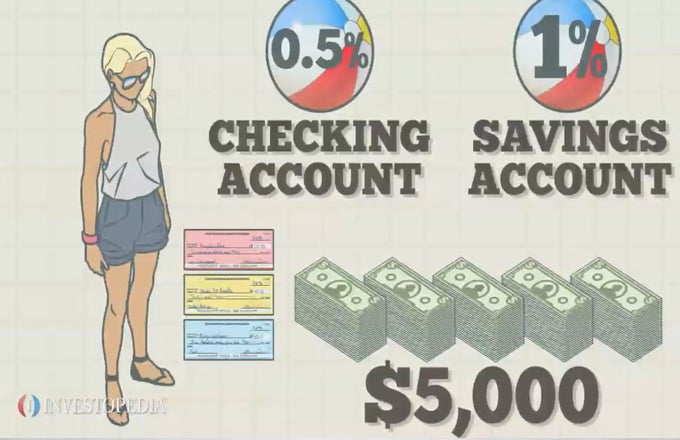
Interest is payment from a borrower or deposit taking institution (such as a bank) to either a lender (someone who you took out a loan from) or a depositor (someone who puts money in the bank) above the principal sum (the original amount of the loan or deposit).at a particular rate. It’s not like a fee which gets paid to a lender and it is not like a dividend that is paid to a shareholder. When interest is paid to a lender or a person depositing money in an interest-bearing account more money comes out on the principal balance. The rate of interest  is equal to the interest amount paid or received over a particular period divided by the principal sum borrowed or lent usually expressed by a percentage (such as the annual percentage rate for loans or average percentage yield on interest bearing savings). Wen dealing with interest you also have compound interest (this is the fun one to get paid but not so fun if you are the one paying) which makes the total amount of the debt grow. Interest can be compounded daily, monthly, or on a yearly basis and the impact is affected by the compounding rate.

When dealing with interest you have some rules of thumb to consider. First, the rule of 78s which helps with calculating interest during the life of the loan as you pay on it. (i.e. on a 1 year loan in the 1st month 12/78 of all interest owed over the life of the loan is due and so on and so forth until the 12th month where only 1/78 of all interest is due. The rule of 72 can be used to approximate how long it would take for money to double at a given interest rate, for the compounding interest to reach or exceed the initial deposit, divide 72 by the percentage interest rate. When dealing with interest you always have options to refinance as well as find interest bearing accounts for higher interest to be paid. There are more technical aspects to interest as one looks into the markets and economics outside of the simple aspects of getting pair or paying interest but that is a topic for another time.

Until the next time, stay safe and continue to learn. Excelscior!
Mucho Mullah Money Markets

Image result for money market accounts"

Savings accounts come in different shapes and sizes. One very good savings account type is a money market savings account. A money market account or money market deposit account is a deposit account that pays interest based on current interest rates in the money markets.

Now I am sure you are thinking “if markets are in the name doesn’t that mean my money is in the stock market?”, not quite my friend; those are money market funds that invest in money market securities. That is another animal to tackle later. These are governed similar to regular savings accounts. They are insured by the FDIC (unlike money market funds) and, although they may provide checking services, the restrictions of Federal Reserve Regulation D, a federal law that limits transfers and withdrawals from money market accounts, discourage their use for day-to-day payment purposes. In practice, money market accounts are distinguished from ordinary savings accounts by their higher balance requirements and more complex interest rate structure.

Image result for money market accounts"

A money market account is like having a savings account with the flexibility of a checking account. And it almost always offers higher-than-usual interest rates (as an annual percentage yield) than savings checking accounts. You can write checks off a money market account and even use a debit card in some cases. These accounts are also insured under NCUA/FDIC as well

The downside is that with a money market account, you only get six transactions (transfers or withdrawals) per month, or per account cycle of at least four weeks. A transaction could mean writing a check, moving money from one account to another, or using a debit card to make a purchase. If you go beyond the transaction limit, you may get hit with a fee. For example, US Bank charges $15 each time you go over the limit of six. In addition to this, some will give you fees or not give you dividends for dipping below a minimum balance for the account. These are also subject to inflation as well and that could increase or diminish returns.

These accounts work very well with those who keep high checking balances, write few checks and make few debits out of their account each month, and desire to keep funds as liquid as possible if you have no interest in an IRA or a CD. These work very well for those that want to get the most for their money and save for special purposes as well such as an emergency fund, a vacation, a wedding or a new vehicle. There are other alternatives to these accounts such as rewards checking accounts, high yield savings, and even passbook savings accounts. These accounts have competitive rates, do some research and find what kind of accounts might work out for you!

After a month’s worth of writer’s block I hope I was able to give you an informative lesson on money markets. This month will be a double dose of learning so stay tuned for the next entry, excelsior!