What is a line of credit?

As a finance professionL I am asked a myriad of different questions in regards to personal finance. From simple questions on account balances to the fine workings of credit, there is never a dull moment or a dull question. One common misconception I have seen is what a line of credit is and exactly how it works.

A line of credit is a revolving line of credit (similiar to a credit card) that allows you to access money as you need it up to a certain limit. You can borrow up to that limit again as the money is repaid over time. A line of credit requires approval by a bank or credit union through various criteria such as credit, income, and other factors that a lender may require. Once funds from a line of credit are used, interest will accrue until the loan is repaid.

Unlike traditional personal loans (and most credit cards), the interest rate on a line of credit is generally variable, meaning it could change as broader interest rates change. This can make it difficult to predict what the money you borrow will end up costing you over time.

Generally speaking, lines of credit aren’t as common as their counterparts know as home equity lines of credit or HELOCS (we’ll visit this later). These see usage for various things such as home improvement projects, weddings, unexpected repairs, and other things that might not have a certain upfront cost. Additionally, there may be other costs associated with the line of credit, such as maintenance fees. Be sure to consult your lender in regards to learning all fees associated with a line of credit. Credit cards will always have minimum monthly payments, and companies will significantly increase the interest rate if those payments are not met. Lines of credit may or may not have similar immediate monthly repayment requirements.

In summary, lines of credit are useful tools that can benefit you if there are things that are appropriate to use it for. They aren’t common, but whether it be for a person or for a business, a line of credit can be a viable asset to move things along. Until the next time dear readers. Excelsior!

Savings with a purpose

Savings are an important thing in life that is often neglected. Did you know the average American has less than $400 in their savings? This is an alarming number due to the simple fact that life is full of unexpected things and anything can and will happen so you must be prepared. Learning how to save no matter your situation will help you in the long run. Oftentimes I’ve heard “I’ll start saving later”, sometimes later could be too late. Too often do we wonder “where has my money gone?” it’s time to stop wondering and time to start telling your money where it needs to go. With that, there is no time like the present so let’s begin, shall we?

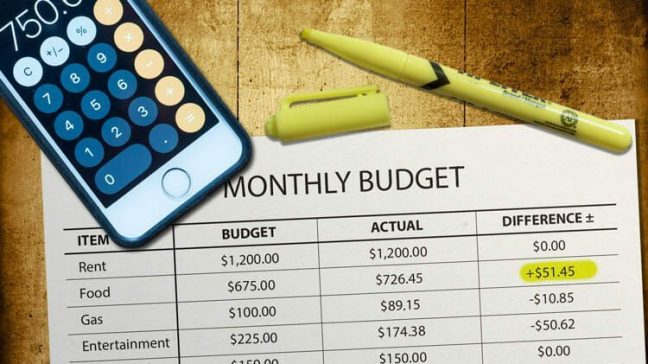
Image result for budgeting

The first step in achieving your savings goal is to make a budget. Making a budget isn’t difficult, but it can seem daunting if your finances need a big overhaul and you’re desperately trying to build up your net worth. There are plenty of helpful budgeting tools to get you on the right path, but the most important thing to remember is to make your budget realistic. When you’re trying to decide what to cut from your current spending, look for things you know you can live comfortably without. That means getting rid of your magazine subscriptions, cable, home phone, trips to the nail salon, or anything else that’s more of a want than a need. After you’ve made those cuts, divide your income into three piles: one to pay your bills and necessities with, one for savings, and one just for fun. Too strict of a budget will drive you crazy, and the best way to maintain good financial habits is by rewarding yourself, even if it’s just with a fancy latte or new outfit from time to time. It’s important to keep yourself financially healthy but it’s also important to treat yourself from time to time for your hard work.

Image result for focus on your goals

One thing to keep in mind is your why: why are you saving? Keep a goal in mind and you’ll be more likely to reach it by tracking it with your budget.  Even if you make the most amazing budget in the world, without setting any specific savings goals, the chances of you sticking to your budget are slim. Do you want to save up to buy a home? Pay down your student loan or credit card debt? Quit your job so you can backpack around Southeast Asia for a year? Keep yourself a rainy-day fund?  Whatever your goals are, give them price tags and deadlines to give your budget purpose and to keep you motivated.

Image result for emergency fund

There are several “terms” of savings to keep in mind here: emergency, short term savings, midterm, long term, and retirement. The emergency fund is, as the name implies, is for EMERGENCIES only. Things such as your car breaking down and needing repair, your furnace at home breaking, medical emergencies and other things of that nature. When life throws a wrench into your works you need to be prepared to get the wrench out.

Image result for long term savings

Short term savings are for things you know are coming up very soon (like within the next weeks or months up to 3 years max) these funds are readily available to be used for things that are small but you know they’re things that could happen but you are prepared for them. I call it the “surprise!” fund but others could call it the sinking fund. Things that pop up such as a family member in need, a bridal shower gift you forgot to get, or things to that extent. This is commonly referred to as the sinking fund which is separate from the emergency fund due to it being something you can use for more fun things as well such as a vacation.  Ideally, you want to be prepared for big emergencies, so the “surprise” fund is something I’d put second to your emergency fund.

Midterm savings are things you would plan for that aren’t an immediate event such as buying a new or used vehicle cash or having the startup funds for a business. These things are a year to 5 years out even up to 10 years. Instead of getting into debt with a loan it can help to establish savings for those big-ticket items so that way you have little to no debt for those larger expenditures.

Long term savings are more dedicated to things happening 10 or more years out. One such thing would be your planning to buy a home. Some save up for cash down payments on their home and you can also buy your home outright depending on the home’s price. A good way to ensure good savings for this goal would be a CD so your money is earning more interest while you’re waiting or placing it into an investment fund on some sort depending on your risk tolerance.

Another form of long-term savings is your retirement savings. As I mentioned with my previous IRA series you also have your 401k if your employer offers it or any other type of employer-sponsored retirement plan. You can also invest in a mutual fund or brokerage account with countless firms and funds for your retirement supplementation. Your employer might offer you matching for your retirement plan, it would be ideal to take the maximum match for stuffing your nest egg. Fidelity recommends placing at least 15 percent of your income into a retirement plan, this sounds like a lot but with payroll deductions and automatic transfers into such an account, it makes it easier to put away for retirement.


Image result for no excuses

I know what you might be thinking: how do I do that with all my different expenses and such? The answer lies in several different methods. One method would be having multiple savings accounts for your different purposes, akin to Dave Ramsey’s envelope system but only digitally. Setting up automatic transfers into these separate savings accounts will help you fill the different buckets for achieving your goals. Other cool tools are CDs for mid and long-term saving tools that you cannot touch without penalty to give you more incentive not to touch the money you’ve purposed. Even establishing a separate account for out of sight out of mind savings helps keep you honest and on task.

I hope this basic overview of savings helps spark an idea as to how you can save money for your future. Money is the most renewable resource that someone can obtain. No matter how much you earn you can save with a plan and dedication. Commit to save and you can achieve your goals. That is all for now, until the next time, invest wisely my friends.

Give your self some credit (wisely)


In this day and age, we can buy things with cash, card, check, app, wires and even your signature on a dotted line. How so on the latter you ask? With credit of course! Credit is a topic that some would like to avoid or don’t know about or are cozy discussing. As someone who works in banking/finance I am not afraid to discuss the importance of credit and what it can do for you.

download (3)

Credit is determined by many factors. You’ll hear the term “credit score” thrown around a lot these days. A credit score summarizes your credit risk based on a snapshot of your credit report at a particular point of time. So essentially, it’s a screening process to see how responsible you are in managing debt to see if a lender can take a chance on giving you financing for your desired purchase. Credit scores are often called FICO (fair isaaac & Company) scores because most credit bureau scores used in the US are produced by software developed by FICO. Keep in mind that not every score you buy online (or view on credit karma) is a true FICO score. Credit scores range from 300 to 850 and are calculated by a mathematical equation that evaluates information from your credit report. The higher your score the better your chances are for getting financing for whatever you’re looking for.

download (4)

Here in the good ol’ US of A we have 3 national credit bureaus (Equifax, Experian and Transunion) that compete to capture, update, and store credit histories on most US consumers. While most of the information collected is similar, there are some differences in what information is captured and how things are displayed by each bureau causing each score to be different from each other. Then if you add in sites like credit karma (which I enjoy because it’s free) or credit sesame that track using their own metrics you could have a lot of confusing variants on your score. Your credit karma might be 642 but Experian says you’re a 720, Equifax says you’re a 772 and Transunion will say you’re a 843. Confusing right? Even a variance of 20 points can make a huge difference. While each source has different scoring metrics there are some general guidelines for determining your credit score.

download (2)

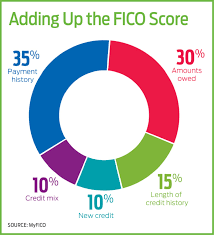
Your score is determined by your payment history (35%), amounts owed (30%), length of credit (15%), new credit (10%), and types of credit (10%). The most important factor in determining your score, your payment history, is simply a record of whether you’ve paid your bills ( I must further stress not only regular bills but things revolving your credit like your car notes and credit cards, etc.) on time. The second more important, the amount owed, is a little more complicated. It looks at how much you’re using of the total credit you have available – also known as your “utilization ratio” or “capacity”. Lenders believe that borrowers who are close to maxing out their credit are more likely to miss payments due to using a lot of their capacity (it’s a good idea not to use more than 30% capacity i.e. $300 on a $1,000 card). The third factor, length of history, is determined by the average age of your accounts, as well as how long it’s been since those accounts were used (like your favorite wine or steak, credit gets better with age). The two smallest factors are how often you’ve opened new accounts (opening a bunch at once will hurt your score in addition to too many inquiries on your credit), and whether you’ve got a mix of different types of credit (such as a mortgage, student loan and car loan). Lenders like to know that you can manage different kinds of accounts responsibly. As long as you keep these factors in mind when obtaining credit, you’ll be well on your road to having excellent credit.

download (3)

One other factor in keeping excellent credit is also knowing that life happens and so do mistakes. Sometimes people make mistakes in the bureaus and it’s up to you to call them out on any mistakes you find on your credit report (such as payments being reported wrong or new accounts opened that you didn’t ever open, etc.). you have a right to dispute any inaccurate information on your credit report and if you do find anything out of the ordinary you can contact the consumer reporting agency. It’s always a good idea to keep an eye on your credit to make sure that information contained therein is accurate. Under federal law you have the right to obtain a free copy of your credit report each year from the national consumer reporting agencies once a year. You can use the following methods:

By phone: call toll free 1-877-322-8228

On the net: www.annualcreditreport.com

By snail mail: send a completed annual credit report request form to:

Annual credit report request service

P.O. Box 105281

Atlanta, GA 30348-5281

Another tool for your utility belt you can use is the Consumer Financial Protection Bureau’s website www.consumerfinance.gov/learnmore to learn more about credit reports and your rights under the law.

Credit can seem like a scary thing and there’s always more that can be learned but with the basics on managing your credit you’ll be well equipped to begin your journey into using this tool properly for your goals.

images (3)

Use Credit Responsibly my friends!


Business Etiquette 102: Professional Eating

In the world of business and in the life and times of the rich and fabulous, there comes a time where one must conduct themselves with refinement and poise. This goes a step past dressing and talking the part of being a professional. Little things such as your posture and eye contact can make or break a deal. The topic I’ll be covering today will be on fine dining etiquette.

  1. Entering the fray  flat,550x550,075,f.u1

Let’s say you get an invite to your boss’ board dinner or maybe you score a lunch meeting with someone you’re looking to get a job with, congrats to you on that opportunity. Now we must set the stage on making sure you’re not eating like you are a caveperson in front of them and making them think you’re gross. The first step is to properly make the introduction, if you read my last post on “impressionable minds” you’ll recall the steps to a proper first impression. The same rule applies here. Do some research on the people you’ll be dining with for good info for conversation. Next make sure when you greet that you keep it on a last name basis unless they give you permission to use their first name (Mr./Ms. Executive). If you forget their name by chance don’t panic, just admit it gracefully and go on with your conversation and if you can’t pronounce their name it never hurts to ask! Also while we are  in the introduction phase and everyone is being seated be sure to not just sit anywhere, try to sit near the host for maximum exposure and also check for reserved seats so you don’t step out of line!


  1. Placement   images (1)

Now that we’re at the table let’s talk about where things go on the table. Take your napkin on your lap immediately after everyone is seated. In the event of you needing to leave the table take your napkin and place it on your chair to indicate you’ll return soon. Upon the end of the meal then place the napkin on the table to indicate you’re finished and ready to go.

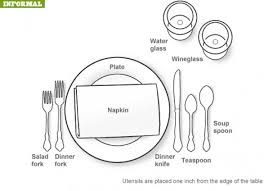
Next look at the silverware on your tale. The number of utensils depends on the number of courses being served, you’re going to work from the right side in start furthest from the plate. Properly hold your silverware lie a pencil and don’t wave your silverware around in the air while gesturing, you don’t want to scare people holding your knife like the second coming of Michael Meyers. Once you pick up a silverware piece make sure not to put it down until you’re finished with it and if you drop it leave it and ask for another. You may or may not have glasses for drinking and the same rules apply (usually there are 2-3 glasses, each for water and possibly wines so pay attention to when it’s appropriate to make use of those). To conclude the topic of posture let me remind you that your body posture is just as important as your table placement so do not slouch, keep your elbows off the table and eat at the pace of the table because your posture is important as your performance.


  1. Conversation download

Now we get to the fun stuff, the art of the conversation with your table and your waiter. In regards to your waiter/ waitress please be sure to be courteous and make eye contact with them if you need anything. When ordering be sure not to order the most or least expensive item on the menu, you don’t want to seem cheap or a spendthrift. Ask the host if they’ve eaten at the venue before and see what they recommend but keep two different items in mind and after the host orders order accordingly. Do not order alcohol during the meal, treat this like an interview and have water or a pop (that’s soda for you non Michigan folks reading this). Please be sure to avoid messy foods that might get everywhere i.e. spaghetti or sandwiches, think knife and fork food.

Now let’s talk about your conversation game, you’re not going get far if you can’t talk properly to people. A good conversationalist is above all, polite. Be sure that you’re being an active listener and acknowledge people as they speak to you. Ask good questions, in fact try “echoing” (I say I fly model airplanes and explain a little about how I build them and you ask a question like “so you spend x hours building a plane?”) this method shows that you’re paying attention to the topic at hand. Don’t interrupt people when they’re talking to you, it’s rude and be sure to make eye contact and not let your eyes wander around the room when people address you directly, be in the moment. If someone gives you a compliment gracefully give a thank you and extend compliments genuinely and for the love of all things pure and holy do not broach the topic of politics, sex, religion or anything marked as “things to make a conversation go from civil to civil war real quick”. If things get stale and people are tuning out just change the subject appropriately and don’t open the “business” topics until it’s time to do so.


  1. The food images (2)

Now let’s get ready to dive into the grub hub folks. Chances are at a fancy restaurant or business dinner you are going to have several courses. I know you might be a starvin’ marvin if you get to the table but please wait until everyone is seated and the host starts eating first or encourages you to eat so you’re not being rude. Pro tip: make sure to pass food to the right and pass the salt and pepper together and anything like creamers or syrup pitchers should be given handle first to the recipient. This is still part of the interview!

If you have salad be sure to use the salad fork unless the salad is the main course. If you have something in the salad you don’t like eat around it, DO NOT pick it out. If you need to cut your salad with a knife do it bit by bit. If you have bread at the table tear the bread with your fingers, butter while the bread is on the plate when the butter dish is passed and eat one piece at a time instead of all at once. If you have soup make sure to move the soup spoon away from you toward the center of the back of the bowl. Make sure if crackers are present not to crush them in bag before dumping them into the soup (that works better in chilli anyway), one piece at a time. The soup bowl may be tipped away from you to fill the spoon with the last sips of soup so no using your face and no slurping! Once you’re done place the spoon on the plate underneath the bowl while resting when finished

Time for the main course now. Be sure that you cut your meat and eat one bite at a time instead of all at once. Remove small objects such as pits, fish bones etc. from your mouth quickly with your fingers and place them on the edge of the plate. Don’t use a toothpick at the table, go in private to use it to get things lodged in the teeth. Also make sure to remove sizzle sticks or spoons before taking a drink. Lastly, contrary to our budgets and taste buds, if the portions are too big resist the urge to order the waiter to wrap up your food if you can’t finish it, it’s not appropriate in this context.

5. Conclusion of the meal download (1)

Once you’re done eating place the knife and fork in the “finished “ position (10:20 position, tips of the utensils at 10 o’clock and handles at 4 o’clock.  Leave the plates as they were presented, I know you want to stack them up or push them away but that is frowned upon in this context of fine dining. After the meal be sure to follow up with a thank you to the host after the meal and thank you cards within the next 24 hours, try to do it by hand if possible unless you have abysmal handwriting.And there you have it, now you know how to “eat like a pro”, for your reference I have a sample table placement of what your table could look like.
download


Until the next time I wish you the best of success. Stay tuned for next time when I cover more of the proper ways to navigate to big bad business world. Excelsior!
download (1)


Business etiquette 101-Impressionable minds


In this modern society there are some things that can be lost to time. One important thing we should never forget is proper business etiquette. This applies to many settings in the professional world from interviews, the workplace and in the dining room. I’ll be covering business etiquette in several different articles. The first topic is how to properly prepare to make a good first impression and knock out any professional interaction.

  1. The first contactImage result for the first contact

Always make sure that if you are meeting with important people to remember that if you receive any kind of correspondence/invitations to reply as soon a possible. If you cannot make it then say so and see what steps you can take from there. No one likes a rude person who no shows and didn’t give prior notice (and don’t cancel 24 hours before unless it is an ABSOLUTE emergency). This goes doubly for business events such as galas and dinners because every response means a mouth to feed!

  1. AppearanceImage result for appearance

I’ll get some grief from some folks for this, but your appearance does matter in the professional world. I know you enjoy wearing your sweats and flip flops and you feel cozy in your leggings and such, but they have no place in the professional scene.  Depending on the situation you might have to change your attire accordingly. Business formal (suit and tie and dress shoes/ business suit/ blouse and skirt for the ladies with shoes not showing toes and such) Business casual (polo shirt with slacks/ a nice blouse with dress pants for ladies). These are general ideas I’m throwing you, but I can give you specifics I use. If it’s a bug business affair I could wear a tux with all the finings (bow tie, cummerbund, etc.) if it’s a business day at the office I will war a suit and tie (3 piece if you really want to show off and earn style points) or I’ll wear a dress shirt and tie with a nice pressed pair of slacks. Business casual for me is a polo with a good pair of slacks and loafers. And everyone’s favorite: CASUAL FRIDAY! A good pair of jeans (no holes or outrageous patterns) and a good top with tennis shoes. Make sure your hair and face are not crusty and messy and make sure you smell nice but do not bathe in cologne/perfume, that runs people away and overpowers them. Try not to have any wrinkles, rips, stains or holes in your outfit because in a professional setting that looks tacky and ill prepared.


  1. ArrivalImage result for arrive on time

Punctuality matters in the professional world, don’t let anyone tell you otherwise. If you show up late some might but lenient, but others might not take kindly to you being 15 minutes late because you burned your avocado toast and you had to get McDonalds. For interviews/meetings I recommend you show up about 5-10 minutes early. This give you time to give yourself a good look over in the mirror to make sure you’re together, go over notes, and freshen up your breath if needed.  I have a saying that if you’re on time you’re late and if you’re early you’re on time. Timeliness is important in the business world and you being able to show you care about timeliness will show your employer or whoever you’re meeting with that you actually care about what you’re doing (note: this is applicable in dating 😉 )

  1. GreetingImage result for greeting

Onto the fun things; whenever I meet with a client I am sure to do several things when I greet them. The first is greeting them PROPERLY by their name (if you are unsure of pronunciation feel free to use their last name “Mr./ Ms.  blah blah blah). Please be sure to know “What’s shakin’?” or “what’s up?” are inappropriate. Informal talk is to be left at the door in the world of business even if you and that person have excellent rapport a degree of professionalism is a must but gauge that level of formality as you go. /secondly, you must also introduce yourself clearly and shake the persons hand (not like a dead wimpy fish or like an Olympic strongman but assertively firm) look the person in the eye, that shows you’re there and in the moment. if you have something in your right hand put it into your left and prepare to shake hands. While you shake remember web to web for your fingers (web of thumb touching theirs) not palm and fingers, this will weaken the handshake. Make sure your name tag is visible and readable as well. If this is a meeting of some sort (non-interview) learning something that connects you to the person you meet on first contact is a good rapport builder (“I heard, you are active in this group I am actually looking to get into that group as well….”) but use that when appropriate


There you have it, that was the basics of making a good impression in the professional scene. Stay tuned for next time when I cover more of the proper ways to navigate to big bad business world. Excelsior!
Image result for to be continue