IRA Distributions

In my previous entry I discussed contributing to the different types of IRAs. Once you hit the appropriate age you will need to make a distribution from your IRA. You might need to withdraw earlier but it all depends on your situation. There are many factors involved with IRA distributions so let us dive in shall we?

Image result for ira taxes

IRA owners generally must include traditional IRA distributions in their taxable gross income. There are, however, some exceptions to the rule: rollovers (if done properly), transfers, recharacterization, removal of excess contributions, revocation of regular/spousal/catch up contributions, distribution of basis (nondeductible traditional IRA contributions and after-tax rollover contributions). Taxable traditional IRA distributions taken before age 59 ½ are generally subject to an additional 10 percent early distribution tax, this is to encourage you not to take an early distribution if you can help it. This early distribution tax is paid when the persona taking out the early distribution files their federal tax return. The penalty tax does not apply, however in special circumstances such as age 59 1/1, death, disability, certain medical expenses, IRS levy, and qualified reservist distributions.  There are also waivers for the penalty tax in instances of taking qualified hurricane distributions provided by the disaster tax relief and other provisions provided during qualified natural disasters.

A Roth IRA qualified distribution may be taken tax and penalty free as long as: there is a 5-year waiting period, the owner is 59 ½, death, disability, or is a first-time home buyer. If these criteria aren’t met it is a non-qualified distribution. Roth IRAs are distributed in the following order: annual contributions, conversion and retirement plan rollover assets (by year), and earnings. These can also get the same penalty tax waivers as a traditional IRA. Both types of IRAs are subject to federal tax withholding up to 10 percent of the distribution unless the IRA owner elects the IRA owner elects not to have income tax withheld or have more than 10 percent of income tax withheld.

Traditional IRAs are subject to required minimum distributions (RMD) that means when you turn 70 ½ you must take a certain amount of funds from your IRA. Typically, these must be taken out by April 1st of the following year they become 70 ½ this the required beginning date (RBD), all required RMDs must be taken out by December 31st. You can also donate $100,000 of your IRA funds tax free to charity if you’re age 70 1/2 , these go directly to charity and are reported to the IRA owner to claim on their taxes. An RMD is calculated by the balance of the IRA and the distribution period. The distribution period is calculated by a number using the IRS life expectancy table. If you fail to take your RMD you will be subject to an excess accumulation tax equal to 50% of the amount that was needed to be taken out. for the sake of simplicity i’ve included a copy of the life expectancy table here.

Image result for ir designate beneficiary

When an IRA owner dies their beneficiaries are entitled to the remaining balance of the IRA. IF there are no beneficiaries, the owner’s estate Is generally entitled to the funds but in some cases the funds will just defer to the living spouse based on documentation. The IRA plan will specify how assets will be paid out when a beneficiary is names. Beneficiaries should also provide copies of the owner’s death certificate to the financial organization where the IRA is housed. Once obtain. need and all beneficiaries have been verified, funds can be distributed amongst the beneficiaries. If there is more than one beneficiary, the funds will be split reasonably between all beneficiaries. Depending on when the owner dies, distribution of funds for beneficiaries can get tricky in such events like the owner dying before the required beginning date. The IRS has developed a table for traditional IRA beneficiary options including default life expectancy payments if a beneficiary isn’t named by December 31st of that year. I have made this available for your viewing pleasure here

The beneficiary may take out distributions of any amount as long as the entire amount is withdrawn December 31st of the year containing the owners 5th anniversary of their death. Beneficiaries can also have life expectancy payments payed out starting December 31st of the year following the year of the IRA owner’s death based on the life expectancy of the beneficiary. As a beneficiary you can also move your deceased spouse’s IRA into your own through a direct transfer and distribute at any time or roll it over into their IRA, minus their RMD due for that year. You can also have a non-person beneficiary such as an estate or a trust if it is qualified and valid with identifiable beneficiaries listed. The same rules apply for Roth IRAs as well.

We’re reaching the end of my series on IRAs. I hope that the journey so far has been enjoyable. I also hope that I made these fun retirement assets as easy to understand and that you might even be considering getting yourself an IRA if you don’t already have one. Tune in next time for my next entry my friends. Invest wisely, ciao!

Image result for to be continued

IRA contributions

Image result for contribute to ira

In my last entry, I went over what IRAs are and why they matter. This entry will cover contributions to your IRA. You can’t retire without money and to fund an IRA you need to make sure you’re able to stay within certain limits set in place by the IRS. I know what some of you are thinking: “why do I have to limit what I put into my IRA? It’s my retirement money after all!” rest assured I will explain what this entails shortly.

Image result for ira contribution limit

As of this year, the IRS limits up to $6000 to be placed into an IRA each calendar year for regular contributions and $1000 max for catch up distributions. People with eligible compensation (like your earnings from work) of less than their max contribution can only contribute into their IRA equal to their work wages. You can also own a traditional and a Roth IRA, but you cannot go past the $6000 annual limit. Additionally, if you’re 50 or older before the end of the tax year you can make a catch-up contribution into your IRA as well. The deadline for contributions (regular, catch-up, prior year, etc.) is April 15th to the following calendar year.

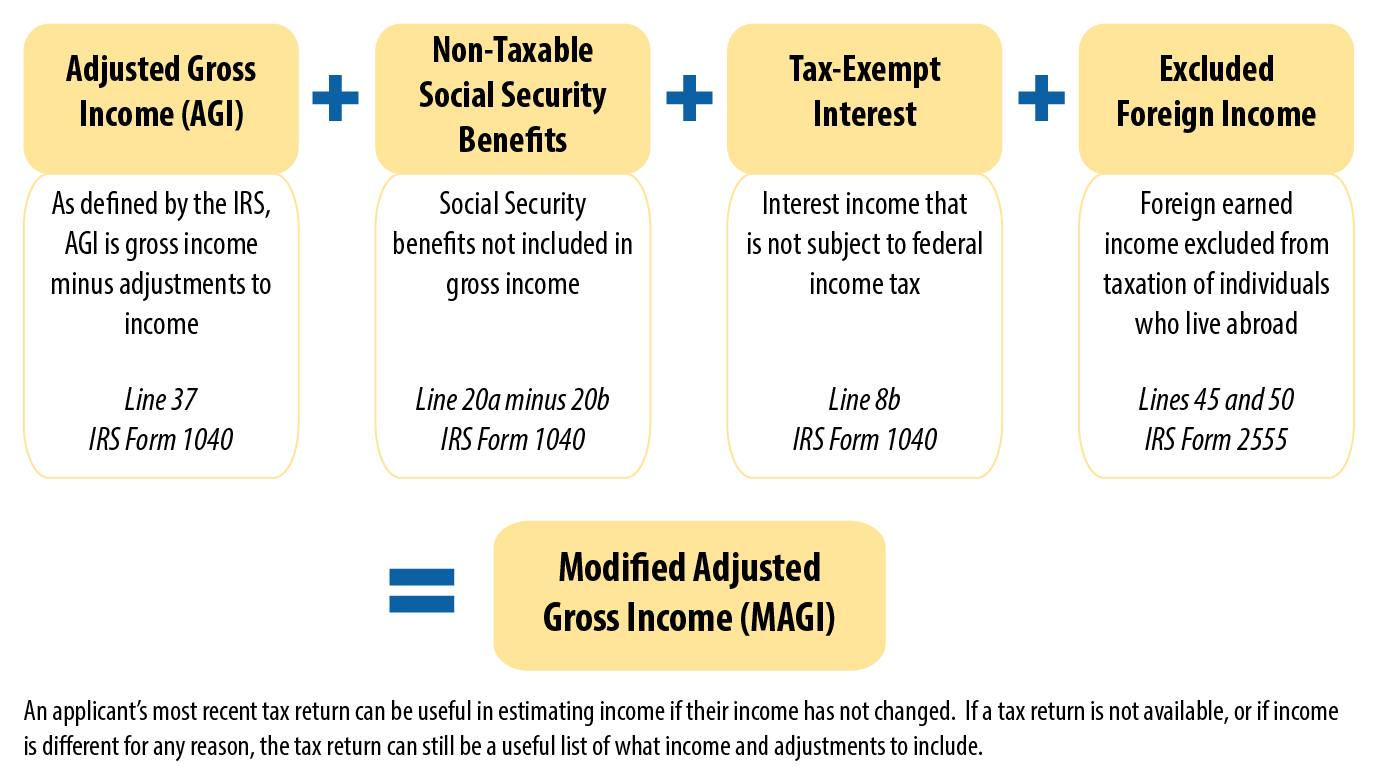
Image result for modified adjusted gross income (magi)

To contribute to a traditional IRA, you must be less than 70 ½ years old and eligible earned funds (usually from work) to place into the IRA. The same rule applies if your spouse wishes to contribute to your IRA but in addition, they must file joint on their tax return with you. Now there are factors regarding your contribution regarding deductions on your taxes. Such factors include having an employer sponsored retirement plan (i.e. 401k), marital status and modified adjusted gross income. Your financial custodian over your IRA cannot determine or track deductible contributions so keep that in mind as you contribute this will need to be done yourself. To further break down modified adjusted gross income you will want to make sure to account for having an employer sponsored retirement plan because there are different ranges for those different income tiers. The same rules apply to Roth IRAs as well. Roth IRA accounts can also receive transfer contributions, rollovers, and conversions (from traditional to Roth and vice versa). Your income has phase out ranges for Roth IRA contribution eligibility, this means however much you make could disqualify you for making a Roth IRA contribution. If your adjusted gross income is within the proper phase out range, however, the eligible contribution amount for a person is reduced. These levels can vary from year to year.

Image result for ira custodian

For financial organizations accepting IRA contributions it is required that they keep records of the contributions, the type and the year it was made. This is important for your records and on a typical form for collecting information you’ll see things pertaining to the IRA type, how much you’re putting in, the contribution type and when it was made, as well as any other info including your signature for the records. These contributions can also be reported to the IRS via a form 5498 and have their own tax form for each year you contribute. this information is compared to an individual’s income tax return to determine what’s taxable or tax advantaged as well.  Under some state laws it is possible to have a saver’s credit for contributions (see your states contribution rules for this). Typically. these are low to moderate income individuals and the credit is typically nonrefundable and not to exceed $1000. This is based on the annual adjusted gross income figures calculated by the IRS and cost of living adjustments. To be eligible you must be 18 before the end of the tax year (April 15th), not be a dependent or full-time students (sorry kiddos) and have adjusted gross income in the acceptable limits (depending on the year this could vary). This info can be found on the IRS publication 590-A and 8880 for credit for qualified retirement savings contributions.

I knew I threw a lot of material at you today, I wanted to condense this as best as possible. Tune in next time when I discuss the distributions from an IRA and what that means to you. Until then, invest wisely my friends, ciao!

Image result for to be continued

IRA Fundamentals part 1: Introduction

Image result for individual retirement account

An introduction

All good things come to an end. Nothing lasts forever, not even diamonds if you ask me. We all age, get a little slower and eventually can’t work to the same level we used to. It’s time to discuss the important topic of retirement. I know it’s something no one usually thinks about but it’s a thing that you should probably consider if you haven’t thought of it already. Time stands still for no one and each passing day is an opportunity lost fore retirement savings, allow me to share a little savings tool known as the IRA.

An Individual Retirement Account, IRA for short, is a special domestic trust, custodial account or annuity established for saving for retirement. This is not a CD, a money market account, or any special type of investment (though you can make investments held under the IRA, more on that later). These types of accounts are established in banks, credit unions, loan associations, insurance companies, brokerage firms or any organization that can demonstrate they can lawfully administer the trust.

Image result for individual retirement account

Retirement savings

IRAs were created to help supplement retirement savings, promote economic growth, and lessen the burden on social programs (SSI, SSA, etc.). Most people will have 4 primary sources of income for retirement: 1) social security income 2) employer sponsored retirement plan benefits (i.e. 401k) 3) IRA and other personal savings and 4) wages. Some people will need all 4 of these retirement incomes necessary to retain their current lifestyle after retirement.

Image result for taxes

IRAs and the US tax law

IRAs are subject to tax law and all kinds of fun legalities such as contribution limits and changes made by the government to make getting an IRA more desirable and increase rollovers into an IRA. There are 2 main types of IRA: traditional or roth IRA. Traditional IRAs have the benefit of being tax deductible if eligible, has tax deferred earnings and potential tax credits if eligible as well. Traditional IRA contributions are tax-deductible on both state and federal tax returns for the year you make the contribution; withdrawals in retirement are taxed at ordinary income tax rates. Roth IRAs offer tax deferred earnings, tax free earnings if there are qualified distributions and, if eligible, tax credits as well. Roth IRAs provide no tax break for contributions, but earnings and withdrawals are generally tax-free. There are other types of IRAs created by changes in tax laws such as savings match incentive programs for employers (SIMPLE) IRAs, SEP IRAs, Self-Directed IRAs, and others.

Image result for financial disclosure documents

Full disclosure

When setting up an IRA you need three key documents to provide to your customer: the plan agreement (contract) between the customer and the financial organization, the disclosure statement expressing the details of the IRA in non-technical terms, and a financial disclosure displaying the projection of the growth of the IRA investment (such as a CD, or money market account within the IRA)  if desired as well. These are provided to the IRA owner for their records and there is a copy retained for the financial organization as well.

Image result for beneficiaries

Ownership and successorship

When setting up an IRA you also have the option for setting up beneficiaries. As an account service specialist,  I STRONGLY recommend placing a beneficiary (or several) on your different accounts in the event of your death. Save your loved ones the trouble of dealing with the courts to get your IRA or any other account closed and add a beneficiary. With an IRA you can add primary beneficiaries as well as contingent beneficiaries in the event of the primary beneficiary passing as well. Each beneficiary will receive a portion of the IRA funds upon your death. In some states you also have what is called spousal consent; this essentially requires your spouses consent on major changes to your IRA including adding beneficiaries. Certain states adhere to the spousal consent rule, check with your financial institution to see what regulations are in place for marital /community property are in your state when setting up your IRA.

Setting up and IRA and all their Intricacies can be daunting but I am hoping, by the end of my series on IRAs, that you’ll have a better handle on what these tools are and how to use them. I will say there is a lot of tax law involved with these so depending on your tax needs I would always say do your homework and if need be seek the advice of a tax consultant if you’re unsure of what retirement plan will suit your situation. Tune in next time when I present part 2 of my IRA series, until then, invest wisely my friends.

Image result for to be continued

The Savvy vs The Shyster

Every day, someone is a victim of some form of fraud. It’s something that hurts when it happens and can really set you back when it does. There are many ways that fraud can happen but, at the same time, there are many ways to protect yourself against it from happening to you.

Image result for swiper no swiping

One common method of fraud involves your debit/credit card use. This is a common one I see daily. You find things being purchased on obscure sites and even sites you might even use frequently but haven’t touched in a while. On way this can happen is via data breach in a website or a company database. Any cards that were utilized could be subject to risk of fraud in those situations. One such example of this would be you use your card at the store and your financial institution shuts the card down due to notification of someone breaching the stores systems. The same concept could also be applied for online retailers if there is a notice of breach given as well.

Image result for debit card fraud

In addition to a merchant database being compromised there is also the possibility of “skimming”. Skimming is lifting data from the card via magnetic stripe or via RFID scan. A skimmer can be placed anywhere a magnetic stripe can be swiped on a card. Thigs such as the gas pump and even the terminal at a restaurant where the card can be swiped. One way to protect yourself from this kind of skimming would be to utilize your chip enabled debit/credit card(s). EVM chip cards have been around for several years and overseas they’ve been around even longer. There are some groups who are skeptical of the chip card but these are much more secure than the magnetic stripe due to how similar they work to Apple Pay. There is a unique code that is ran each time the chip is ran and that code will no longer be used once the card is ran through the terminal. In response fraudsters will try using RFID scanning sensors to get your card info. To protect yourself from this, a simple lined wallet with an RFID proof lining will deflect the RFID ray from a skimmer. These special wallets can be in the form of a regular wallet or a car carrying wallet. These are relatively inexpensive but a worthwhile investment. As a word of advice, never share your pin to your card with anyone because if fraud happens with the card it lowers the likelyhood of regaining the lost funds from the transactions. If you find yourself a victim of  debit/credit card fraud, contact your financial institution and dispute the charge. Once the dispute complete you would be able to recover funds and even acquire a new card.

Image result for check fraud

Another type of fraud that occurs would be in the form of a check. The check could be made out for several reasons. One such would be communication via email for a “job” and you need to do some purchasing or send money to someone. Another way would be via overnight delivery service and having a check wrote for an amount that is more than an item you paid for online or even from someone unrelated to any business you had dealings with. These typically happen during online sales on sites such as eBay or craigslist. The person you are corresponding with may also get you to send money overseas as well via some sort of international lottery that you never signed up for but allegedly won. A frequent one that comes up would also be being asked to send funds overseas for an inheritance from another country (commonly called the Nigerian prince scam). You also might be solicited for accepting money transfers through your bank and/or PayPal account to receive a “commission” of some sort. There might also be people asking you to cash or deposit a check through your account, or the alternative of usingyour debit card to deposit a check in the ATM. Lastly, and one of the most frequent I’ve seen, would be via online dating sites and the person you’re “dating” is sending or requesting funds to or from you. If that check is cashed or deposited the item will return as fraudulent and you will be out of the funds you’ve deposited/ cashed on top of a returned item fee from your institution. These instances will leave you with the bill and the person you’ve aided several hundred (or thousand) dollars richer. If you come across anything like this report it to your financial institution and local law enforcement. They would be able to assist you in determining if what is happening is a legitimate transaction or someone trying to set you up for failure.

Image result for email fraud

In the digital age there are so many ways we can communicate and access information; but there is a price to consider when we have all this power at our fingertips.  Scammers are always looking to find ways to get into your information and do damage. On method used is called “Phishing” aka email fraud; this involves a scammer pretending to be sending correspondence from a trusted source such as the government or your local doctors office. They might try to direct to a site to “verify” personal information or reset your password. Do not fall for this trap! If you notice an email for confirming certain information do not click on it, instead use a legitimate website or phone number to reach the organization in question. Also look for the “look” icon on your browsers status bar and see if the URL uses “https” in it’s addresses and check the spelling of the site to see if there is anything out of place. Pharming is also a form of information fraud in which a scammer will divert you to a copycat web site that looks legitimate but is not. Be on the look out for emails coming unexpectedly and treat it as a phishing attempt. There is also malware aka “spyware” that comes in the form of spam emails and that software can leak data and take control of your computer and leave you at the fraudster’s mercy.

Image result for protect your information

Keeping your computer safe is paramount in mitigating electronic information fraud. In this day and age you’ll want to consider investing in good antivirus and antimalware programs and keep up to date with your computer’s OS and software patches. Do not judge by initial appearance because there are plenty of software options for a shyster to make a site look legitimate and catch you in a trap! Be diligent in how much information you put online as well as exercising caution on giving personal data. You will also want to use secure passwords for different software that you use. You shouldn’t keep the same pin or password for everything, which many people do because it is easy to remeber, because if one site is compromised the rest could be in danger as well! Never leave your passwords wrote down in the open that will set you up for compromise as well.  Invest in a firewall to keep the bad guys out but above all else, you are your own human firewall, so you must know the signs and know how to protect yourself from internet fraud!

Image result for only you can prevent cyber crime

If you or anyone you know are a victim, or potential victim of fraud on the internet you will want to visit the internet crime complaint center (ic3). This is designed to report complaints of cybercrimes and alert authorities of suspected violations. The center identifies current crime trends on the web as well as aid local law enforcement in investigating the bad guys involved. This overall will help with reducing losses that you, your loved ones, your work or anywhere else could lose due to cybercrime. The website is www.ic3.gov and it is a valuable tool in the fight against fraud. Use these tools and knowledge to protect yourself and your information and money. Be careful out there and stay savvy my friend.

CDs are in!

Image result for CDs vs stocks

I can imagine you are probably wondering, if you don’t already know already, why should you care about a CD? The answer is quite simple: CDs are great listening for long road trips and save on your battery life on your phone! Case closed.

I am obviously kidding here; CDs in this context are great financial tools that come in handy for a period of time when you have adequate funds that you don’t feel like taking a big market risk by putting them into the market. Keep in mind that markets can have an effect on banks, credit unions and other financial institutions but CDs are not likely to go up and down as much as your stock in apple or JC penny on a daily basis.

Image result for certificate of deposit

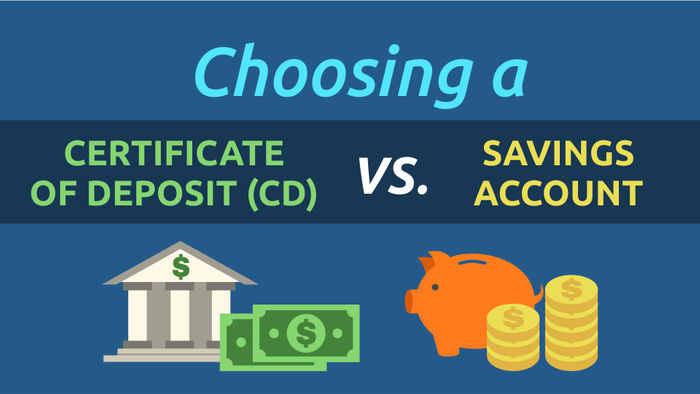
A CD (certificate of deposit) is a savings certificate with a fixed maturity date and specified fixed interest rate that can be issued in any denomination aside from minimum investment requirements. A CD restricts access to the funds until the maturity date of the investment. CDs are generally issued by commercial banks and are insured by the Federal Deposit Insurance Corporation (FDIC) up to $250,000 per individual.

A certificate of deposit (CD) is a promissory note issued by a bank or credit union. It is a time deposit that restricts holders from withdrawing funds on demand. A CD is typically issued electronically and may automatically renew upon the maturity of the original CD. When the CD matures, the entire amount of principal, as well as interest earned, is available for withdrawal. CDs typically do not have a fee unless withdrawn before the maturity date. Most CDs offer higher interest rates than those available from savings and money market accounts.

Image result for certificate of deposit vs savings account

There are some pros and cons to using a CD so you want to do your homework to make sure that a CD will work for you. One thing to keep in mind with a CD is that is not accessible until it’s maturity date without some kind of penalty being incurred, the early withdraw penalty varies depending on your financial institution. The moment money is put into a CD it loses liquidity, the ability to be touched at any time penalty free. CDs operate under the premise that you forfeit liquidity for a higher return. Under typical market conditions, long-term CDs have higher interest rates when compared to short-term CDs. There is more uncertainty and risk associated with holding the investment for a long period of time. In addition, because you are forgoing the opportunity to utilize the funds for a specific period, you are compensated by earning more interest.

Although CDs do not provide a high return, especially compared to investing the same amount in the stock market, investing in CDs is considered relatively safe. The funds are insured, and, assuming there are no early withdrawal penalties, the investment is considered to be as safe as cash in a savings or checking account. As CDs typically pay higher interest than savings accounts, but offer lower returns than stocks, they are a good option for those who don’t need access to the cash for a set period and want to minimize risk. A five-year CD with a 3.15% annual percentage yield (APY) compounded monthly will earn $4,258.48 on a $25,000 initial deposit. The same amount of money kept in a savings account that pays 2.25% would earn just $2,973.86, assuming the interest rate stays the same, something that is not guaranteed with a savings account. Online banks tend to have the most competitive rates for both CDs and savings accounts.

Image result for lets negotiate

There are also additional benefits to having a CD in terms of negotiability and the style of the CD. Most CDs are non-negotiable, meaning they can’t be transferred, sold, bought or exchanged. In most cases, non-negotiable CDs can be cashed in before maturity by paying an early withdrawal penalty. Negotiable CDs, also known as NCDs, are just the opposite. They can be sold in the secondary market but can’t be cashed in before they mature. With few exceptions, NCDs are issued in large denominations of $100,000 or more. Another feature of NCDs is that they are short term and have maturity dates of between two weeks and one year.

Most financial institutions also offer promotional rates on CDs depending on the amount brought and have specific stipulations as well. Those stipulations can include the term, if a percentage of it are new funds to be deposited, or even in some cases, a rate match from a rival institution. There are also special CDs you can get depending on your institution. Here are some of the different types:

  1. Liquid CDs: These feature low or no penalty for early withdrawal, overcoming one of the main objections people have about CDs. This feature comes at a cost, including a lower rate of return, and, in many cases, a minimum balance requirement. Even with those caveats, in a fluctuating interest environment, liquid CDs enable you to move your funds to a higher-paying certificate when opportunity presents itself.
  2. Bump-Up CDs: Like liquid CDs, these have a lower interest rate than fixed-rate CDs but let you take advantage of a new higher interest rate and apply that rate to your existing CD. As with liquid CDs, bump-up CDs may also require a high minimum deposit. Bump-up CDs also typically limit the number of times a higher rate can be activated, depending on the length of the term.
  3. Step-Up CDs: These are often confused with bump-up certificates, although they are not the same. Unlike bump-up CDs, which allow you to take advantage of a higher rate, step-up CDs raise rates at regular intervals on a preset basis. It’s important to know what the overall (blended) interest rate is and compare that with a regular CD of the same term length.
  4. IRA CDs: These are regular CDs held in a tax-advantaged individual retirement account (IRA). As CDs offer relatively low interest rates compared to other investments, taking up a significant part of your annual IRA contribution limit with CDs could lead to much-lower-than-expected returns in your IRA retirement account. These are a personal favorite of mine
  5. Brokered CDs: These are sold through brokerage accounts and sometimes offer better rates than those sold through a bank or credit union. It’s important to make sure the brokered CD is FDIC insured or offers a high enough interest rate to outweigh the risk when it isn’t insured. It’s also worth noting that brokered CDs can be difficult to get out of when you want to exit the investment.

There are also other types of CDs such as save to win CDs (these give you a chance to deposit multiple times into a 1-year CD program and every set amount is deposited you get an entry into a sweepstakes for cash prize, think lottery but no way to lose) and other CDs your institution may offer that haven’t been brought out to the public yet.

As someone who has a CD and helps people obtain them I can confidently say that these are excellent saving tools. These are for the more risk adverse and those who want to diversify their investments. Additionally, these funds can be pledged on secured loans as well and be used as collateral. That can helpful in seeking a lower rate of interest on your loan and help build up your credit. CDs are a cool thing and you can expect these to stay in style for a while. Invest wisely my friends. Excelsior!

Give your self some credit (wisely)


In this day and age, we can buy things with cash, card, check, app, wires and even your signature on a dotted line. How so on the latter you ask? With credit of course! Credit is a topic that some would like to avoid or don’t know about or are cozy discussing. As someone who works in banking/finance I am not afraid to discuss the importance of credit and what it can do for you.

download (3)

Credit is determined by many factors. You’ll hear the term “credit score” thrown around a lot these days. A credit score summarizes your credit risk based on a snapshot of your credit report at a particular point of time. So essentially, it’s a screening process to see how responsible you are in managing debt to see if a lender can take a chance on giving you financing for your desired purchase. Credit scores are often called FICO (fair isaaac & Company) scores because most credit bureau scores used in the US are produced by software developed by FICO. Keep in mind that not every score you buy online (or view on credit karma) is a true FICO score. Credit scores range from 300 to 850 and are calculated by a mathematical equation that evaluates information from your credit report. The higher your score the better your chances are for getting financing for whatever you’re looking for.

download (4)

Here in the good ol’ US of A we have 3 national credit bureaus (Equifax, Experian and Transunion) that compete to capture, update, and store credit histories on most US consumers. While most of the information collected is similar, there are some differences in what information is captured and how things are displayed by each bureau causing each score to be different from each other. Then if you add in sites like credit karma (which I enjoy because it’s free) or credit sesame that track using their own metrics you could have a lot of confusing variants on your score. Your credit karma might be 642 but Experian says you’re a 720, Equifax says you’re a 772 and Transunion will say you’re a 843. Confusing right? Even a variance of 20 points can make a huge difference. While each source has different scoring metrics there are some general guidelines for determining your credit score.

download (2)

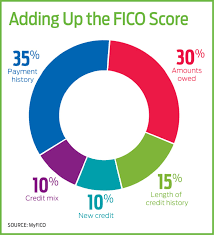
Your score is determined by your payment history (35%), amounts owed (30%), length of credit (15%), new credit (10%), and types of credit (10%). The most important factor in determining your score, your payment history, is simply a record of whether you’ve paid your bills ( I must further stress not only regular bills but things revolving your credit like your car notes and credit cards, etc.) on time. The second more important, the amount owed, is a little more complicated. It looks at how much you’re using of the total credit you have available – also known as your “utilization ratio” or “capacity”. Lenders believe that borrowers who are close to maxing out their credit are more likely to miss payments due to using a lot of their capacity (it’s a good idea not to use more than 30% capacity i.e. $300 on a $1,000 card). The third factor, length of history, is determined by the average age of your accounts, as well as how long it’s been since those accounts were used (like your favorite wine or steak, credit gets better with age). The two smallest factors are how often you’ve opened new accounts (opening a bunch at once will hurt your score in addition to too many inquiries on your credit), and whether you’ve got a mix of different types of credit (such as a mortgage, student loan and car loan). Lenders like to know that you can manage different kinds of accounts responsibly. As long as you keep these factors in mind when obtaining credit, you’ll be well on your road to having excellent credit.

download (3)

One other factor in keeping excellent credit is also knowing that life happens and so do mistakes. Sometimes people make mistakes in the bureaus and it’s up to you to call them out on any mistakes you find on your credit report (such as payments being reported wrong or new accounts opened that you didn’t ever open, etc.). you have a right to dispute any inaccurate information on your credit report and if you do find anything out of the ordinary you can contact the consumer reporting agency. It’s always a good idea to keep an eye on your credit to make sure that information contained therein is accurate. Under federal law you have the right to obtain a free copy of your credit report each year from the national consumer reporting agencies once a year. You can use the following methods:

By phone: call toll free 1-877-322-8228

On the net: www.annualcreditreport.com

By snail mail: send a completed annual credit report request form to:

Annual credit report request service

P.O. Box 105281

Atlanta, GA 30348-5281

Another tool for your utility belt you can use is the Consumer Financial Protection Bureau’s website www.consumerfinance.gov/learnmore to learn more about credit reports and your rights under the law.

Credit can seem like a scary thing and there’s always more that can be learned but with the basics on managing your credit you’ll be well equipped to begin your journey into using this tool properly for your goals.

images (3)

Use Credit Responsibly my friends!


Business Etiquette 102: Professional Eating

In the world of business and in the life and times of the rich and fabulous, there comes a time where one must conduct themselves with refinement and poise. This goes a step past dressing and talking the part of being a professional. Little things such as your posture and eye contact can make or break a deal. The topic I’ll be covering today will be on fine dining etiquette.

  1. Entering the fray  flat,550x550,075,f.u1

Let’s say you get an invite to your boss’ board dinner or maybe you score a lunch meeting with someone you’re looking to get a job with, congrats to you on that opportunity. Now we must set the stage on making sure you’re not eating like you are a caveperson in front of them and making them think you’re gross. The first step is to properly make the introduction, if you read my last post on “impressionable minds” you’ll recall the steps to a proper first impression. The same rule applies here. Do some research on the people you’ll be dining with for good info for conversation. Next make sure when you greet that you keep it on a last name basis unless they give you permission to use their first name (Mr./Ms. Executive). If you forget their name by chance don’t panic, just admit it gracefully and go on with your conversation and if you can’t pronounce their name it never hurts to ask! Also while we are  in the introduction phase and everyone is being seated be sure to not just sit anywhere, try to sit near the host for maximum exposure and also check for reserved seats so you don’t step out of line!


  1. Placement   images (1)

Now that we’re at the table let’s talk about where things go on the table. Take your napkin on your lap immediately after everyone is seated. In the event of you needing to leave the table take your napkin and place it on your chair to indicate you’ll return soon. Upon the end of the meal then place the napkin on the table to indicate you’re finished and ready to go.

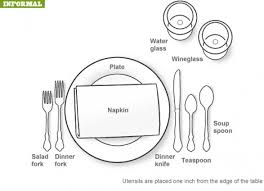
Next look at the silverware on your tale. The number of utensils depends on the number of courses being served, you’re going to work from the right side in start furthest from the plate. Properly hold your silverware lie a pencil and don’t wave your silverware around in the air while gesturing, you don’t want to scare people holding your knife like the second coming of Michael Meyers. Once you pick up a silverware piece make sure not to put it down until you’re finished with it and if you drop it leave it and ask for another. You may or may not have glasses for drinking and the same rules apply (usually there are 2-3 glasses, each for water and possibly wines so pay attention to when it’s appropriate to make use of those). To conclude the topic of posture let me remind you that your body posture is just as important as your table placement so do not slouch, keep your elbows off the table and eat at the pace of the table because your posture is important as your performance.


  1. Conversation download

Now we get to the fun stuff, the art of the conversation with your table and your waiter. In regards to your waiter/ waitress please be sure to be courteous and make eye contact with them if you need anything. When ordering be sure not to order the most or least expensive item on the menu, you don’t want to seem cheap or a spendthrift. Ask the host if they’ve eaten at the venue before and see what they recommend but keep two different items in mind and after the host orders order accordingly. Do not order alcohol during the meal, treat this like an interview and have water or a pop (that’s soda for you non Michigan folks reading this). Please be sure to avoid messy foods that might get everywhere i.e. spaghetti or sandwiches, think knife and fork food.

Now let’s talk about your conversation game, you’re not going get far if you can’t talk properly to people. A good conversationalist is above all, polite. Be sure that you’re being an active listener and acknowledge people as they speak to you. Ask good questions, in fact try “echoing” (I say I fly model airplanes and explain a little about how I build them and you ask a question like “so you spend x hours building a plane?”) this method shows that you’re paying attention to the topic at hand. Don’t interrupt people when they’re talking to you, it’s rude and be sure to make eye contact and not let your eyes wander around the room when people address you directly, be in the moment. If someone gives you a compliment gracefully give a thank you and extend compliments genuinely and for the love of all things pure and holy do not broach the topic of politics, sex, religion or anything marked as “things to make a conversation go from civil to civil war real quick”. If things get stale and people are tuning out just change the subject appropriately and don’t open the “business” topics until it’s time to do so.


  1. The food images (2)

Now let’s get ready to dive into the grub hub folks. Chances are at a fancy restaurant or business dinner you are going to have several courses. I know you might be a starvin’ marvin if you get to the table but please wait until everyone is seated and the host starts eating first or encourages you to eat so you’re not being rude. Pro tip: make sure to pass food to the right and pass the salt and pepper together and anything like creamers or syrup pitchers should be given handle first to the recipient. This is still part of the interview!

If you have salad be sure to use the salad fork unless the salad is the main course. If you have something in the salad you don’t like eat around it, DO NOT pick it out. If you need to cut your salad with a knife do it bit by bit. If you have bread at the table tear the bread with your fingers, butter while the bread is on the plate when the butter dish is passed and eat one piece at a time instead of all at once. If you have soup make sure to move the soup spoon away from you toward the center of the back of the bowl. Make sure if crackers are present not to crush them in bag before dumping them into the soup (that works better in chilli anyway), one piece at a time. The soup bowl may be tipped away from you to fill the spoon with the last sips of soup so no using your face and no slurping! Once you’re done place the spoon on the plate underneath the bowl while resting when finished

Time for the main course now. Be sure that you cut your meat and eat one bite at a time instead of all at once. Remove small objects such as pits, fish bones etc. from your mouth quickly with your fingers and place them on the edge of the plate. Don’t use a toothpick at the table, go in private to use it to get things lodged in the teeth. Also make sure to remove sizzle sticks or spoons before taking a drink. Lastly, contrary to our budgets and taste buds, if the portions are too big resist the urge to order the waiter to wrap up your food if you can’t finish it, it’s not appropriate in this context.

5. Conclusion of the meal download (1)

Once you’re done eating place the knife and fork in the “finished “ position (10:20 position, tips of the utensils at 10 o’clock and handles at 4 o’clock.  Leave the plates as they were presented, I know you want to stack them up or push them away but that is frowned upon in this context of fine dining. After the meal be sure to follow up with a thank you to the host after the meal and thank you cards within the next 24 hours, try to do it by hand if possible unless you have abysmal handwriting.And there you have it, now you know how to “eat like a pro”, for your reference I have a sample table placement of what your table could look like.
download


Until the next time I wish you the best of success. Stay tuned for next time when I cover more of the proper ways to navigate to big bad business world. Excelsior!
download (1)


Business etiquette 101-Impressionable minds


In this modern society there are some things that can be lost to time. One important thing we should never forget is proper business etiquette. This applies to many settings in the professional world from interviews, the workplace and in the dining room. I’ll be covering business etiquette in several different articles. The first topic is how to properly prepare to make a good first impression and knock out any professional interaction.

  1. The first contactImage result for the first contact

Always make sure that if you are meeting with important people to remember that if you receive any kind of correspondence/invitations to reply as soon a possible. If you cannot make it then say so and see what steps you can take from there. No one likes a rude person who no shows and didn’t give prior notice (and don’t cancel 24 hours before unless it is an ABSOLUTE emergency). This goes doubly for business events such as galas and dinners because every response means a mouth to feed!

  1. AppearanceImage result for appearance

I’ll get some grief from some folks for this, but your appearance does matter in the professional world. I know you enjoy wearing your sweats and flip flops and you feel cozy in your leggings and such, but they have no place in the professional scene.  Depending on the situation you might have to change your attire accordingly. Business formal (suit and tie and dress shoes/ business suit/ blouse and skirt for the ladies with shoes not showing toes and such) Business casual (polo shirt with slacks/ a nice blouse with dress pants for ladies). These are general ideas I’m throwing you, but I can give you specifics I use. If it’s a bug business affair I could wear a tux with all the finings (bow tie, cummerbund, etc.) if it’s a business day at the office I will war a suit and tie (3 piece if you really want to show off and earn style points) or I’ll wear a dress shirt and tie with a nice pressed pair of slacks. Business casual for me is a polo with a good pair of slacks and loafers. And everyone’s favorite: CASUAL FRIDAY! A good pair of jeans (no holes or outrageous patterns) and a good top with tennis shoes. Make sure your hair and face are not crusty and messy and make sure you smell nice but do not bathe in cologne/perfume, that runs people away and overpowers them. Try not to have any wrinkles, rips, stains or holes in your outfit because in a professional setting that looks tacky and ill prepared.


  1. ArrivalImage result for arrive on time

Punctuality matters in the professional world, don’t let anyone tell you otherwise. If you show up late some might but lenient, but others might not take kindly to you being 15 minutes late because you burned your avocado toast and you had to get McDonalds. For interviews/meetings I recommend you show up about 5-10 minutes early. This give you time to give yourself a good look over in the mirror to make sure you’re together, go over notes, and freshen up your breath if needed.  I have a saying that if you’re on time you’re late and if you’re early you’re on time. Timeliness is important in the business world and you being able to show you care about timeliness will show your employer or whoever you’re meeting with that you actually care about what you’re doing (note: this is applicable in dating 😉 )

  1. GreetingImage result for greeting

Onto the fun things; whenever I meet with a client I am sure to do several things when I greet them. The first is greeting them PROPERLY by their name (if you are unsure of pronunciation feel free to use their last name “Mr./ Ms.  blah blah blah). Please be sure to know “What’s shakin’?” or “what’s up?” are inappropriate. Informal talk is to be left at the door in the world of business even if you and that person have excellent rapport a degree of professionalism is a must but gauge that level of formality as you go. /secondly, you must also introduce yourself clearly and shake the persons hand (not like a dead wimpy fish or like an Olympic strongman but assertively firm) look the person in the eye, that shows you’re there and in the moment. if you have something in your right hand put it into your left and prepare to shake hands. While you shake remember web to web for your fingers (web of thumb touching theirs) not palm and fingers, this will weaken the handshake. Make sure your name tag is visible and readable as well. If this is a meeting of some sort (non-interview) learning something that connects you to the person you meet on first contact is a good rapport builder (“I heard, you are active in this group I am actually looking to get into that group as well….”) but use that when appropriate


There you have it, that was the basics of making a good impression in the professional scene. Stay tuned for next time when I cover more of the proper ways to navigate to big bad business world. Excelsior!

Image result for to be continue

How to use a check

In this age of modern technology the process of carrying a card is commonplace. We are moving away from the days of carrying cash and using checks. In light of this transition, i have elected to share with you the proper way to utilize a check. This would be review to some but for others this will be a new topic for you. The goal behind this is to keep you informed on how to use some of the older financial transactions in the wake of this shifting dynamic in personal finance. Just in case any of our newer methods fail us you’ll know how to use a check if necessary.

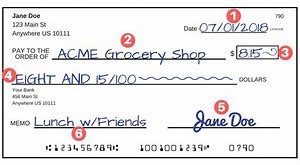
How to use a check

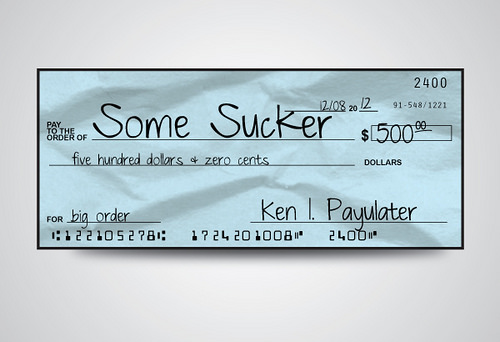
example


  1. Date line: date goes here
  2. Name of the writer of the check aka the payee line
  3. Numerical value of the amount of the check aka courtesy box
  4. The hand written amount of the check aka the legal line
  5. Signature line: signature of the payee goes here
  6. Memo line: optional note (what the check is fore i.e. groceries, reimbursement etc.)


Using the check

You can make use of a check by signing the back of it aka endorsing the check

You have several types of endorsements

For deposit only- restrictive

The name of the payee- blank

Pay to the order of – special endorsement


Dos and don’ts

Do make sure that the legal line and the courtesy box amounts match (a check wrote for $100 on the courtesy box must match the legal line amount. If a check is wrote for $10 on the legal line but in the courtesy box it looks wrote for $100 it must be taken for the LEGAL LINE amount of $10


Do sign your check at the place you intend to deposit or cash because if you lose it another person can endorse their name under yours and use the check (unless it is a special endorsement where it has to be pay to the order of a specific person)


Don’t write in different types/color of pen on the face of the check. That will alter the check and can cause the check to be refused

Do not write a check for “cash” if it is lost it can be used to be cashed by anyone

Make sure you have a signature under the signature line from the person writing the check otherwise it will not be utilized

Do not leave your checks out in the open because they have your account and routing number info there. Keep them in a safe place for storage.

Keep in mind that a check can be placed on hold if deposited or cashed depending on the institution or if put into an ATM

Do keep a consistent signature on your checks because signature fraud happens

Do get duplicate style checks; the carbon copy underneath the check will make balancing your check book easier

Do make sure you don’t damage your check in any way especially near the numbers at the bottom of the check because it will make using it harder

Do always write a check with a pen so no one can alter it

Do not leave your checks blank (not filling out a payee line) because it increases the risk of fraud with the check

Do make sure to balance your checkbook regularly to avoid discrepancies and running the risk of bouncing a check


With this you know have the basics of how to use a personal check. Stay tuned for other tips and tricks on navigating the fun world of personal finance


Photocredit: the balance.com