Beneficiaries: Assigning your money to infinity from beyond

What Is a Beneficiary and How Do I Choose One? | DaveRamsey.com

In my few years in my banking career I have seen many things but one thing that breaks my heart it is seeing someone without a beneficiary for their funds. This simple step can lead you to avoiding months if not years of hassle with the courts (or even court costs if necessary). It is relatively simple process that I preach on constantly whenever I see it, so get ready for me to get back on my soap box once again.

Intellectual Property: Don't Forget to Cover Your (Other) Assets ...

During this trying time, bank accounts, insurance accounts, brokerage accounts, retirement accounts, you name it. The sheer number of financial institutions that count us as customers may seem staggering and in the rush to open an account, we may have forgotten to add a beneficiary, or even simply postponed that last little detail until it was more convenient (or maybe someone hasn’t thought of one yet). Simply taking the time to ask about it, either you or the agent, will help move the conversation in the right direction for several reasons.

The first reason is that you want to make sure you want the people of your choosing to inherit your money. The person you can list can be a spouse, a child, a relative you trust, or even your trust (we’ll come back to that later don’t you worry). By naming your beneficiaries, you ensure that your money goes where you intend for it to go. That could be to a relative who really needs the financial assistance, a charity that’s close to your heart or whomever you want the money directed to. Without clear directions as to your wishes, executors or the state will follow only what the law says in distributing your assets and that’s not fun. You can name as many beneficiaries as necessary to split the proceeds as well if you would like as well. But do keep in mind if a beneficiary passes or any circumstance arise to compromise the beneficiary that these can be changed in most cases. This way everyone can speed up the probate process (because probate court is not a fun time for your family or the financial institutions reporting process) in addition there’s less going to a court appointed estate to be taken care of.

Legacy Planning Advisors, Inc.

The second reason is being able to update it on an annual basis. If you’re married, you can almost always change the beneficiary of your accounts without your spouse’s permission. In fact, this is one of the first recommendations I make in a divorce process. The worst that can happen is being forced to put the beneficiary designation back to the previous spouse if ordered by the court or other arrangements. You can change a beneficiary so make sure to periodically check to see if you have a beneficiary listed or if you need to change or add one (my recommendation is once a year or every six months if needed.) This will help for several reasons: 1) it keeps your information up to date 2) you can also use this way to limit family fighting over your assets once you’re gone. 3) Beneficiaries trump wills as well, so make sure you plan accordingly. (contact your estate planer regarding this to make sure things are done appropriately.

 Naming a beneficiary is an easy thing to skip over when opening an account, but this small step can save a huge headache – and potentially a lot of money – later. So take an inventory of your financial accounts today, and ensure that your wishes are up to date. Then resolve to keep the accounts updated annually so that you continue to avoid problems for yourself and your heirs. During this time, I urge you now, more than ever. Please get your beneficiaries in order if you haven’t considered it before because we are all human and a simple two-minute process can help save your loved ones from a longer time trying to take care of your estate. Until the next time friends. Stay safe and healthy, Excelsior!

Taking a chill pill

8tracks radio | Take a chill pill! (25 songs) | free and music ...

We live in a rather stressful and uncertain time. There are a lot of things happening during this trying time in everyone’s life now. Here in the good old U S of A we are used to the hustle and bustle of daily life but now everything is on a pause. Now is an opportune time to talk about something that is never really taken seriously, rest, and taking a moment to slow down.

Right now many things have been put on pause: visits to your favorite pub, café or restaurant, going to get your reps at the gym (see my previous post on no gym fitness), and even seeing loved ones. There is some good to be found during this time of uncertainty. People are getting creative in terms of cooking abilities, video parties with friends, and even finding ways to still stay in shape. It’s also important to use this time to spend it with our loved ones (even if you have to facetime or conference call them) and also take a moment to rest and take a moment to just recalibrate for when things go back to normal.

Our society has been defined by consistently being on the move. We’re running to meetings, conference calls, fundraisers, recitals, work, you name it. We never take the time anymore to stop and enjoy the smell of the flowers or the warmth of the sun. We see it and know it’s there but do not actually bask in it to truly appreciate it. Our constant hustle and shuffle keeps us from our things that matter most to us (you know what those are), enjoying small moments in life that we take for granted (like breathing clean air, the taste of the morning coffee you chug down without taking a moment to enjoy the smell and taste of it, or the feeling of the wind in your hair…or scalp. We’re always busy or busy bragging to the point where the word busy has become trite and bland.

During this time connect with your loved ones. Call up your grade school pals, learn how to perfect your homemade bread recipe, enjoy the taste of your favorite dessert and the sensation of the wind in your face if you go sailing/biking (since we can do that now in Michigan). Enjoy the moment to turn this lemon into lemonade. Take the time out to take the time and enjoy it as best you can.

During this time of uncertainty, take a moment to take a breath and make this rough period of time to recalibrate and enjoy the finer details of life and use the extra time to get creative and even learn new things. Let’s come out of this quarantine and period of uncertainty smarter, stronger, have more expanded skills, and become more cognizant of the need to take a moment to breathe.  Until the next time my friends, stay safe and healthy and Excelsior.

No gym? No problem!

Image result for no gym no problem quotes

Due to recent circumstances, lots of things are closed. These things include bars, restaurants, salons, and fitness centers. Since the fitness centers are closed, now is a great time to get creative with physical fitness. I will share with you a sample of some great bodyweight workouts that will help keep you in motion and will pose a challenge for you. This will be more of a circuit dedicated to building strength and endurance. For these exercises, I recommend a warm-up and some pre-workout stretching before the actual task begins. after you’ve finished please make sure you do a cooldown of either cardio and/or stretching. I also recommend a 1 and 1 circuit. Do as many reps as possible in that one minute and rest for one minute. To start 3 rounds will suffice. As your conditioning improves feel free to add an additional round as you progress.

First, let’s start with a warm-up to get the blood flowing. Here are some warm-up ideas:

1 minute of jumping jacks (as many as you can) or

1 minute of high knees or

1 minute of butt kicks

After you get some blood flowing, it’s time to get some stretching in. ( I use a number of different stretches in my regimen. I recommend holding the stretches for about 10 seconds or more depending on how mobile you are. ) Click here for some nice ways to get yourself limbered up.

Now let’s get to work. 1 minute of work, 1 minute of rest 3 rounds and then you are done. feel free to try some variants of these exercises once you get used to the current routine to make it more intense. Then feel free to add a round or even cut your rest time if you wish to present more of a challenge.

Three rounds, 1 and 1, as many reps as you can (variants are in parenthesis for your convenience :

Simple circuit

Squats (traditional, squat thrust, single-leg squat)

Push up (traditional, elevated, decline)

Sit-ups/bicycle crunches/v up (pick your poison)

Dips (feel free to use a counter, a chair, porch steps etc.)

Lunges (traditional, reverse, springing lunges)

Pull-ups (narrow, wide, backward using a tree limb, playground set, I beam in the basement, maybe the threshold of a doorway if it can support you)

What’s that? You want even more of a challenge? I have a challenge for you. This one is intense, so I recommend keeping a lot of water nearby. You will sweat a lot:

The Assassins Circuit (Crafted by your truly)

Warm-up: high knees for 2 minutes

Burpees

Clockwork pushups

Dragon flags

Walk up bridge

Alternating grip pull-ups (switch grips between sets)

Jumping jacks

Spiderwalks

Cooldown kickboxing drills

This is merely a sample of some great exercises to help keep you in shape during these trying times. Until the next time, stay healthy my friends. Excelsior!


Notoryius: An overview of the Notary Public

Image result for what does a notary do

This month I would like to discuss the importance of the Notary Public. This is an often misunderstood topic and from my own experience, it can be a little challenging at times to understand what details go into such a thing as a Notary. Let’s dive right into the exciting world of notarization, you never know when you could need one.

The National Notary Association defines a Notary Public is an official of integrity appointed by state government —typically by the secretary of state — to serve the public as an impartial witness in performing a variety of official fraud-deterrent acts related to the signing of important documents. These official acts are called notarizations, or notarial acts. Notaries are publicly commissioned as “ministerial” officials, meaning that they are expected to follow written rules without the exercise of significant personal discretion, as would otherwise be the case with a “judicial” official. To put it simply, a Notary Public is an official unbiased witness to the signing of an important document. Notaries can also do a slew of other things including but not limited to: administering oaths and affirmations, taking affidavits and statutory declarations, take acknowledges of deeds, protest bills and notes of exchange, and even provide notices of foreign drafts.

The Notary Public is to screen the signers of the document to ensure there is no sort of fraud, duress, of incoherence taking place in the signing of documents. These documents could be things such as power of attorney documents, quitclaim deeds, unclaimed property documents and much more.  Some notarizations also require the Notary to put the signer under an oath, declaring under penalty of perjury that the information contained in a document is true and correct.

Notaries are also duty-bound not to act in situations of which they have a personal interest (such as notarizing a quitclaim deed for a rental property that their parents are buying or their own documents, etc.). A Notary Public must be impartial and not act in their own self-interest for the sake of public trust and must not refuse to take a notarization due to race, nationality, religion, politics, sexual orientation or status as a non-customer. This is important because the documents that notaries sign can be life-changing (power of attorney, trusts, deeds, etc.) because they have on civilians.

Official documents (such as documents closing the sale of a house) must be notarized. Notarization is the official fraud-deterrent process that assures the parties of a transaction that a document is authentic and can be trusted. It is a three-part process, performed by a Notary Public, that includes vetting, certifying and record-keeping. This is to screen willingness, awareness, and identity to the individuals signing any important documents. The Notary keeps a journal of all the individuals that sign a document for review if needed. Upon all signatures being on the documented the Notary will stamp and/or seal the document making it officially notarized.

As a Notary Public, I will also share some do’s and don’ts when it comes to meeting with a Notary. Firstly, the document must not be signed before coming to a notary; that defeats the purpose of the notary and renders the document invalid and the notary will have you get a new document to be signed. Secondly, the Notary Public is to verify and deter fraud happening on documents on transactions they are being apart of, not assist in filling out the paperwork. Third, you must have valid identification present to have documents notarized as well, this is essential to the verification process.

The Notary Public is an important part of many important transactions. You can find notaries in many places such as clerk offices, banks, and credit unions, and there are even websites dedicated to finding a Notary in your area. That is all I have for the overview of what a Notary does, until the next time. Excelsior!

You are what you drink

This month marks the beginning of the year and of a new decade. Lots of us are making goals and resolutions being crafted. One such goal I have often heard is drinking more water. As someone who drinks half their body weight in ounces of water at a minimum, I want to share with you some really great things about drinking water on a steady basis.

Drinking water helps maintain the balance of body fluids. Your body is composed of about 60% water. The functions of these bodily fluids include digestion, absorption, circulation, creation of saliva, transportation of nutrients, and maintenance of body temperature. What is neat is when you need water your brain activates a thirst mechanism to tell you that you need water. Secondly, water can help you get some control over your calories. Food with high water content tends to look larger, its higher volume requires more chewing, and it is absorbed more slowly by the body, which helps you feel full. Water-rich foods include fruits, vegetables, broth-based soups, oatmeal, and beans.  Additionally, drinking water with your food will help in trimming your calorie intake.

Image result for drink more water

Water can energize your muscles before a workout by helping maintain the fluid level in your body. During a workout when you sweat, there are electrolytes lost and there is fatigue. If you drink water before a workout your physical performance will be better than without drinking water beforehand. Your skin contains plenty of water and functions as a protective barrier to prevent excess fluid loss. But don’t expect over-hydration to erase wrinkles or fine lines. Proper hydration will help keep your skin look better and not as dry. You can also use a moisturizer to help lock in moisture on your skin.

Body fluids transport waste products in and out of cells. The main toxin in the body is blood urea nitrogen, a water-soluble waste that can pass through the kidneys to be excreted in the urine. Our kidneys can filter a lot of toxins from the body but keeping your body hydrated, the kidneys can continue their job in flushing out all the toxins in your body.  When you’re getting enough fluids, urine flows freely, is light in color and free of odor. When your body is not getting enough fluids, urine concentration, color, and odor increases because the kidneys trap extra fluid for bodily functions. Drinking less water will increase your risk of kidney stones and other disorders connected to the kidneys being unable to flush out toxins it takes in. Adequate hydration keeps things flowing along your gastrointestinal tract and prevents constipation. When you don’t get enough fluid, the colon pulls water from stools to maintain hydration and the result is constipation.

Image result for waterboy meme

Some of the best ways to keep yourself on track with drinking water would be eating foods that are water-rich, like fruits and vegetables. Keep some water for during and between meals as well. There are even water bottles designed to help motivate you to keep on chugging the H2O. Let’s keep the goal of drinking water flowing this year. Until the next time. Excelsior!


Happy New Year!

Image result for happy new year 2020"

As this year draws to a close, we also draw close to the end of the decade. A common trend around this time of year is a plethora of “new year, new me”  posts as well as new years resolutions (that a decent percentage of us will fail within a few weeks or so statistically speaking) This time I do not wish to talk about the clichés of the new years goals, this time I would like to discuss commitments for life.

When I started this blog, I had the idea to talk about investments of the financial sort (IRA, CDs, retirement, etc.), but there is more to the investments that you can make with your time and resources. Going forward I will also be discussing more topics in not just finance but also health and wellness (because your health is a serious investment), style, and professional etiquette. I will also throw a few more surprises your way, dear reader.

As you prepare for this new year keep in mind that we are embarking on a new chapter in time, let this new chapter in your book start with making more of an investment in yourself and your wellbeing for yourself and those around you. I look forward to sharing more topics and hope that you have a successful start to the new year. Stay tuned!

Mucho Mullah Money Markets

Image result for money market accounts"

Savings accounts come in different shapes and sizes. One very good savings account type is a money market savings account. A money market account or money market deposit account is a deposit account that pays interest based on current interest rates in the money markets.

Now I am sure you are thinking “if markets are in the name doesn’t that mean my money is in the stock market?”, not quite my friend; those are money market funds that invest in money market securities. That is another animal to tackle later. These are governed similar to regular savings accounts. They are insured by the FDIC (unlike money market funds) and, although they may provide checking services, the restrictions of Federal Reserve Regulation D, a federal law that limits transfers and withdrawals from money market accounts, discourage their use for day-to-day payment purposes. In practice, money market accounts are distinguished from ordinary savings accounts by their higher balance requirements and more complex interest rate structure.

Image result for money market accounts"

A money market account is like having a savings account with the flexibility of a checking account. And it almost always offers higher-than-usual interest rates (as an annual percentage yield) than savings checking accounts. You can write checks off a money market account and even use a debit card in some cases. These accounts are also insured under NCUA/FDIC as well

The downside is that with a money market account, you only get six transactions (transfers or withdrawals) per month, or per account cycle of at least four weeks. A transaction could mean writing a check, moving money from one account to another, or using a debit card to make a purchase. If you go beyond the transaction limit, you may get hit with a fee. For example, US Bank charges $15 each time you go over the limit of six. In addition to this, some will give you fees or not give you dividends for dipping below a minimum balance for the account. These are also subject to inflation as well and that could increase or diminish returns.

These accounts work very well with those who keep high checking balances, write few checks and make few debits out of their account each month, and desire to keep funds as liquid as possible if you have no interest in an IRA or a CD. These work very well for those that want to get the most for their money and save for special purposes as well such as an emergency fund, a vacation, a wedding or a new vehicle. There are other alternatives to these accounts such as rewards checking accounts, high yield savings, and even passbook savings accounts. These accounts have competitive rates, do some research and find what kind of accounts might work out for you!

After a month’s worth of writer’s block I hope I was able to give you an informative lesson on money markets. This month will be a double dose of learning so stay tuned for the next entry, excelsior!


The truth behind debit cards

As times change, technologies change, and we develop things to help make our lives easier and more convenient. One such example is the introduction of the debit card. This handy little piece of plastic eliminates the need to carry cash but, like anything else in life, it has its pros and cons. We will look at how debit cards work and some myths and facts about them as well.

Image result for debit card transactions

Debit cards are primarily tied to your checing account for purchasing. You can also access funds at the ATM with your debit card as well. There are multiple parts in a debit card transaction, and we’ll break down how the process works. When someone swipes a debit card through a merchant’s terminal, the terminal reads the magnetic stripe (or chip) in the card and transmits the data to a card processing network, this is called authorization. There are several card processing networks commonly found on the emblem on your card (Visa, MasterCard, star network, maestro, etc.).  The network ensures the pieces of transaction data are correctly formatted. Then, it performs a fraud analysis and forwards the information to the bank that issued the debit card. The issuer then validates that the card hasn’t been reported as stolen or lost, confirms whether funds are available in the cardholder’s account and then notifies the merchant, again through the network, whether the transaction has been approved.

Image result for debit card processing

Once authorized, the card transaction will need to be sent through the card processing network to be sent through to their bank. This might take several tries throughout the day, once sent through the transactions are recompiled and sent to the issuers. Once this is done the issuer posts the transaction to the customer’s account. That’s what is called clearing the transaction. Once cleared, the network will calculate how much the issuer owes the merchant and vice versa and payment is made. This could be done on the same day, next day or several days. Once the merchant is paid by the acquiring financial institution and the network is paid the transaction is settled.

Your 16-digit card number on your debit card is crucial in the transaction process. Typically, the 16 digits are comprised of a 6-digit bank verification number (to identify your issuing bank) to help verify the account being debited. The back of the card carries a magnetic stripe, signature panel or a code or a chip. Sometimes the issuer of the card will put a hold onto the funds on the card being used until the transaction is authorized and the transaction settles. To illustrate I have two examples of this: An authorization to purchase gasoline up to a certain dollar amount might be adjusted after the fuel is pumped into the tank, and an authorization to pay a certain dollar amount for a meal at a restaurant might be adjusted after the diner adds a tip to the total. This is what causes transactions to sometimes “disappear and reappear” on your transaction history on your accounts.

Image result for pin based transaction

Visa and MasterCard tend to process signature-based transactions, which typically use a so-called two-message process in which authorization and settlement are performed separately. The smaller networks usually handle PIN-based purchases, which occur via a single message that incorporates both authorization and settlement. Signature transactions are more widely accepted by different merchants while pin transactions are typically found at major retailers, gas stations and supermarkets. But as times go on the distinction between pin and signature transactions gets more intertwined with more places being more “swipe and go” and pin-based charges not needing a pin or a signature transaction not needing a signature.

Image result for disputing debit card transactions

Oftentimes there is confusion about debit card transactions on an account. When you look at your statement, the transactions down with a debit card may show up as POS transactions, with the merchant listed on the account. If you see an ACH transaction, this means that the money was directly debited from your account and that you did not use your debit card to complete your transaction. Understanding this can help you if you are trying to find out if someone accessed your account without your permission. It can also help you identify spending if something is not labeled correctly. For example, your local fast-food restaurants may be doing business under another name.
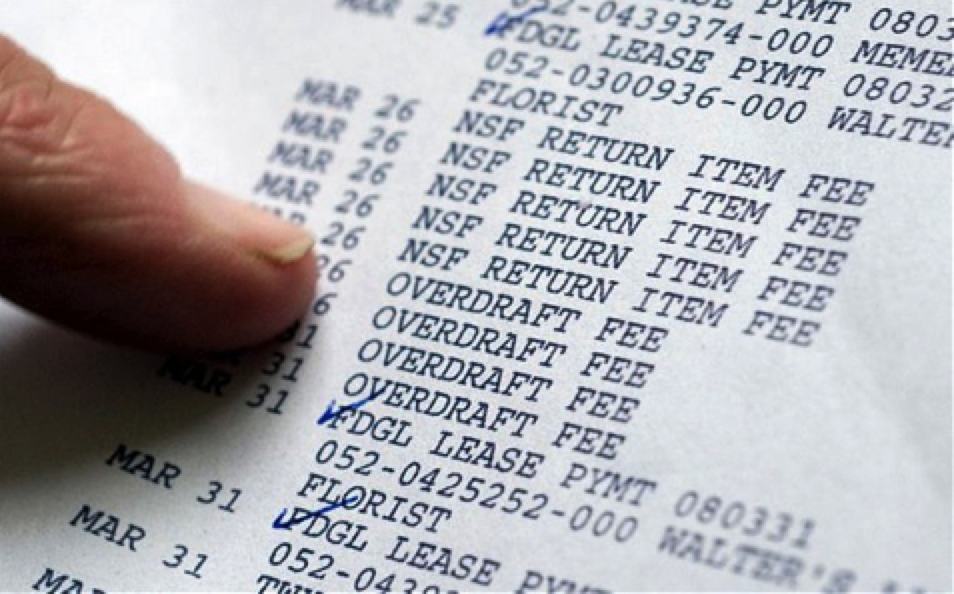
Image result for overdrafting account

You can overdraw your account with a debit card. Some banks allow you to overdraw your account to a certain dollar amount and simply charge you fees for each transaction that they pay into the negative. Additionally, if you have checks clear later that night, you can find yourself overdrawn while using your debit card. It is important to keep a running balance on the account so that you know how much money you have available to you. Some charges may drop off the hold before they clear your account. It makes the money available again, which means that you can overdraw your account while using a debit card. Additionally, a check may not have cleared, which allows you to overdraw. Tracking your purchases yourself on paper or with an app is the best way to protect your money.

One of the biggest precautions you need to take with your debit card is to make sure that it or the information on it is not stolen. If your card is physically stolen, you need to call the bank immediately and cancel the card. Criminals might hack a website and steal the card information and then use it to make purchases online. Your bank may have sent you a new debit card at some point because there was a data breach at a merchant. If you find unauthorized transactions in your account, you need to call the bank immediately to find out what happened.

Another way that criminals are getting the information is through card skimming (one of the different types of fraud I discussed in my previous post on fraud.  The person can either swipe your card through the machine themselves (this happens at restaurants or other places where they take your card from you momentarily) or they can attach a skimmer to a machine where you use your card (like an ATM, vending machine, or RedBox). The skimmers are very small and blend in well. They can be difficult to spot. However, if one of these looks off to you, especially where you swipe the card, you should likely use a different ATM or vending machine. It is important to check your account regularly and watch out for unauthorized transactions, because the sooner you spot the problem, the easier it will be to resolve.

Debit cards are handy tools that can be used to may your day to day business as paper-free as possible. There are pros and cons to utilizing one and now with the knowledge of how these cards work, you can now operate with a better insight as to how these cards work and what all goes into each transaction. That is all I have for today, until the next time, invest wisely my friends.


Savings with a purpose

Savings are an important thing in life that is often neglected. Did you know the average American has less than $400 in their savings? This is an alarming number due to the simple fact that life is full of unexpected things and anything can and will happen so you must be prepared. Learning how to save no matter your situation will help you in the long run. Oftentimes I’ve heard “I’ll start saving later”, sometimes later could be too late. Too often do we wonder “where has my money gone?” it’s time to stop wondering and time to start telling your money where it needs to go. With that, there is no time like the present so let’s begin, shall we?

Image result for budgeting

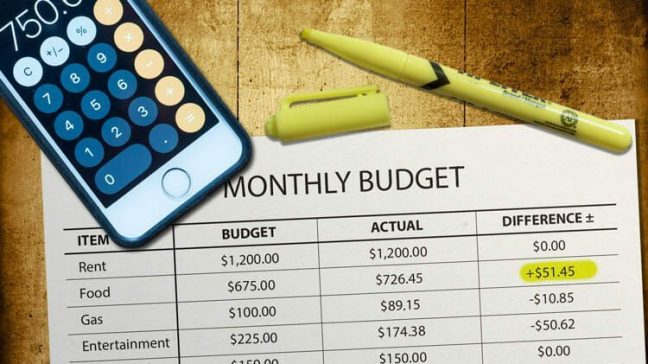
The first step in achieving your savings goal is to make a budget. Making a budget isn’t difficult, but it can seem daunting if your finances need a big overhaul and you’re desperately trying to build up your net worth. There are plenty of helpful budgeting tools to get you on the right path, but the most important thing to remember is to make your budget realistic. When you’re trying to decide what to cut from your current spending, look for things you know you can live comfortably without. That means getting rid of your magazine subscriptions, cable, home phone, trips to the nail salon, or anything else that’s more of a want than a need. After you’ve made those cuts, divide your income into three piles: one to pay your bills and necessities with, one for savings, and one just for fun. Too strict of a budget will drive you crazy, and the best way to maintain good financial habits is by rewarding yourself, even if it’s just with a fancy latte or new outfit from time to time. It’s important to keep yourself financially healthy but it’s also important to treat yourself from time to time for your hard work.

Image result for focus on your goals

One thing to keep in mind is your why: why are you saving? Keep a goal in mind and you’ll be more likely to reach it by tracking it with your budget.  Even if you make the most amazing budget in the world, without setting any specific savings goals, the chances of you sticking to your budget are slim. Do you want to save up to buy a home? Pay down your student loan or credit card debt? Quit your job so you can backpack around Southeast Asia for a year? Keep yourself a rainy-day fund?  Whatever your goals are, give them price tags and deadlines to give your budget purpose and to keep you motivated.

Image result for emergency fund

There are several “terms” of savings to keep in mind here: emergency, short term savings, midterm, long term, and retirement. The emergency fund is, as the name implies, is for EMERGENCIES only. Things such as your car breaking down and needing repair, your furnace at home breaking, medical emergencies and other things of that nature. When life throws a wrench into your works you need to be prepared to get the wrench out.

Image result for long term savings

Short term savings are for things you know are coming up very soon (like within the next weeks or months up to 3 years max) these funds are readily available to be used for things that are small but you know they’re things that could happen but you are prepared for them. I call it the “surprise!” fund but others could call it the sinking fund. Things that pop up such as a family member in need, a bridal shower gift you forgot to get, or things to that extent. This is commonly referred to as the sinking fund which is separate from the emergency fund due to it being something you can use for more fun things as well such as a vacation.  Ideally, you want to be prepared for big emergencies, so the “surprise” fund is something I’d put second to your emergency fund.

Midterm savings are things you would plan for that aren’t an immediate event such as buying a new or used vehicle cash or having the startup funds for a business. These things are a year to 5 years out even up to 10 years. Instead of getting into debt with a loan it can help to establish savings for those big-ticket items so that way you have little to no debt for those larger expenditures.

Long term savings are more dedicated to things happening 10 or more years out. One such thing would be your planning to buy a home. Some save up for cash down payments on their home and you can also buy your home outright depending on the home’s price. A good way to ensure good savings for this goal would be a CD so your money is earning more interest while you’re waiting or placing it into an investment fund on some sort depending on your risk tolerance.

Another form of long-term savings is your retirement savings. As I mentioned with my previous IRA series you also have your 401k if your employer offers it or any other type of employer-sponsored retirement plan. You can also invest in a mutual fund or brokerage account with countless firms and funds for your retirement supplementation. Your employer might offer you matching for your retirement plan, it would be ideal to take the maximum match for stuffing your nest egg. Fidelity recommends placing at least 15 percent of your income into a retirement plan, this sounds like a lot but with payroll deductions and automatic transfers into such an account, it makes it easier to put away for retirement.


Image result for no excuses

I know what you might be thinking: how do I do that with all my different expenses and such? The answer lies in several different methods. One method would be having multiple savings accounts for your different purposes, akin to Dave Ramsey’s envelope system but only digitally. Setting up automatic transfers into these separate savings accounts will help you fill the different buckets for achieving your goals. Other cool tools are CDs for mid and long-term saving tools that you cannot touch without penalty to give you more incentive not to touch the money you’ve purposed. Even establishing a separate account for out of sight out of mind savings helps keep you honest and on task.

I hope this basic overview of savings helps spark an idea as to how you can save money for your future. Money is the most renewable resource that someone can obtain. No matter how much you earn you can save with a plan and dedication. Commit to save and you can achieve your goals. That is all for now, until the next time, invest wisely my friends.

Excess IRA Contributions

The last two sections of the IRA series were the heavy meat and potatoes of my 4-part IRA series, let’s get to dessert, shall we? So far, we have discussed what IRAs are and what they can do for you. We have also discussed how contributions and distributions typically work. What happens if there is an excess of what is supposed to be contributed into an IRA?

Image result for what do i do?

There are a number of ways that an IRA can receive an excess contribution and, if left unchecked, can cost you a six percent penalty on the excess contribution. The IRS provides specific procedures for removing excess contributions. Annual Contributions are excess contributions if the exceed the statutory contribution limit or the amount that the owner is eligible to contribute. If discovered before the tax return due date, with any extensions, the IRA owner may remove the excess without incurring the six percent penalty. The IRA owner may also distribute valid (not excess) contributions before the tax return due date, this is called a “deemed excess”.

Sometimes there are ineligible assets such as RMDs from their IRA/retirement plan accounts. Ineligible rollover amounts become regular contributions to IRAs and financial organizations must report only eligible rollover amounts as regular contributions. If the IRA owners are not eligible to contribute or have already made their annual contribution these regular contributions become excess contributions.

Image result for excess ira contributions

The IRA owner must decide how to correct their contributions. The allowed method depends on whether the excess contribution is corrected on or before the owner’s tax return date plus extensions or after the deadline. If it is corrected before the deadline, the six percent penalty will not apply and if it is not caught in time the owner must pay the six percent for each year that the excess remains after December 31. The extended deadline is generally October 15th., in addition, financial organizations can document elections of the IRA owners’ excess contributions on the proper authorization/ recharacterizations to be reported to the IRS.

Image result for excess ira  tax

Excess contributions removed on or before the deadline must be removed with the NIA (net income attributable). Many financial organizations assist IRA owners in calculating the NIA by using excess contribution form or other means. IRA owners have with eligibility being determined by an individual modified adjusted gross income can also utilize recharacterization to handle excess contributions. Roth IRA excess due to MAGI restrictions can generally be converted into a traditional IRA. Income restrictions do not apply to traditional IRA contributions, although certain restrictions exist for deductions in this case.  IRA owners may elect to recharacterize valid contributions as well.

Image result for deadline tax

After the deadline IRA owners can carry the excess forward by the owner treating the excesses an eligible contribution for the subsequent year and address it on their income tax return. The financial organization can also report it for the year of the contribution on a form 5498 but not do any additional reporting for the amount carried over for subsequent year contributions. The owner can also elect for the financial organization to distribute the excess amount but not the NIA or report it on the form 1099-R.

That concludes my IRA series. I hope you learned some valuable information on IRAs. These are amazing savings tools to help supplement your retirement savings. Please take advantage of these tools for your benefit. That’s all for now until the next time folks, invest wisely. Ciao!